Advertising and promotions on social media: Free checklist
Start a new document with this content. Open the editor to build from scratch — paste in what you need and keep writing.
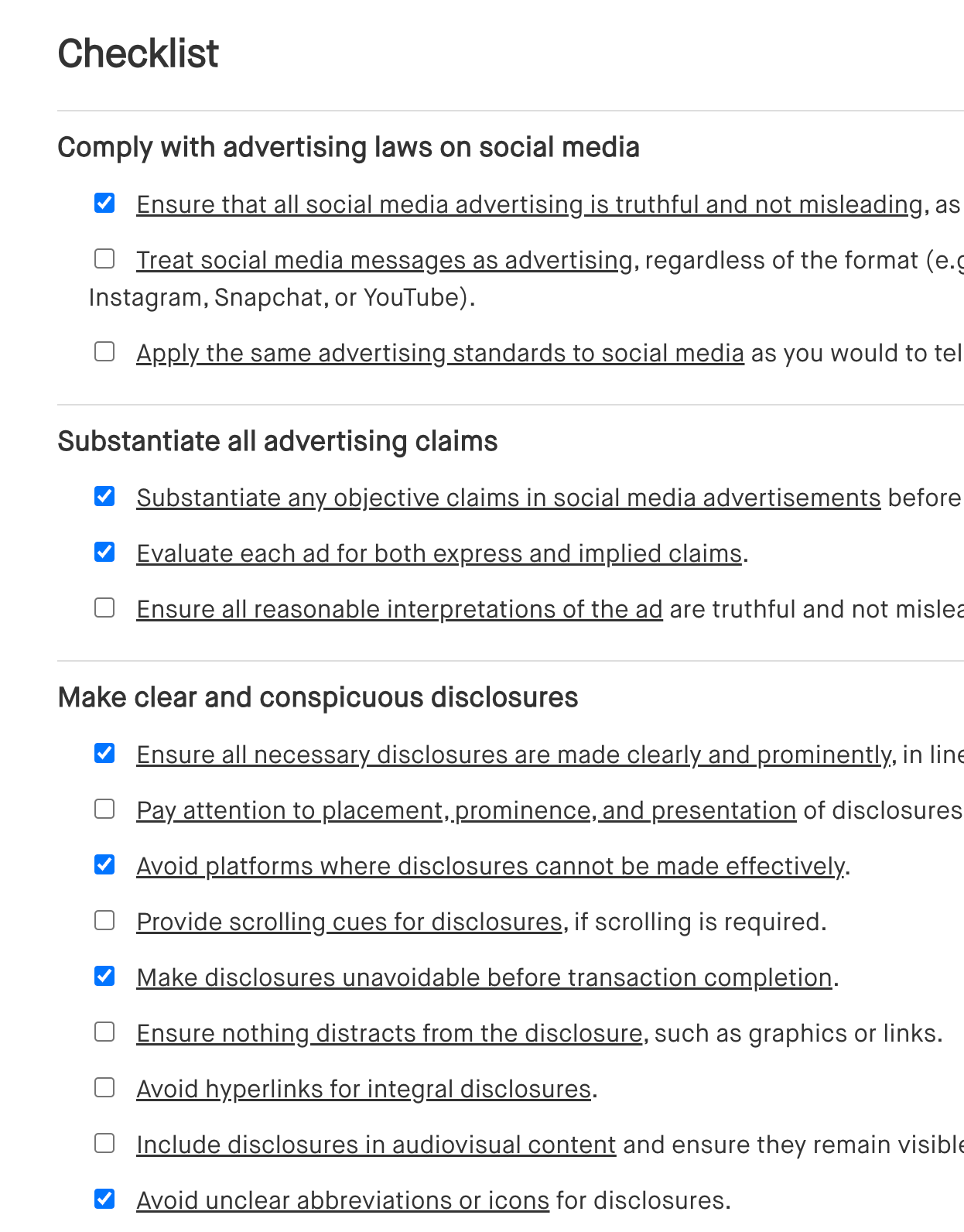
Advertising and promotions on social media checklist
This advertising and promotions on social media checklist helps you ensure that your social media advertising and promotional activities comply with legal standards and protect your brand’s reputation. It covers key aspects such as FTC compliance, transparent disclosures, endorsement guidelines, and intellectual property protection. By following this checklist, your company can confidently manage social media campaigns while minimizing legal and financial risks.
With social media's rapid pace and high visibility, staying compliant is crucial to safeguarding your brand and avoiding legal pitfalls. This checklist gives you a structured approach to navigate the complexities of advertising and promotions online.
How to use this advertising and promotions on social media checklist
Here’s how to get the most out of this checklist:
- Follow the process: Use this checklist as a guide for each stage of your social media campaigns—from creating content to partnering with influencers and running promotions. It ensures that you meet legal requirements and avoid potential issues.
- Tailor to your campaigns: Customize the checklist based on your specific social media platforms, promotional activities, and industry regulations. This makes it more relevant and effective for your business’s unique needs.
- Involve the right teams: Engage legal, marketing, and compliance teams to ensure everyone understands and follows the guidelines. This ensures alignment across departments and helps maintain a compliant advertising strategy.
- Monitor and document compliance: Keep track of completed tasks, document your advertising claims and disclosures, and monitor influencer activities to ensure all actions meet legal standards and company policies.
- Review regularly: Social media platforms and regulations evolve quickly. Regularly review and update your checklist to ensure it stays current with new rules, guidelines, and platform-specific changes.
Checklist
Comply with advertising laws on social media
[ ] Ensure that all social media advertising is truthful and not misleading, as is required for traditional media.
[ ] Treat social media messages as advertising, regardless of the format (e.g., posts on X, Facebook, Pinterest, Instagram, Snapchat, or YouTube).
[ ] Apply the same advertising standards to social media as you would to television or print ads.
Substantiate all advertising claims
[ ] Substantiate any objective claims in social media advertisements before publishing.
[ ] Evaluate each ad for both express and implied claims.
[ ] Ensure all reasonable interpretations of the ad are truthful and not misleading.
Make clear and conspicuous disclosures
[ ] Ensure all necessary disclosures are made clearly and prominently, in line with FTC guidelines.
[ ] Pay attention to placement, prominence, and presentation of disclosures to ensure visibility on all devices.
[ ] Avoid platforms where disclosures cannot be made effectively.
[ ] Provide scrolling cues for disclosures, if scrolling is required.
[ ] Make disclosures unavoidable before transaction completion.
[ ] Ensure nothing distracts from the disclosure, such as graphics or links.
[ ] Avoid hyperlinks for integral disclosures.
[ ] Include disclosures in audiovisual content and ensure they remain visible long enough.
[ ] Avoid unclear abbreviations or icons for disclosures.
Establish a compliant endorsement policy
[ ] Create an internal endorsement policy that complies with FTC’s 2023 Endorsement Guides.
[ ] Review and revise old endorsement policies to meet 2023 guidelines.
[ ] Determine if an influencer is a sponsored endorser based on material connections like payment, free samples, or affiliate marketing.
Train and inform sponsored endorsers
[ ] Ensure endorsers understand their obligation to disclose material connections.
[ ] Provide training to endorsers and agencies on internal endorsement policies.
[ ] Prepare contracts/guidelines for endorsers that include disclosure requirements and substantiated claims.
Ensure clear and conspicuous disclosures by endorsers
[ ] Instruct endorsers to make easy-to-understand disclosures.
[ ] Require disclosures within the video and not just descriptions.
[ ] Superimpose disclosures over images for image-only platforms.
[ ] Avoid ambiguous abbreviations like “#sp”.
[ ] Make disclosures unavoidable, like placing before Instagram's “More” button.
Monitor and enforce endorser compliance
[ ] Regularly monitor endorsers’ disclosures.
[ ] Correct or require correction of non-compliant posts.
[ ] Be prepared to take enforcement action, including termination or withholding payment.
Ensure transparency in native ads
[ ] Clearly identify native ads as advertising.
[ ] Include disclosure unless the ad’s commercial nature is obvious.
Avoid deceptive practices
[ ] Do not use misleading tactics to lure consumers into viewing ads.
[ ] Clearly identify native ads before user engagement.
Use clear language for disclosures
[ ] Use simple terms like “ad,” “sponsored content,” or “paid advertisement”.
[ ] Avoid confusing terms like “promoted stories”.
Consider the viral nature of native ads
[ ] Recognize native ads can reach unintended audiences, which affects disclosure strategy.
Assess the effectiveness of disclosures
[ ] Consider platform behavior and user experience when placing disclosures.
Understand consumer interaction
[ ] Consider how consumers engage with content when evaluating native ad disclosures.
Comply with advertising laws on social media
[ ] Ensure that all social media advertising is truthful and not misleading, as is required for traditional media.
[ ] Treat social media messages as advertising, regardless of the format (e.g., posts on X (formerly Twitter), Facebook, Pinterest, Instagram, Snapchat, or YouTube).
[ ] Apply the same advertising standards to social media as you would to television or print ads, maintaining accuracy and honesty in all communications.
Substantiate all advertising claims
[ ] Substantiate any objective claims in social media advertisements before publishing.
[ ] Evaluate each ad for both express claims and implied claims.
[ ] Consider the overall impression of the ad and how a reasonable consumer would interpret it.
[ ] Ensure that all reasonable interpretations of the message are truthful and not misleading.
Make clear and conspicuous disclosures
[ ] Ensure all necessary disclosures are made clearly and prominently, in line with FTC guidelines.
[ ] Pay attention to the placement, prominence, and presentation of disclosures to ensure they are noticeable on all platforms and devices.
[ ] Avoid running ads on platforms where clear and conspicuous disclosure cannot be made effectively.
[ ] Provide cues encouraging consumers to scroll if scrolling is required to view a disclosure.
[ ] Make disclosures unavoidable by requiring them to be viewed before a transaction is completed.
[ ] Ensure nothing on the screen distracts from the disclosure, such as graphics or hyperlinks.
[ ] Avoid using hyperlinks for disclosures that are integral to the ad’s claim.
[ ] Place necessary disclosures within audiovisual content and ensure they remain visible long enough for consumers to read and understand them.
[ ] Avoid using unclear abbreviations or icons unless they are easily understood by consumers.
Establish a compliant endorsement policy
[ ] Create an internal endorsement policy that complies with the FTC’s updated 2023 Endorsement Guides.
[ ] Review and revise any existing endorsement policies written before the 2023 updates to ensure compliance with the new guidelines.
[ ] Determine if a speaker is a sponsored endorser by evaluating if they have a material connection to the company.
Train and inform sponsored endorsers
[ ] Ensure that employees and endorsers understand their obligation to disclose their material connection to the company.
[ ] Provide training for agencies, endorsers, and employees on your internal endorsement policy.
[ ] Prepare contracts or guidelines for sponsored endorsers that include:
[ ] Clear instructions to disclose material connections in their posts.
[ ] Requirements to express honest opinions and avoid misleading statements.
[ ] A list of substantiated claims about the product or service.
[ ] Guidance on complying with FTC endorsement regulations.
Ensure clear and conspicuous disclosures
[ ] Instruct endorsers to make disclosures that are easy to notice and understand.
[ ] Require disclosures in video posts to be part of the video, not just in the description.
[ ] Superimpose disclosures on image-only platforms such as Instagram.
[ ] Avoid ambiguous abbreviations like “#sp” and ensure consumers clearly understand content is sponsored.
[ ] Disclose material connections before the “More” button on platforms like Instagram.
[ ] Ensure disclosures are in the same format as the claim (visual and verbal) per FTC guidelines.
Monitor and enforce endorser compliance
[ ] Regularly monitor sponsored endorsers to ensure they comply with disclosure and endorsement requirements.
[ ] Correct or require endorsers to correct any failure to comply with guidelines.
[ ] Be prepared to take enforcement action against noncompliant endorsers, such as withholding payment or terminating agreements.
Ensure transparency in native ads
[ ] Focus on transparency in native ads, ensuring consumers understand the content is an advertisement.
[ ] Clearly identify the sponsoring company behind the native ad.
[ ] Determine if the ad’s commercial nature is obvious enough to require no additional disclosure. If not, include one.
[ ] Make required disclosures clear and prominent to avoid misleading consumers.
Avoid deceptive practices
[ ] Do not use misleading tactics, such as deceptive door openers, to lure consumers into viewing ads.
[ ] Clearly identify native ads as advertising before consumers engage with them, regardless of how they arrive at the content.
Use clear language for disclosures
[ ] Use simple, clear words to disclose native ads, such as “ad,” “advertisement,” “paid advertisement,” or “sponsored content.”
[ ] Avoid ambiguous terms like “promoted” or “promoted stories” that might confuse consumers.
Consider the viral nature of native ads
[ ] Recognize that native ads can reach unintended audiences due to their viral nature.
[ ] Consider the viral reach of content when deciding if and how disclosures should be made.
Assess the effectiveness of disclosures
[ ] Consider the social media platform’s typical user behavior and context when evaluating disclosure effectiveness.
[ ] Account for multiple content access channels when deciding disclosure placement.
[ ] Tailor disclosure placement to the format of the content for maximum visibility.
[ ] Assess how sponsored content appears outside its original platform when evaluating disclosure visibility.
Understand consumer interaction
[ ] Consider how consumers typically interact with social media content, which affects their perception of native ads.
[ ] Place disclosures where consumers are most likely to notice them.
Ensure compliance with legal requirements
[ ] Ensure all social media promotions comply with promotion laws applicable to traditional media.
[ ] Provide a free method of entry for sweepstakes and disclose it clearly and conspicuously.
[ ] Select contest winners based on skill, not chance, and avoid random drawings to break ties.
[ ] Ensure qualified judges make the final decision in skill-based contests.
[ ] If consumers promote products for a chance to win, require them to disclose their participation in the contest or sweepstakes.
[ ] Disqualify entries that do not include proper disclosures about the promotion.
Comply with social media platform guidelines
[ ] Follow the unique promotion guidelines of each social media platform where the promotion runs.
[ ] Comply with platform-specific requirements, such as:
[ ] Facebook: limits on where promotions can be administered and how entries are collected.
[ ] Instagram: prohibits inaccurate tagging or encouraging users to do so.
[ ] Pinterest: limits entries per participant and use of specific images.
[ ] YouTube: prohibits fees to enter and forfeiting ownership rights in entries.
[ ] Snapchat: prohibits encouraging spam tactics like mass Snap forwarding.
[ ] Follow platform privacy policies, terms of service, and community guidelines.
[ ] Check for updates to platform guidelines before each promotion.
[ ] Include in official rules a platform release of liability and a disclaimer that the platform is not a sponsor or endorser.
[ ] Do not imply affiliation with a platform without explicit consent.
Avoid liability with user-generated content (UGC)
[ ] Carefully consider what UGC is being requested from participants and set clear content guidelines to avoid IP issues.
[ ] Establish a process to comply with DMCA safe harbor requirements when using UGC:
[ ] Post a copyright policy and takedown procedure.
[ ] Establish a repeat infringer termination policy.
[ ] Register a designated agent to receive takedown notices.
[ ] Promptly take down materials identified in any DMCA takedown notice.
[ ] Secure necessary rights to use UGC after the promotion, including:
[ ] Permission from the submitter.
[ ] Releases from identifiable people in photos.
[ ] Proper licensing for any music or third-party content.
Implement guardrails for consumer voting
[ ] Limit the number of times a participant can vote and deploy technology to detect manipulation.
[ ] Include internal judging or qualified judges to retain control over winner selection.
[ ] Plan for scenarios where consumers hijack voting by rallying support for inappropriate entries.
Ensure compliance with intellectual property, privacy and publicity laws
[ ] Treat social media use as commercial activity in terms of IP and privacy laws.
[ ] Understand that third-party content on social media requires permission before use.
Avoid rights of publicity and privacy issues
[ ] Do not use a celebrity’s name, image, or likeness without permission, including:
[ ] Posting about a celebrity unless they interact directly with your company.
[ ] Reposting a celebrity’s social media content.
[ ] Posting photos of identifiable individuals without permission.
Prevent copyright violations
[ ] Do not assume social media content is in the public domain.
[ ] Secure permission to use third-party photos, quotes, or audiovisual content.
[ ] Obtain appropriate rights for any music used in social media posts or videos.
Avoid trademark and false endorsement issues
[ ] Do not imply connections with major events (e.g., Super Bowl, Olympics) unless formally partnered.
[ ] Do not use logos or trademarks from these events without permission in social media posts.
Safeguard against other trademark issues
[ ] Do not use third-party trademarks as hashtags without permission.
[ ] Ensure UGC does not contain third-party trademarks before reposting.
[ ] Be cautious when using third-party trademarks in metatags or for SEO purposes.
Benefits of using an advertising and promotions on social media checklist
An advertising and promotions checklist helps ensure your social media campaigns comply with legal standards and protect your brand. Here’s how it benefits your business:
- Stay compliant: It helps you follow advertising laws, avoiding fines or legal action for misleading ads or improper disclosures.
- Protect your brand: By setting clear guidelines, it reduces the risk of damaging your brand’s reputation through non-compliant or poorly managed social media promotions.
- Manage influencer relationships: It ensures that all endorsements and influencer partnerships are transparent and meet FTC guidelines, protecting both your brand and your partners.
- Mitigate risks: The checklist helps you avoid intellectual property violations and prevents misuse of third-party content, reducing the chances of costly legal battles.
- Streamline processes: It provides a clear, organized approach for managing social media promotions, making it easier for your marketing team to stay aligned and compliant.
Frequently asked questions (FAQs)
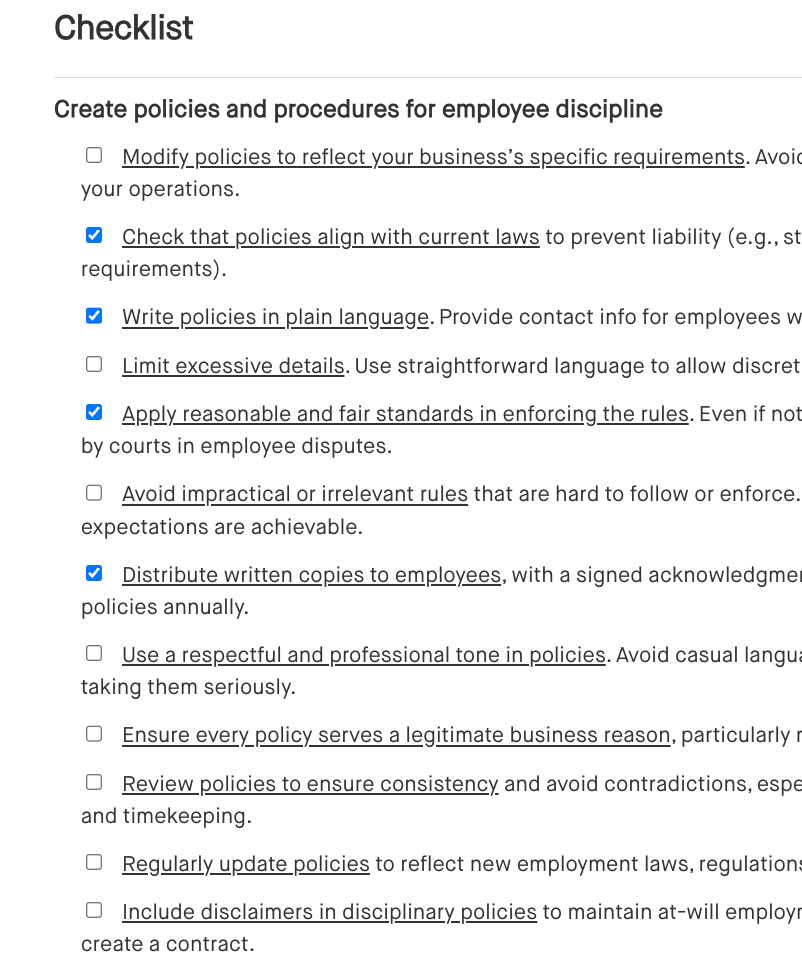
Outlines steps to address employee behavior or performance issues, ensuring fair, consistent, and documented disciplinary actions.
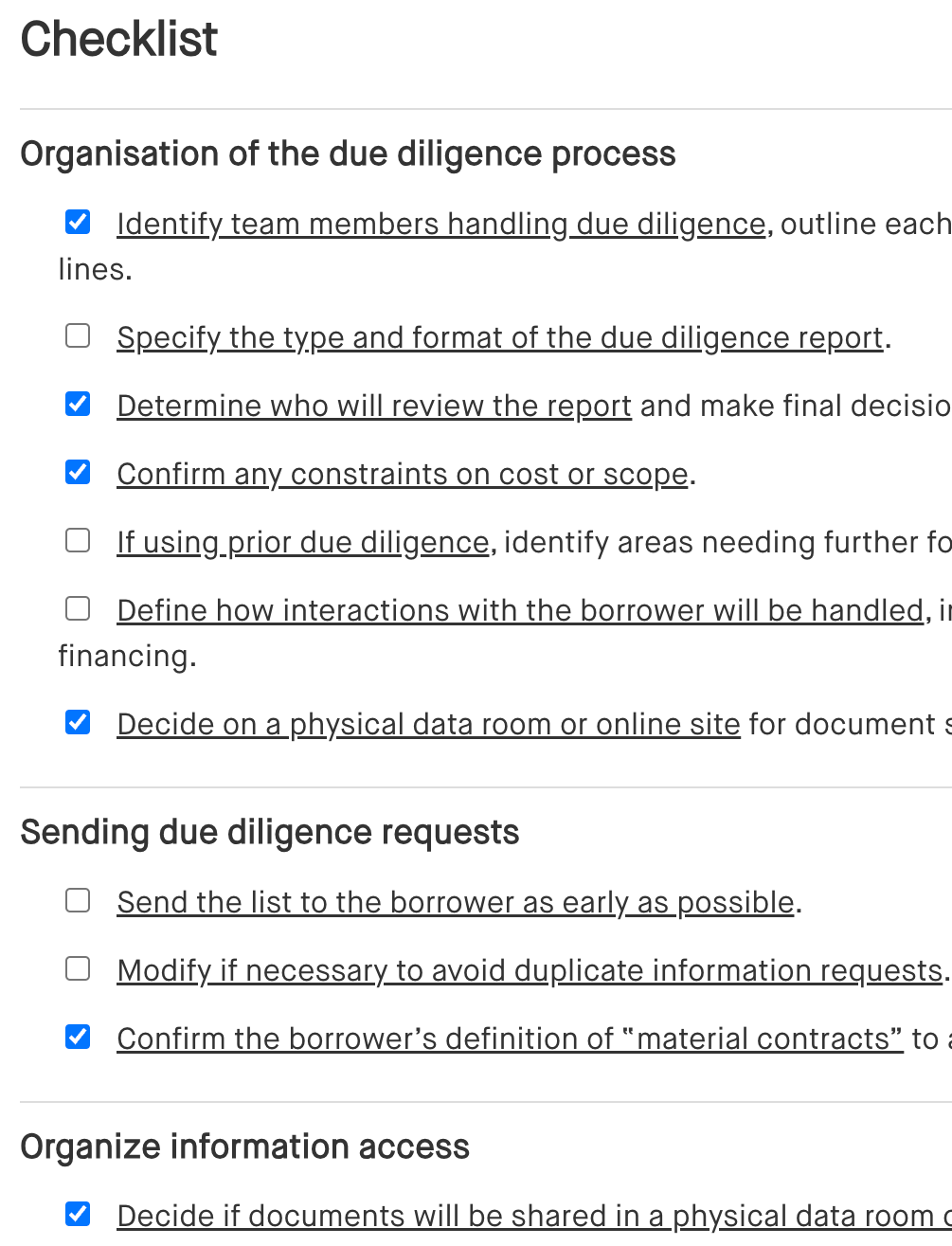
Outlines key areas for lenders to review during legal due diligence, ensuring thorough assessment of the borrower’s legal standing, risks, and obligations.

Outlines the key factors to consider when selecting a new vendor, ensuring a thorough evaluation of their capabilities, reliability, and alignment with your business needs.