Start a new document with this content. Open the editor to build from scratch — paste in what you need and keep writing.
AI vendor due diligence checklist
This AI vendor due diligence checklist is designed to guide you through evaluating potential AI vendors, ensuring their AI tools align with your organization’s legal, compliance, and operational requirements. Whether you're assessing AI for internal processes, vendor risk management, customer-facing applications, or regulatory compliance, this checklist covers all the essential steps, from understanding the AI tool and its data to assessing vendor reliability and key legal considerations.
By following this AI vendor due diligence checklist, you can make well-informed decisions, mitigate risks, and ensure a smooth vendor selection process.
How to use this AI vendor due diligence checklist
To get the most value from this AI vendor due diligence checklist, follow these steps:
- Understand the scope: Determine whether the AI tool will be used internally (e.g., for analytics, HR, or operations) or for external-facing services (e.g., customer interactions or product integration). This distinction will guide how you assess the AI tool and vendor.
- Collect key information: Request important documents from the AI vendor, such as product specifications, data privacy policies, cybersecurity certifications, and compliance records. Additionally, consult with your internal teams—especially legal, compliance, and IT— to ensure you have a full understanding of what’s required.
- Methodically work through the checklist: Use this checklist to systematically review all areas, focusing on important factors like data handling, intellectual property rights, and vendor security practices. Ensuring that no step is missed is critical to mitigating risks and maintaining legal compliance.
- Record your findings: As you go through the checklist, document all relevant information from the vendor. Keeping a detailed record will be essential for making informed decisions, negotiating contract terms, and ensuring you meet your organization's compliance and operational goals.
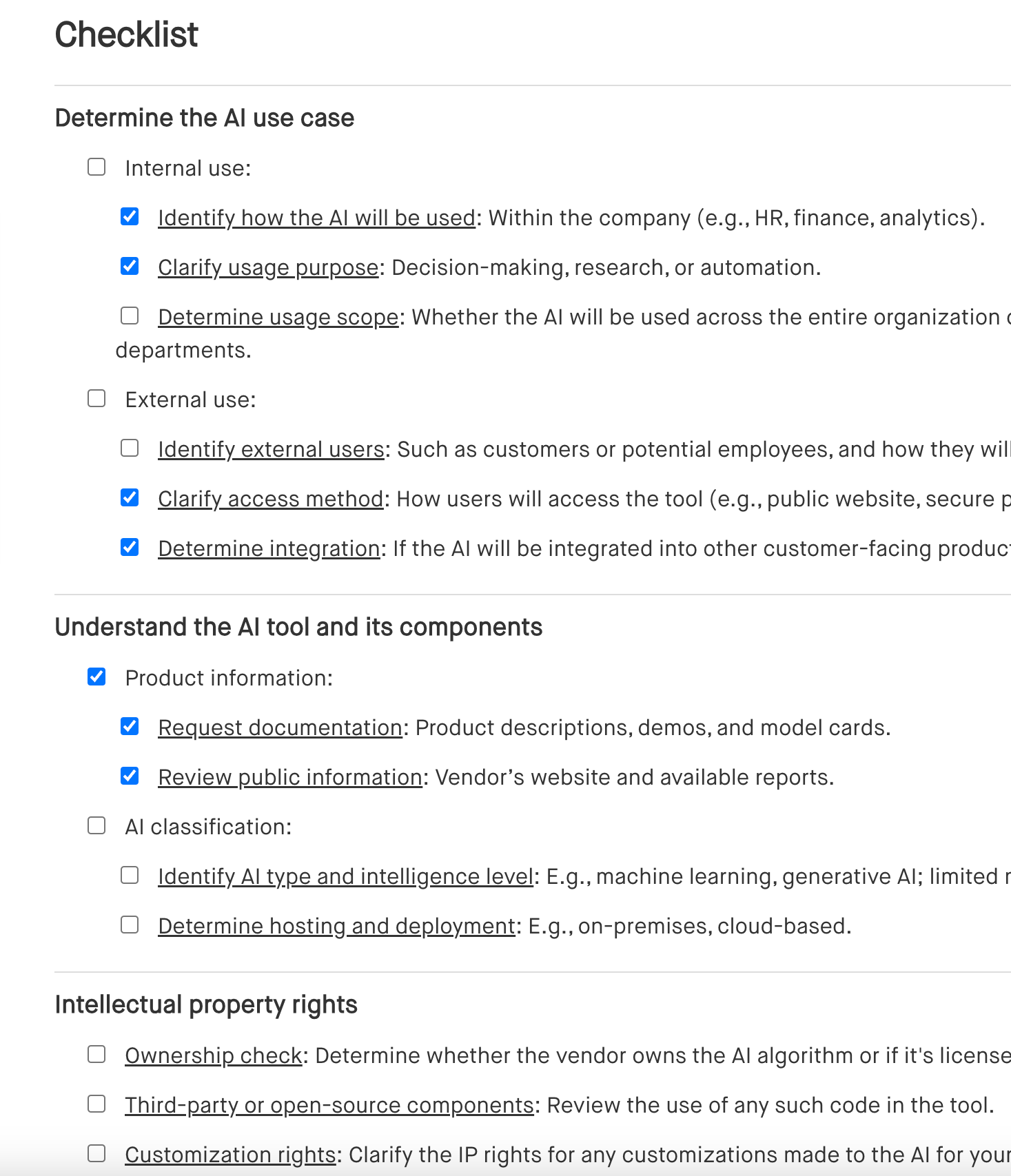
Checklist
Determine the AI use case
[ ] Internal use:
[ ] Identify how the AI will be used: Within the company (e.g., HR, finance, analytics).
[ ] Clarify usage purpose: Decision-making, research, or automation.
[ ] Determine usage scope: Whether the AI will be used across the entire organization or in specific departments.
[ ] External use:
[ ] Identify external users: Such as customers or potential employees, and how they will interact with the AI tool.
[ ] Clarify access method: How users will access the tool (e.g., public website, secure portal).
[ ] Determine integration: If the AI will be integrated into other customer-facing products or services.
Understand the AI tool and its components
[ ] Product information:
[ ] Request documentation: Product descriptions, demos, and model cards.
[ ] Review public information: Vendor’s website and available reports.
[ ] AI classification:
[ ] Identify AI type and intelligence level: E.g., machine learning, generative AI; limited memory, reactive.
[ ] Determine hosting and deployment: E.g., on-premises, cloud-based.
Intellectual property rights
[ ] Ownership check: Determine whether the vendor owns the AI algorithm or if it's licensed from third parties.
[ ] Third-party or open-source components: Review the use of any such code in the tool.
[ ] Customization rights: Clarify the IP rights for any customizations made to the AI for your organization.
Data handling
[ ] Training data:
[ ] Review data types: E.g., personal data, images.
[ ] Check data collection methods: E.g., vendor-owned datasets, web scraping.
[ ] Confirm usage rights and assess diversity: Ensure permission and avoid bias.
[ ] Input data:
[ ] Determine data source: Who provides the data (e.g., internal staff, customers).
[ ] Review processing and storage: Ensure compliance with internal policies.
[ ] Output data:
[ ] Understand data type: E.g., recommendations, predictions.
[ ] Review quality monitoring: Vendor’s process for accuracy and output quality.
Data privacy and cybersecurity
[ ] Request certifications: E.g., ISO, SOC.
[ ] Review security policies: Ensure proper data handling and privacy practices.
[ ] Confirm legal compliance: AI tool complies with data privacy laws like GDPR or CCPA.
Vendor due diligence
[ ] Verify legal status: Confirm vendor’s business registration and creditworthiness.
[ ] Check insurance and financial health: Review coverage and stability.
[ ] Review compliance concerns: Check for regulatory issues, litigation, or AI-specific risks.
Contractual considerations
[ ] Review contract terms: Including IP rights, liability limits, indemnification.
[ ] Verify licensing: Ensure open-source or third-party tools are properly licensed.
[ ] Define user rights: Including usage limits and data handling policies.
Benefits of using an AI vendor due diligence checklist
This AI vendor due diligence checklist is a powerful tool for businesses to make smarter decisions when evaluating AI vendors. Here’s how it helps:
- Save effort: This checklist provides a clear, step-by-step guide to streamline the AI vendor evaluation process. It helps you avoid getting bogged down in unnecessary details while ensuring that all key areas are covered.
- Minimize risk: By following the checklist, you can identify potential red flags such as data privacy vulnerabilities, legal risks, or vendor instability. This proactive approach helps you mitigate risks before they become problems.
- Standardize evaluations: The checklist ensures that each AI vendor is assessed against the same criteria, making it easier to compare vendors and make informed decisions. It simplifies the process, whether you're evaluating internal tools or external-facing AI applications.
- Ensure compliance: This AI checklist helps you navigate complex privacy laws, cybersecurity requirements, and industry regulations. By ensuring compliance, you protect your business from potential legal issues.
- Enhance vendor relationships: Using a structured approach to vendor due diligence fosters clearer communication and builds trust. By setting clear expectations from the start, this checklist supports stronger, long-term vendor relationships, reducing misunderstandings and improving collaboration.
Frequently asked questions (FAQs)
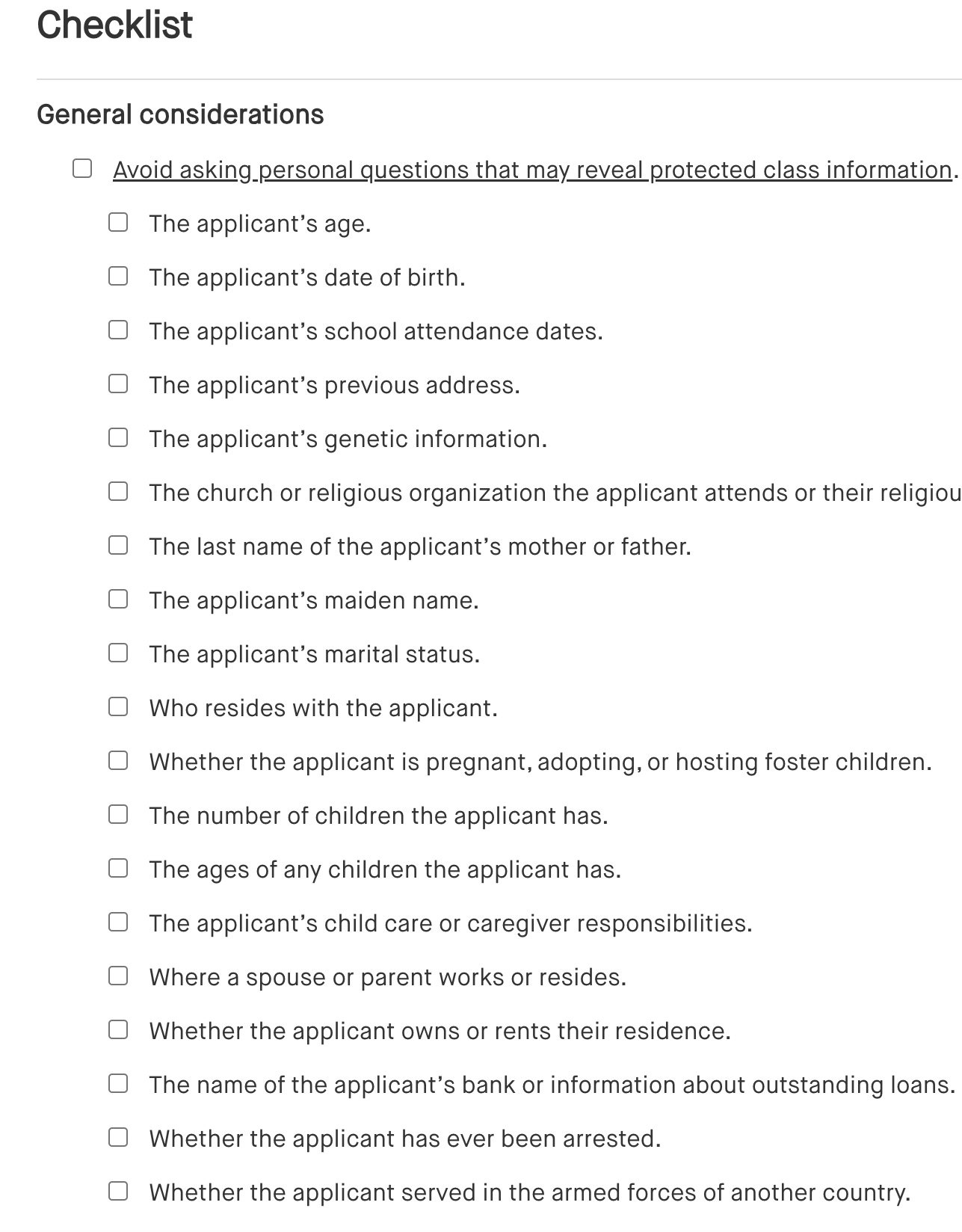
Lists common interview questions to avoid, focusing on those that may unintentionally discriminate based on race, gender, age, or other protected characteristics.
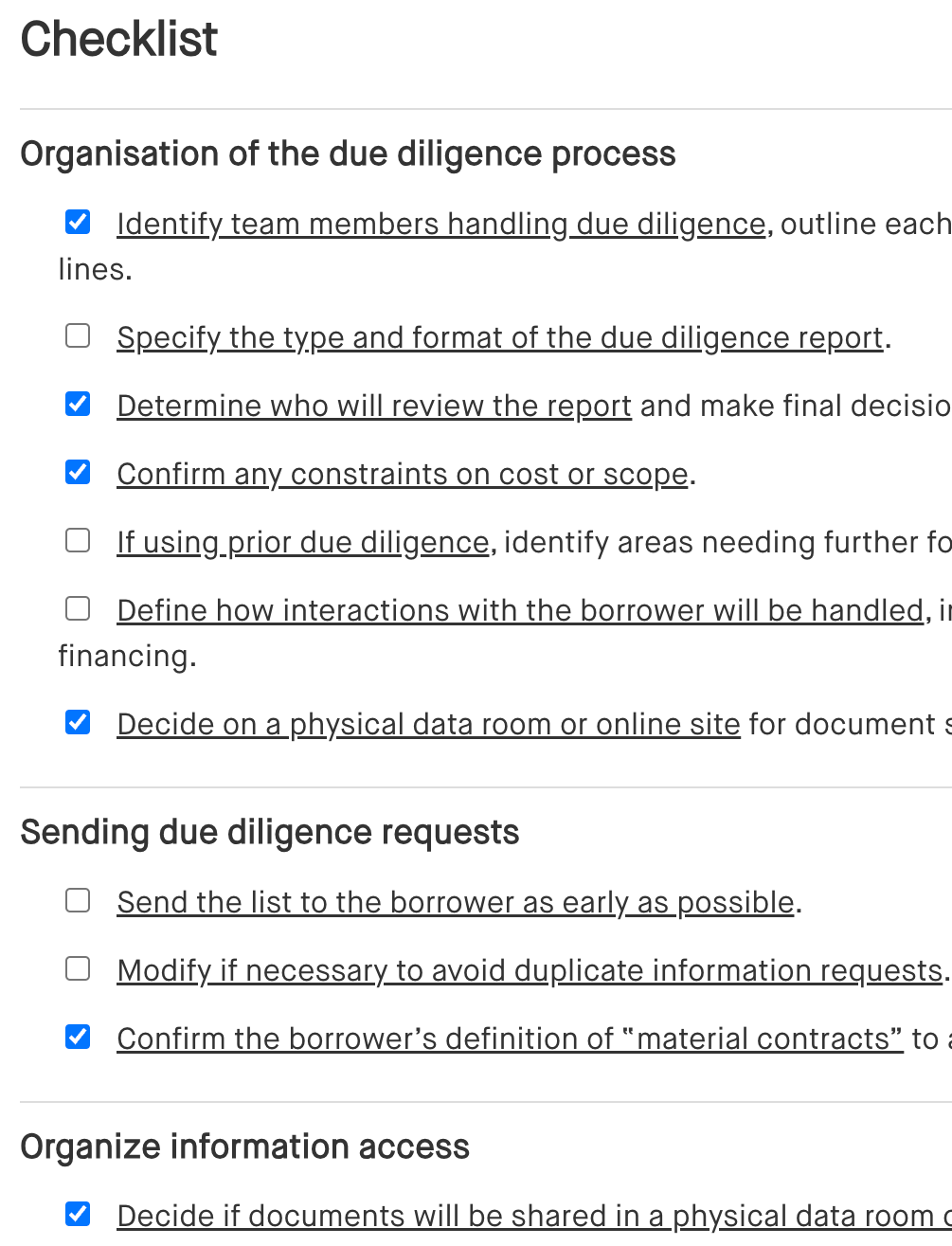
Outlines key areas for lenders to review during legal due diligence, ensuring thorough assessment of the borrower’s legal standing, risks, and obligations.
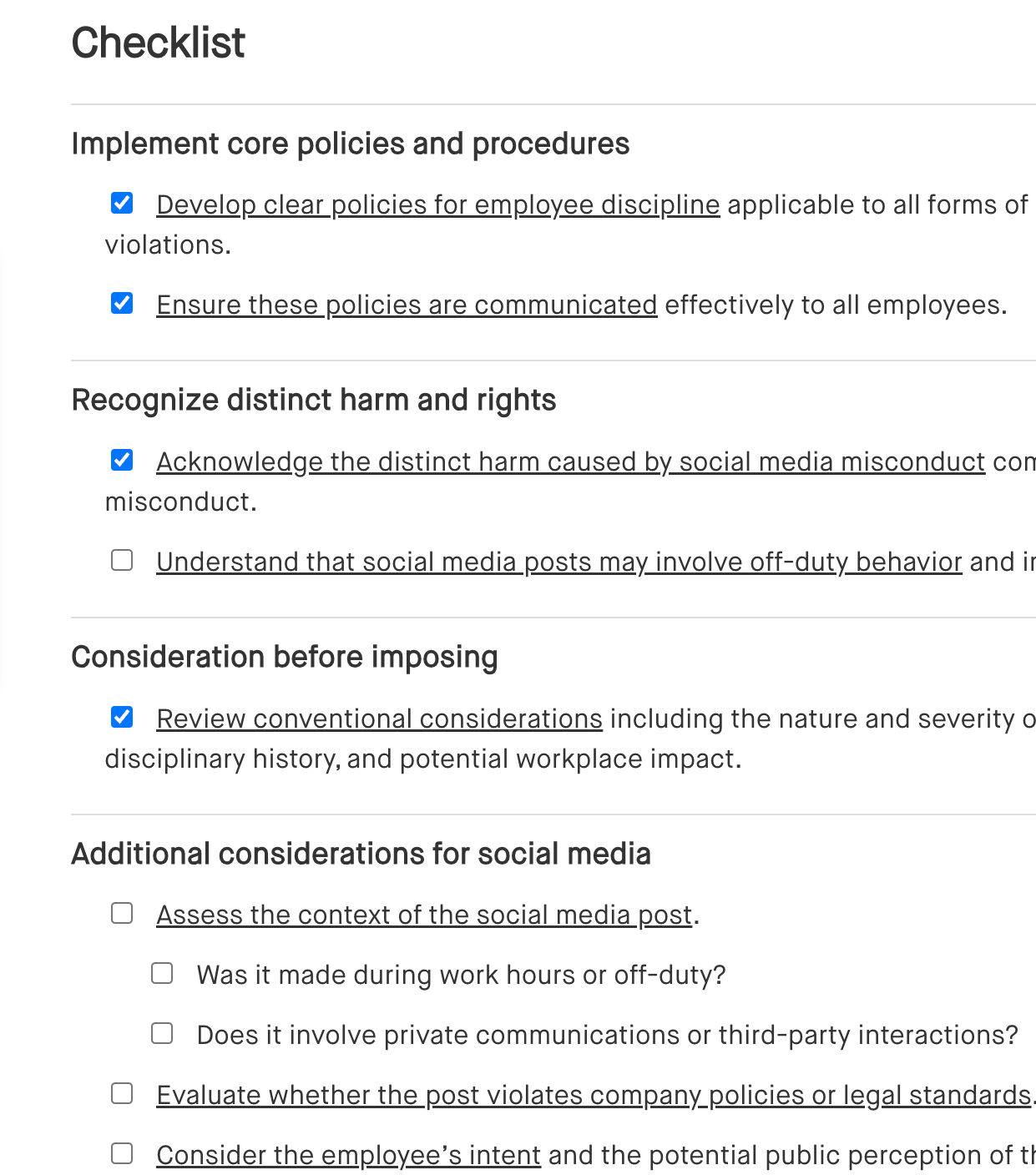
Identifies steps for addressing employee misconduct on social media, including reviewing the content, assessing impact, and determining appropriate disciplinary action.