Start a new document with this content. Open the editor to build from scratch — paste in what you need and keep writing.
Contract dispute checklist
Disputes can arise in any business relationship, but addressing them quickly and effectively is key to minimizing risk and protecting your company. This contract dispute checklist helps guide you through the essential steps needed to manage a dispute, from identifying issues early to resolving or escalating the matter if needed. Whether you're dealing with a minor contract disagreement or a major breach, this checklist will help you navigate each step carefully and ensure your business is prepared for any potential legal or financial impact.
Following this contract dispute checklist can help you maintain control, safeguard important relationships, and avoid common pitfalls that could worsen the situation. By being proactive, you can work toward resolving disputes efficiently while protecting your company’s interests.
How to use this contract dispute checklist
Here’s how to make the most of this checklist:
- Start early: The best time to manage a dispute is before it escalates. Train staff to spot issues as they arise and act quickly to flag potential disputes to key stakeholders and legal advisors.
- Work with legal advisors: Disputes can have legal consequences, so it’s essential to involve your legal team from the beginning. Their expertise will guide you through each step, from reviewing the contract to negotiating with the other party.
- Adapt the checklist to the situation: Every dispute is different, so modify the steps in this checklist based on the nature and severity of the issue. Focus on actions that address the specific risks your business faces, and tailor the strategy to your company’s commercial priorities.
- Keep communication clear and controlled: Managing internal and external communications is critical. This checklist provides guidance on how to handle messaging with your contract counterpart and key stakeholders, ensuring your company’s position is protected throughout the process.
- Use it as a live document: Disputes can evolve quickly. Use this checklist as a dynamic tool, updating it as the situation changes and involving relevant departments like finance, legal, and PR to address any emerging risks.
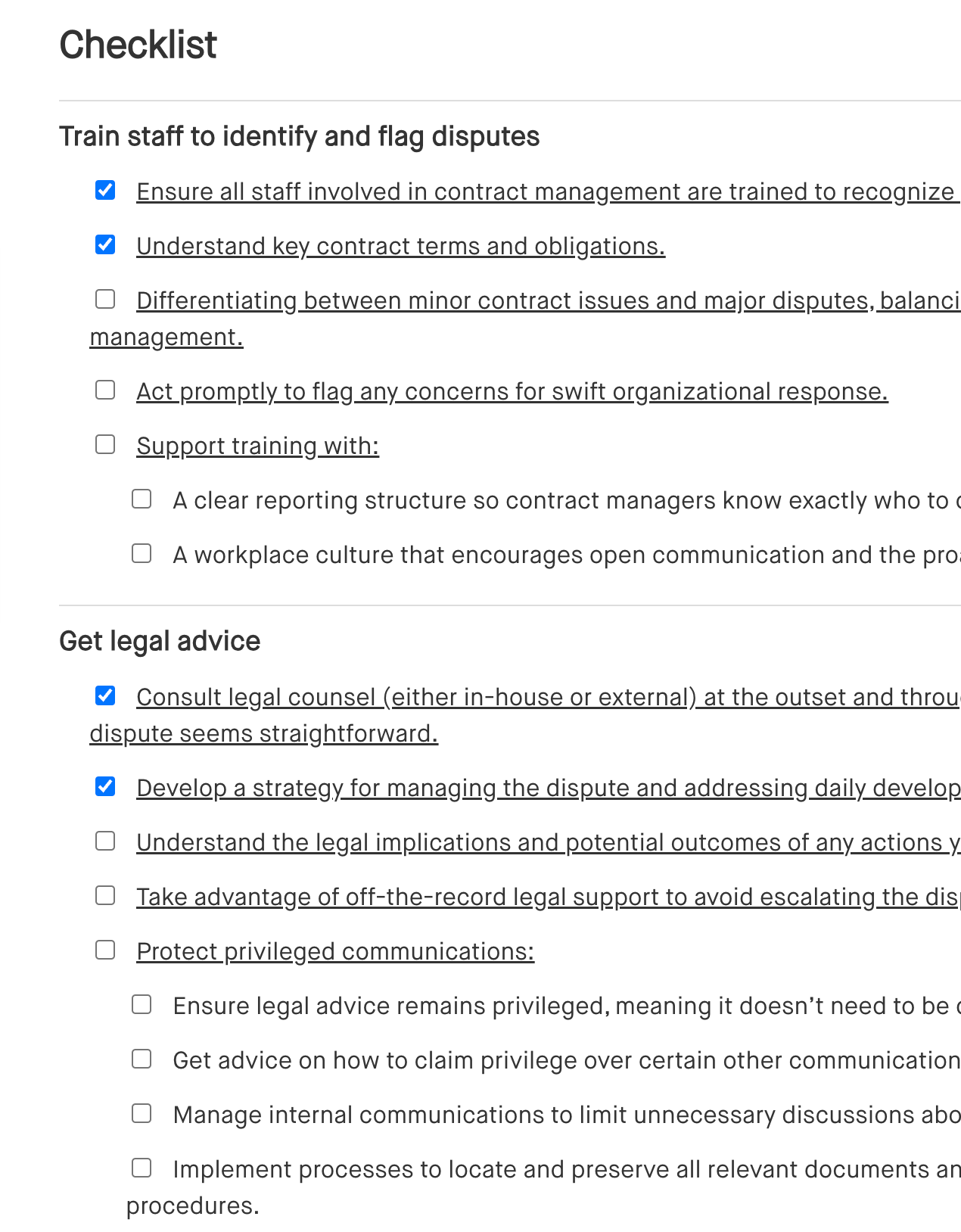
Checklist
Train staff to identify and flag disputes
[ ] Ensure all staff involved in contract management are trained to recognize potential or actual disputes.
[ ] Understand key contract terms and obligations.
[ ] Differentiating between minor contract issues and major disputes, balancing commercial needs with risk management.
[ ] Act promptly to flag any concerns for swift organizational response.
[ ] Support training with:
[ ] A clear reporting structure so contract managers know exactly who to contact for assistance.
[ ] A workplace culture that encourages open communication and the proactive reporting of concerns.
Get legal advice
[ ] Consult legal counsel (either in-house or external) at the outset and throughout the dispute process, even if the dispute seems straightforward.
[ ] Develop a strategy for managing the dispute and addressing daily developments.
[ ] Understand the legal implications and potential outcomes of any actions your organization may take.
[ ] Take advantage of off-the-record legal support to avoid escalating the dispute unnecessarily.
[ ] Protect privileged communications:
[ ] Ensure legal advice remains privileged, meaning it doesn’t need to be disclosed in future legal proceedings.
[ ] Get advice on how to claim privilege over certain other communications.
[ ] Manage internal communications to limit unnecessary discussions about the dispute.
[ ] Implement processes to locate and preserve all relevant documents and suspend any document destruction procedures.
Review the contract
[ ] Examine the contract and related materials with legal advisors to assess the grounds for the dispute and your organization’s position.
[ ] Determine if the contract’s terms are clear or if it has been modified.
[ ] Identify if a breach of contract has occurred.
[ ] Review available remedies under the contract.
[ ] Analyze your organization's best arguments and its strategic goals for resolving the dispute.
[ ] Check if the contract outlines any specific dispute resolution procedures:
[ ] Determine if there’s a process for escalation or alternative dispute resolution (ADR) that must be followed.
[ ] Verify time limits for taking legal action, such as deadlines for filing a claim or initiating arbitration.
Don’t do or say anything hasty
[ ] Avoid making any hasty decisions without consulting legal advisors, as they may have serious unintended consequences:
[ ] Do not suggest terminating the contract without adequate grounds or the proper process.
[ ] Refrain from alleging a breach or frustration of the contract without legal guidance.
[ ] Don’t stop fulfilling your contractual obligations (e.g., halting payments or services) without careful consideration, as this could be seen as wrongful termination or give the other party a right to terminate and claim damages.
[ ] Protect your right to terminate:
[ ] Avoid actions that might waive your right to terminate, such as indicating an intention to continue the contract after a breach or delaying your response.
[ ] Ensure termination rights are applied consistently.
[ ] Act quickly to prevent mistakes:
[ ] Communicate the risks to all staff involved in the contract.
[ ] Make sure they avoid taking actions or making statements (including emails or oral discussions) that could harm the organization’s position.
Think about urgent risks
[ ] Assess immediate risks related to the dispute and address them promptly to protect your organization’s position:
[ ] Determine if any urgent steps are required to contain the dispute and minimize its impact.
[ ] Ensure compliance with internal policies and procedures.
[ ] Handle staffing concerns, such as consulting individuals who may be leaving or relocating, and notifying insurers about potential claims.
[ ] Consider actions under the contract:
[ ] Decide if payments should be stopped.
[ ] Determine if the supply of goods or services should be paused.
[ ] Respond to any breaches by the counterparty in line with the contract’s process to safeguard termination rights.
[ ] Always seek legal advice before taking any of the above steps to ensure you have legal grounds for your actions.
[ ] Evaluate the broader impact of the dispute:
[ ] Consider the practical implications, including worst-case scenarios.
[ ] Identify contingency plans, such as arranging alternative suppliers or addressing disruptions that may affect other contracts.
[ ] In extreme cases, discuss the possibility of obtaining an injunction with legal counsel.
Develop a strategy to manage and resolve the dispute
[ ] Work with legal advisors to create a strategy that supports your organization’s preferred outcome:
[ ] Explore options such as contract variation, mediation, termination threats, or renegotiation of contract terms.
[ ] Analyze your options:
[ ] Assess the legal grounds and risks of each approach.
[ ] Weigh the best and worst possible outcomes.
[ ] Evaluate the commercial impact:
[ ] Evaluate how each approach affects the business beyond the immediate dispute.
[ ] Even if termination is justified, maintaining the relationship may be a better commercial decision (e.g., securing compensation, renegotiating terms, or avoiding procurement costs).
[ ] Keep the strategy flexible:
[ ] Regularly review and adjust the approach as the dispute evolves over time.
Manage communications
[ ] Internal communications:
[ ] Ensure communications with legal advisors are protected by privilege.
[ ] Limit internal communications to avoid creating evidence that could be disclosed in future legal proceedings.
[ ] Instruct staff involved in the dispute to avoid unnecessary written exchanges and follow clear guidelines on what to say.
[ ] External communications:
[ ] Plan communication strategies with the other party, depending on your desired outcome and legal advice.
[ ] Adopt a conciliatory approach if aiming to deter litigation or an aggressive stance in case of serious breach.
[ ] Consider having legal advisors take over direct communications if the dispute becomes formal.
Brief relevant parties
[ ] Contract management team:
[ ] Provide ongoing guidance, especially if they are still in contact with the other party.
[ ] Senior management or board:
[ ] Ensure they are informed, particularly for major disputes.
[ ] HR department:
[ ] Involve them if there are human resources implications.
[ ] IT department:
[ ] Ensure electronic data is preserved and managed.
[ ] PR department:
[ ] Prepare for potential public interest or media inquiries.
[ ] Finance team:
[ ] Inform them if the dispute impacts financial transactions.
[ ] Insurers:
[ ] Notify if needed under your insurance policies.
Reflect on lessons learned
[ ] Record the resolution:
[ ] Ensure any settlement or resolution is formally documented with legal guidance.
[ ] Follow any necessary formalities to finalize the dispute resolution process.
[ ] Analyze and improve:
[ ] Review what went well and what could have been handled better during the dispute.
[ ] Identify areas for improvement, such as additional staff training, contract review processes, or communication practices.
[ ] Update relevant parties:
[ ] Inform senior management and other key stakeholders of the dispute’s resolution and any lessons learned.
If the dispute remains unsolved and legal action is being considered:
[ ] Consult with legal advisors:
[ ] Assess the costs, risks, and timeframes of pursuing legal proceedings.
[ ] Evaluate the cost-benefit of litigation to determine whether legal action is the best course of action.
[ ] Confirm if the contract requires any preliminary steps like mediation or arbitration before formal proceedings.
[ ] Ensure compliance with pre-action protocols, as outlined in the Civil Procedure Rules.
[ ] Check for approaching deadlines (limitation periods) to avoid losing the right to file a legal claim.
Benefits of using a contract dispute checklist
Using a contract dispute checklist ensures a structured approach to managing and resolving disputes, helping your business stay organized and protect its interests. Here’s how it helps:
- Minimize risk: By following a clear process, you can avoid common mistakes that may escalate the dispute, such as failing to follow proper termination procedures or overlooking critical contract terms. This checklist guides you through every step, ensuring you take the right actions at the right time.
- Improve resolution outcomes: A well-organized response increases the likelihood of resolving the dispute efficiently. The checklist prompts you to consider all available options, from renegotiation to formal dispute resolution, so you can pursue the most favorable outcome for your business.
- Protect legal standing: Involving legal advisors early, managing communications carefully, and documenting everything helps protect your company in the event of litigation. The checklist ensures that every legal requirement is addressed, reducing the risk of costly legal missteps.
Frequently asked questions (FAQs)

Outlines steps for addressing a non-compete or non-solicitation violation, including reviewing the agreement, investigating the breach, and determining corrective actions or legal steps.
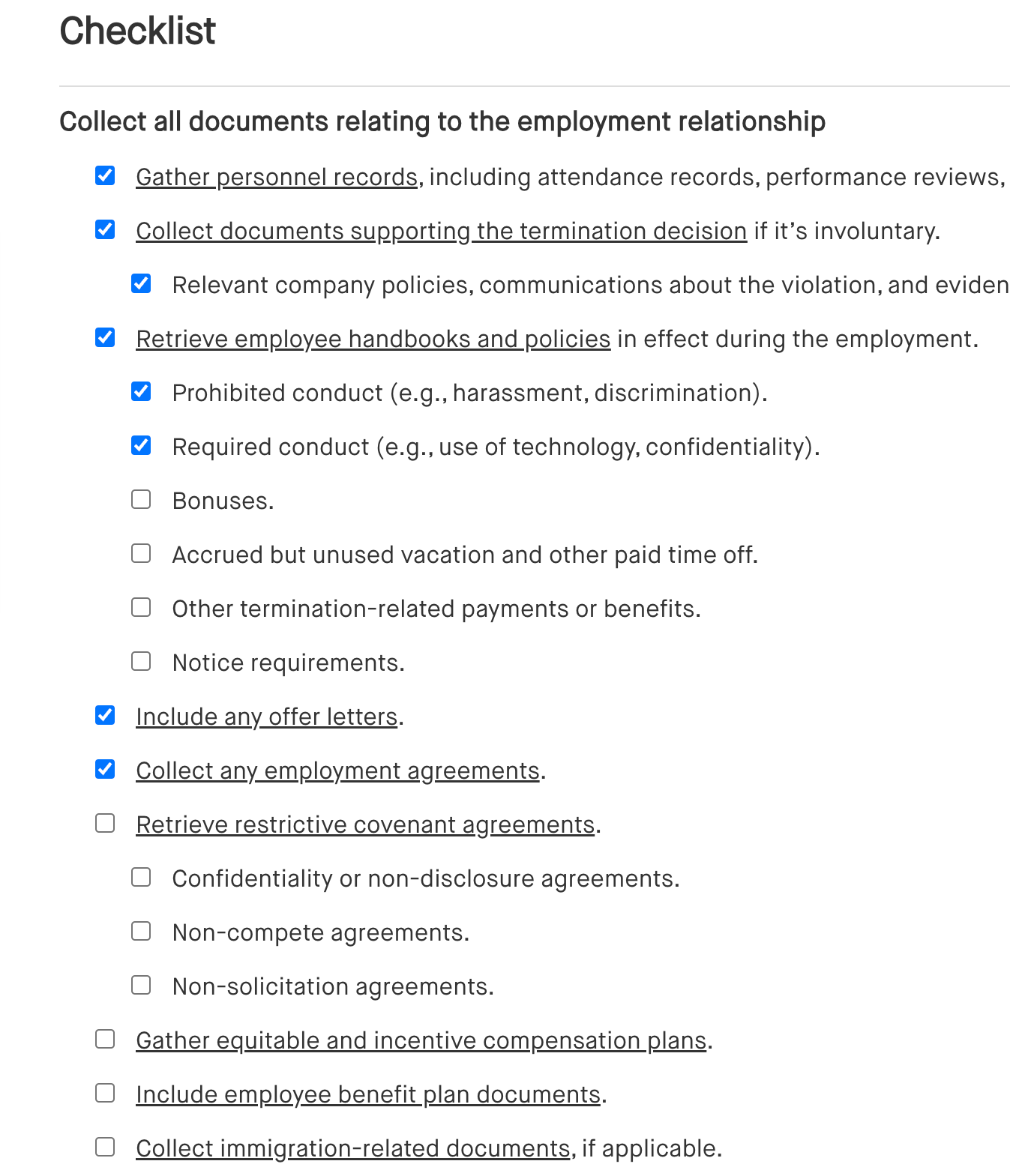
Lists essential steps when handling a departing employee, including exit interviews, return of company property, final paycheck, and updating access permissions.
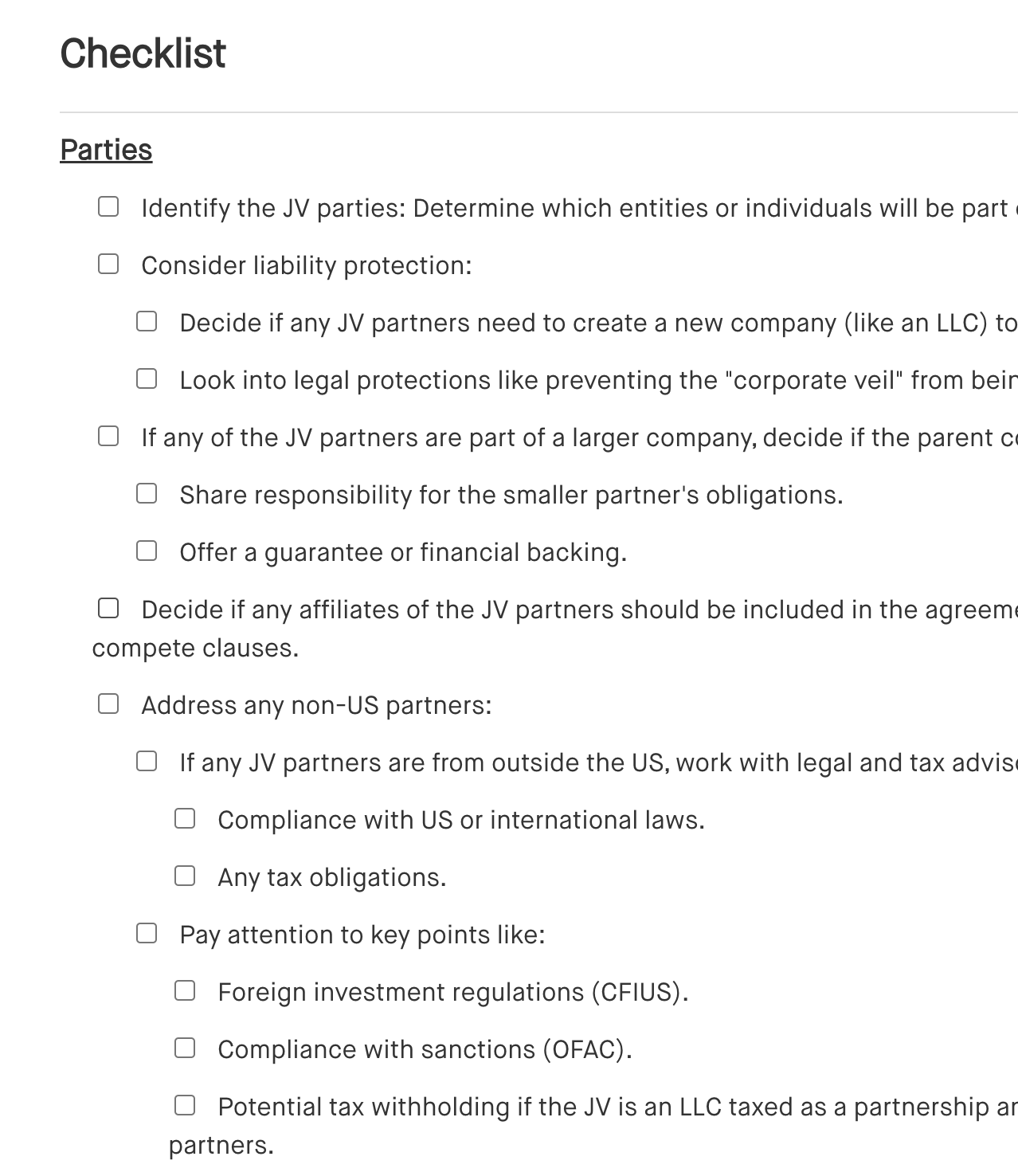
Outlines the steps for forming a joint venture, including defining objectives, selecting partners, drafting agreements, and establishing governance and operational structures.