Start a new document with this content. Open the editor to build from scratch — paste in what you need and keep writing.
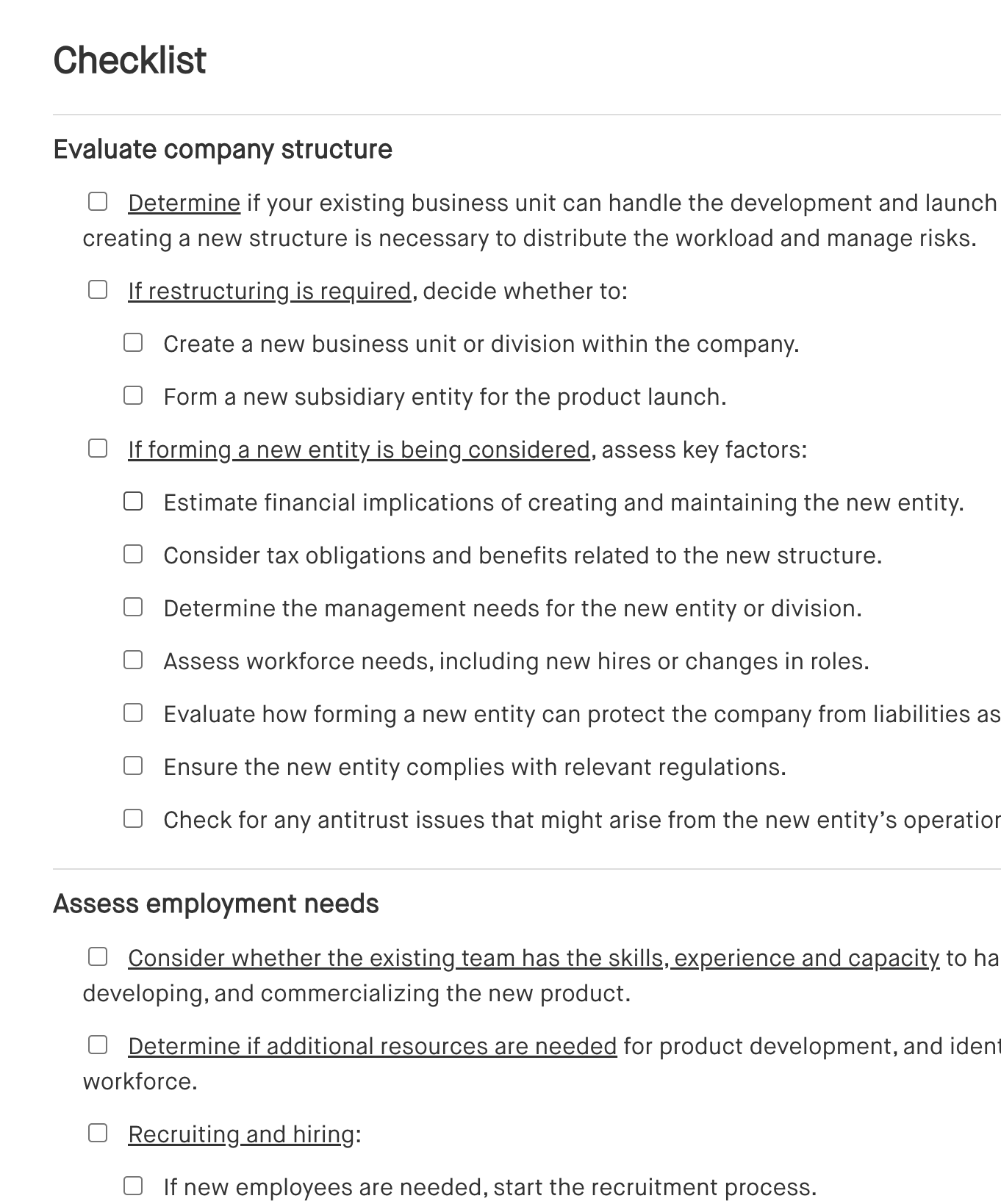
Launching a new product checklist
Launching a new product involves multiple steps, each of which can determine the success of your product in the market. This new product launch checklist is designed to guide you through each stage of the process.
Whether you're developing a consumer product or introducing a new service, this new product introduction checklist covers everything from evaluating your company structure to ensuring regulatory compliance. By following this new product launch checklist template, you can mitigate risks, streamline workflows, and ensure a smooth market entry for your product.
How to use this new product checklist
This new product checklist is designed to guide your organization through all the essential steps when launching a new consumer product. It covers everything from evaluating your company’s structure and employment needs to product development, intellectual property, marketing, and risk management. To get the most value out of this new product launch checklist, follow these steps:
- Tailor your product: Modify the new product introduction checklist to fit the specific needs of your new product. Whether you’re in a highly regulated industry (e.g., food, cosmetics) or launching a general consumer product, ensure the new product launch checklist template addresses your unique requirements.
- Collaborate with teams: Involve your legal, marketing, and product development teams. Cross-functional collaboration ensures every area of the new product launch is thoroughly managed and aligns with your company’s goals.
- Work methodically: Use the new product launch checklist template to work through each section, ensuring that critical aspects like product labeling compliance, intellectual property protection, and marketing strategies are addressed in a step-by-step manner.
Checklist
Evaluate company structure
[ ] Determine if your existing business unit can handle the development and launch of the new product, or if creating a new structure is necessary to distribute the workload and manage risks.
[ ] If restructuring is required, decide whether to:
[ ] Create a new business unit or division within the company.
[ ] Form a new subsidiary entity for the product launch.
[ ] If forming a new entity is being considered, assess key factors:
[ ] Estimate financial implications of creating and maintaining the new entity.
[ ] Consider tax obligations and benefits related to the new structure.
[ ] Determine the management needs for the new entity or division.
[ ] Assess workforce needs, including new hires or changes in roles.
[ ] Evaluate how forming a new entity can protect the company from liabilities associated with the new product.
[ ] Ensure the new entity complies with relevant regulations.
[ ] Check for any antitrust issues that might arise from the new entity’s operations.
Assess employment needs
[ ] Consider whether the existing team has the skills, experience and capacity to handle the demands of designing, developing, and commercializing the new product.
[ ] Determine if additional resources are needed for product development, and identify any skill gaps in the current workforce.
[ ] Recruiting and hiring:
[ ] If new employees are needed, start the recruitment process.
[ ] Use structured offer letters and employment agreements for both non-executive and executive roles.
[ ] Consider independent contractors:
[ ] If hiring full-time employees isn’t ideal, consider contracting independent professionals to assist with design, development, and commercialization.
[ ] Draft proper independent contractor agreements.
[ ] Protect the company's competitive advantage by implementing non-compete and non-solicitation agreements, as allowed by state law, for both employees and contractors.
[ ] Provide training to ensure employees and contractors understand best practices for protecting trade secrets and confidential information.
[ ] Require employees and contractors involved in the new product to sign confidentiality agreements and NDAs to protect sensitive information.
[ ] Implement retention bonus agreements for key employees essential to the product’s success, ensuring their commitment throughout the product launch process.
[ ] Ensure compliance with all necessary employment-related filings, reporting, and insurance obligations, such as workers’ compensation and unemployment insurance.
Set up a corporate advisory board
[ ] Determine the specific talents, expertise, and connections your company requires to support the new product launch. This could include industry experience, legal expertise, marketing insights, or technical knowledge.
[ ] Choose candidates with relevant skill sets that complement your management team and board of directors. Look for advisers who bring unique value that is not already covered within the company.
[ ] Approach selected individuals and discuss their potential role on the advisory board. Clearly outline your expectations and the areas where their advice will be most valuable.
[ ] Ensure each adviser signs a formal board adviser agreement, outlining their roles, responsibilities, and any compensation or equity arrangements.
[ ] Regularly engage with the advisory board to provide input on product development, marketing strategy, legal compliance, or other business areas as needed.
[ ] As the company evolves, reassess whether the advisory board members' expertise aligns with ongoing needs and make changes as necessary.
Consider intellectual property (IP) issues
[ ] Verify that all intellectual property created by employees and independent contractors is owned by the company.
[ ] Have employees and contractors sign agreements confirming company ownership of all work product related to the new product.
[ ] Conduct an intellectual property audit:
[ ] Check for existing patents, trademarks, and copyrights within the company related to the new product.
[ ] Ensure that all internal intellectual property is properly documented and protected.
[ ] Avoid infringement of third-party intellectual property:
[ ] Conduct a thorough search for existing copyrights, trademarks, and trade dress to ensure the new product does not infringe on third-party rights.
[ ] Clear publicity rights for any individuals featured in product packaging or marketing materials.
[ ] Conduct a patent freedom to operate (FTO) study to identify potential patent infringement risks.
[ ] Evaluate identified risks and explore options such as obtaining licenses or modifying the product design to avoid infringement.
[ ] Obtain the necessary licenses for third-party IP, including software, technology, or design elements used in the product.
[ ] Protect the company’s intellectual property:
[ ] File for patents, trademarks, and copyrights for the new product where applicable.
[ ] Ensure trade secrets, such as manufacturing processes, are kept confidential with appropriate non-disclosure agreements.
[ ] Monitor and police infringing conduct:
[ ] After the product is launched, monitor the market for potential infringing activities.
[ ] Take necessary legal action, such as sending cease-and-desist letters, to protect the company’s intellectual property from unauthorized use.
Ensure the company’s ownership of intellectual property rights in the new product
[ ] Ensure all employees and independent contractors sign agreements specifying that the company owns any intellectual property (IP) created during their employment or engagement.
[ ] Confirm that the agreement covers inventions created within the scope of employment or engagement, on company time, using company resources, and related to the company’s business or anticipated research or development.
[ ] Ensure that any copyrightable work product is classified as “work made for hire” under the Copyright Act.
[ ] If the work does not qualify as work made for hire, the agreement should include an assignment clause that transfers IP rights to the company.
[ ] Include provisions that assign all inventions and work product that do not fall under "work made for hire" or state-specific invention assignment laws to the company.
[ ] Require employees and contractors to cooperate in securing IP protection (such as patents, trademarks, etc.) on behalf of the company.
[ ] Use confidentiality agreements to further protect any IP and trade secrets that may arise during the product development process.
Protect the company’s intellectual property rights in the new product
[ ] Obtain US patent protection:
[ ] File for patent protection on key inventions used in or complementary to the new product.
[ ] Start the patent application process before any public disclosure to maximize the scope of protection.
[ ] Obtain federal copyright and trademark registrations:
[ ] Register trademarks for the new product’s name or logo with the US Patent and Trademark Office.
[ ] Register copyrights for original works associated with the new product where applicable.
[ ] Protect trade secrets:
[ ] Maintain confidentiality of any trade secrets related to the product’s development or manufacturing process.
[ ] Limit the disclosure of trade secrets to only essential personnel and ensure they sign nondisclosure agreements (NDAs).
[ ] Assess whether patent protection for certain inventions might compromise the confidentiality of related trade secrets or vice versa.
[ ] Obtain signed NDAs from all third parties, employees, and contractors before sharing any proprietary information about the product.
[ ] Consider international intellectual property protection:
[ ] Evaluate whether the product will be distributed or manufactured outside the US.
[ ] Seek international intellectual property protection if the product will enter global markets, using frameworks like the Madrid Protocol for trademarks or filing patents in key jurisdictions.
Develop the product name
[ ] Engage the internal marketing team to brainstorm and develop the new product’s name.
[ ] If needed, collaborate with external service providers like advertising agencies or branding consultants for additional input and expertise.
[ ] Conduct a trademark search:
[ ] Perform a thorough trademark search to ensure the chosen name doesn’t infringe on any existing trademarks.
[ ] Use trademark clearance tools to check for conflicts with existing brands in relevant markets.
[ ] File for federal trademark registration:
[ ] Once the name is finalized, submit a federal trademark registration application with the US Patent and Trademark Office (USPTO) to protect your brand.
[ ] Ensure the product’s domain names are secured and registered to maintain consistent branding across online platforms.
[ ] Explore purchasing or licensing an existing trademark:
[ ] If internal development is not suitable, consider purchasing or licensing an existing trademark from another company.
Design the product labeling and packaging
[ ] Check patent protection for labeling and packaging designs:
[ ] Determine whether any aspects of the product’s label or packaging, such as unique designs or shapes (e.g., a fragrance bottle), may be eligible for patent protection.
[ ] Review available options for protecting original and ornamental designs through patent filings.
[ ] Clear and protect trade dress:
[ ] Just like with the product’s name, ensure that product labeling and packaging (also known as trade dress) are legally cleared to avoid infringement issues.
[ ] Take steps to protect the product’s trade dress by filing appropriate legal protections.
[ ] Ensure compliance with product labeling laws:
[ ] Check federal and state product labeling regulations to ensure that your labels meet all legal requirements for your specific product category. Common categories include: FTC labeling requirements, FDA food labeling regulations, drug labeling laws, FDA medical device labeling requirements, FDA cosmetic labeling regulations, and alcohol beverage regulations.
Advertising and marketing campaign checklist
[ ] Determine whether the advertising and marketing campaign will be managed in-house or if you’ll work with external specialists.
[ ] If external support is needed, consider whether you’ll engage an agency through a formal agreement, or hire a consultant.
[ ] Choose the most effective advertising and marketing strategies for your new product launch, including:
[ ] Traditional print and media advertising.
[ ] Online and social media advertising.
[ ] Direct marketing, sales promotions, contests and sweepstakes.
[ ] Sponsorship arrangements.
[ ] Website marketing.
[ ] Mobile app marketing.
[ ] Verify that your campaign complies with relevant federal, state, and local regulations to avoid any legal or government action.
Comply with consumer protection laws
[ ] Ensure compliance with key federal consumer protection statutes:
[ ] Consumer Product Safety Act (CPSA): Confirm that your product complies with the safety standards set by the Consumer Product Safety Commission (CPSC), ensuring it poses no unreasonable risk of injury.
[ ] Federal Trade Commission Act (FTC Act): Ensure all marketing and business practices are free from deceptive, unfair, or fraudulent practices, especially those involving interstate commerce.
[ ] Food, Drug, and Cosmetic Act (FDCA): For products in categories regulated by the FDA (such as food, drugs, medical devices, or cosmetics), ensure they meet safety standards and labeling requirements set by the FDA.
[ ] Monitor any specific regulations based on product type:
[ ] Identify whether your product falls under industry-specific regulations beyond general consumer protection laws.
[ ] Maintain up-to-date records and documentation:
[ ] Keep detailed records demonstrating compliance with consumer protection statutes, including test results, certifications, and any relevant correspondence with regulatory bodies.
[ ] Ensure that any required warnings, labels, or disclosures are accurately included with the product.
Reduce product liability risk
[ ] Develop a corporate product safety program:
[ ] Draft a written product safety policy that outlines the company’s commitment to ensuring product safety at every stage of development, production, and distribution.
[ ] Create a product safety committee:
[ ] Establish a cross-functional team responsible for overseeing product safety, conducting safety audits, and ensuring compliance with safety protocols.
[ ] Develop product safety audits:
[ ] Regularly audit product safety practices to identify potential risks and ensure that all safety standards are met throughout the production and distribution process.
[ ] Include insurance covenants in contracts:
[ ] Add insurance clauses to sale of goods contracts, ensuring that suppliers have adequate coverage for product liability, including general liability insurance and product liability insurance.
[ ] Ensure proper product labeling:
[ ] Review product labeling to include necessary warnings, cautions, and usage instructions. Make sure labels comply with applicable federal and state laws, especially for regulated products.
[ ] Limit proper product warranties:
[ ] Draft clear and limited product warranties that specify the scope of your liability, using standard clauses that protect the company from excessive claims.
[ ] Address consumer complaints and warranty claims:
[ ] Establish a formal process to handle consumer complaints, inquiries, and warranty claims efficiently, ensuring timely resolution and reducing potential legal exposure.
[ ] Prepare a product recall and crisis management plan:
[ ] Create a recall plan that includes procedures for identifying, managing, and correcting defective products. Establish a crisis management team to handle communication and public relations in case of a recall.
[ ] Carry appropriate insurance policies to mitigate risk, including:
[ ] Commercial general liability insurance.
[ ] Product liability insurance.
[ ] Umbrella and excess liability insurance.
[ ] Recall insurance for potential product recalls.
[ ] Develop a corrective action plan:
[ ] Have a plan ready to take corrective action on defective products, which may include repairing or replacing faulty items or refunding customers as needed.
Benefits of using a launching a new product checklist
Using a checklist when launching a new product ensures a smooth, well-organized rollout. Here’s why it’s essential.
- Stay on track: A checklist keeps your entire team aligned, helping you follow each step in the launch process without missing important tasks or deadlines.
- Avoid costly mistakes: By having a structured plan, you reduce the risk of overlooking key elements like regulatory approvals, market research, or customer feedback, preventing expensive errors.
- Ensure compliance: The checklist helps ensure all legal and regulatory requirements are met before the product hits the market, safeguarding your business from potential issues.
- Optimize your marketing strategy: With a checklist, you can coordinate all marketing activities—from content creation to campaign launches—maximizing your product’s visibility and impact.
- Streamline communication: A clear plan makes it easier for different departments—like marketing, sales, and product development—to collaborate efficiently and avoid confusion.
- Enhance product quality: By following the checklist, you ensure that product testing, quality control, and final adjustments are completed before launch, improving the customer experience.
Frequently asked questions (FAQs)
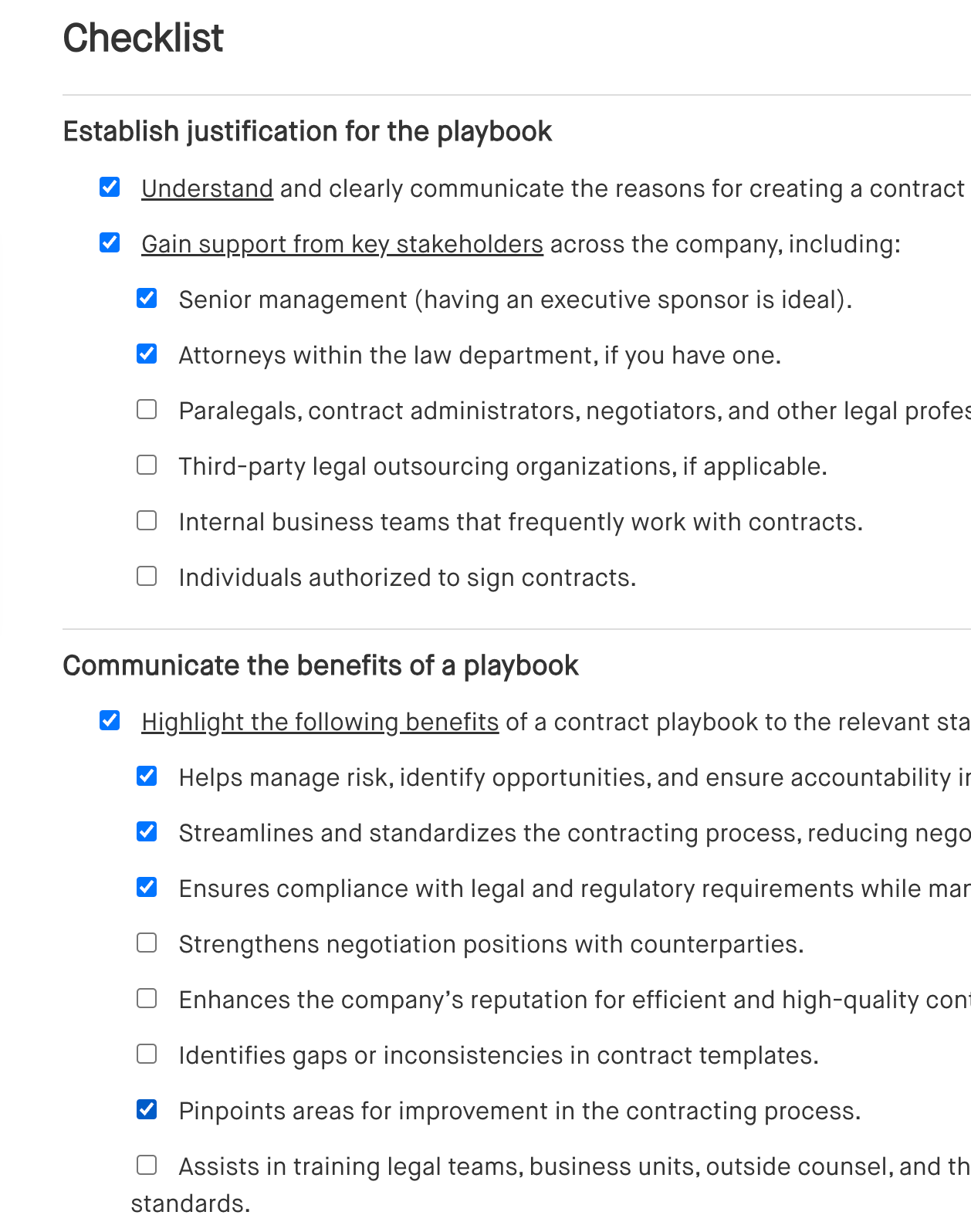
Outlines key elements for creating a contract playbook, including standard clauses, approval workflows, risk management guidelines, and templates for common contract types.
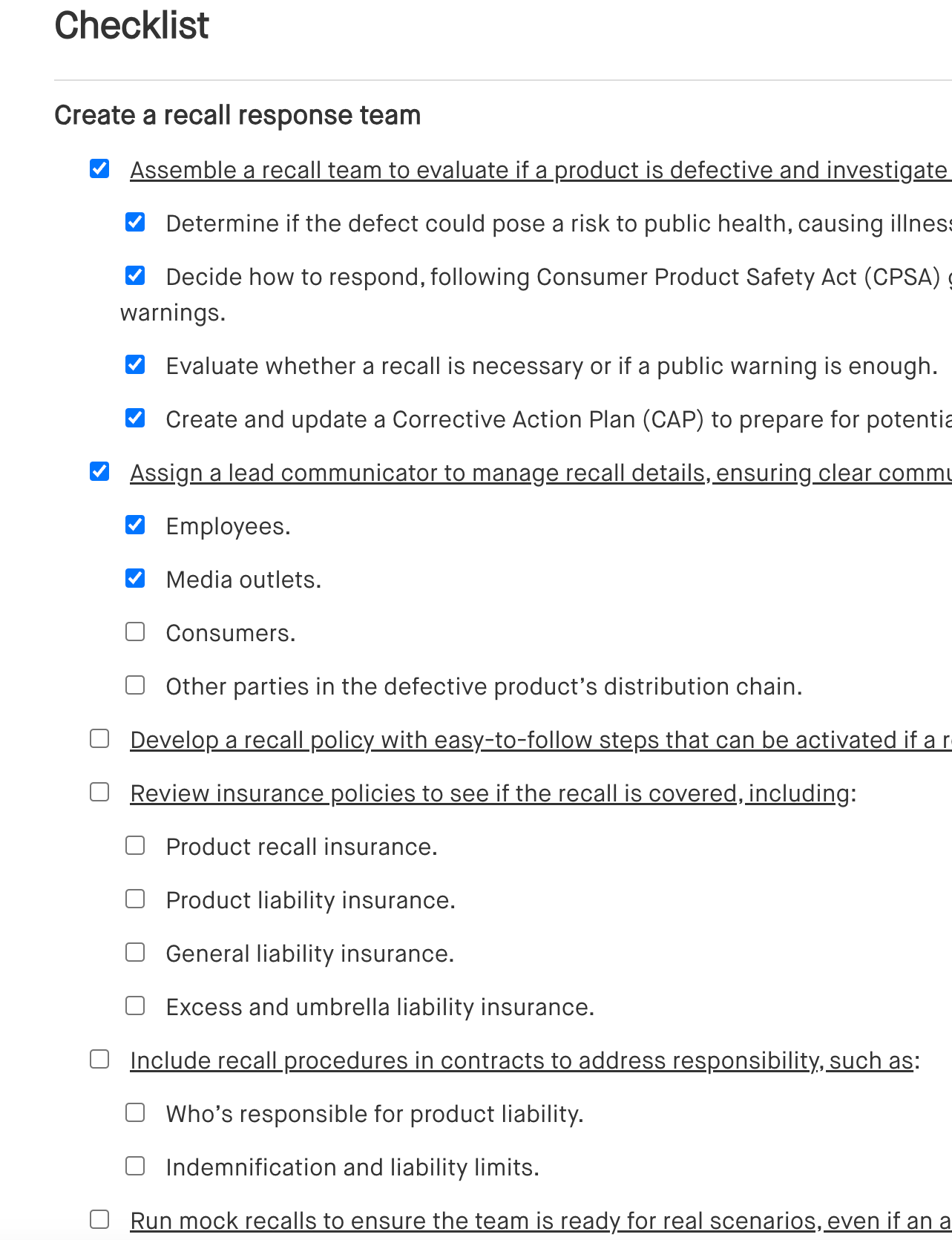
Outlines key steps for managing a consumer product recall, including identifying affected products, notifying customers and regulatory bodies, issuing a return or refund process, and documenting the recall for compliance.
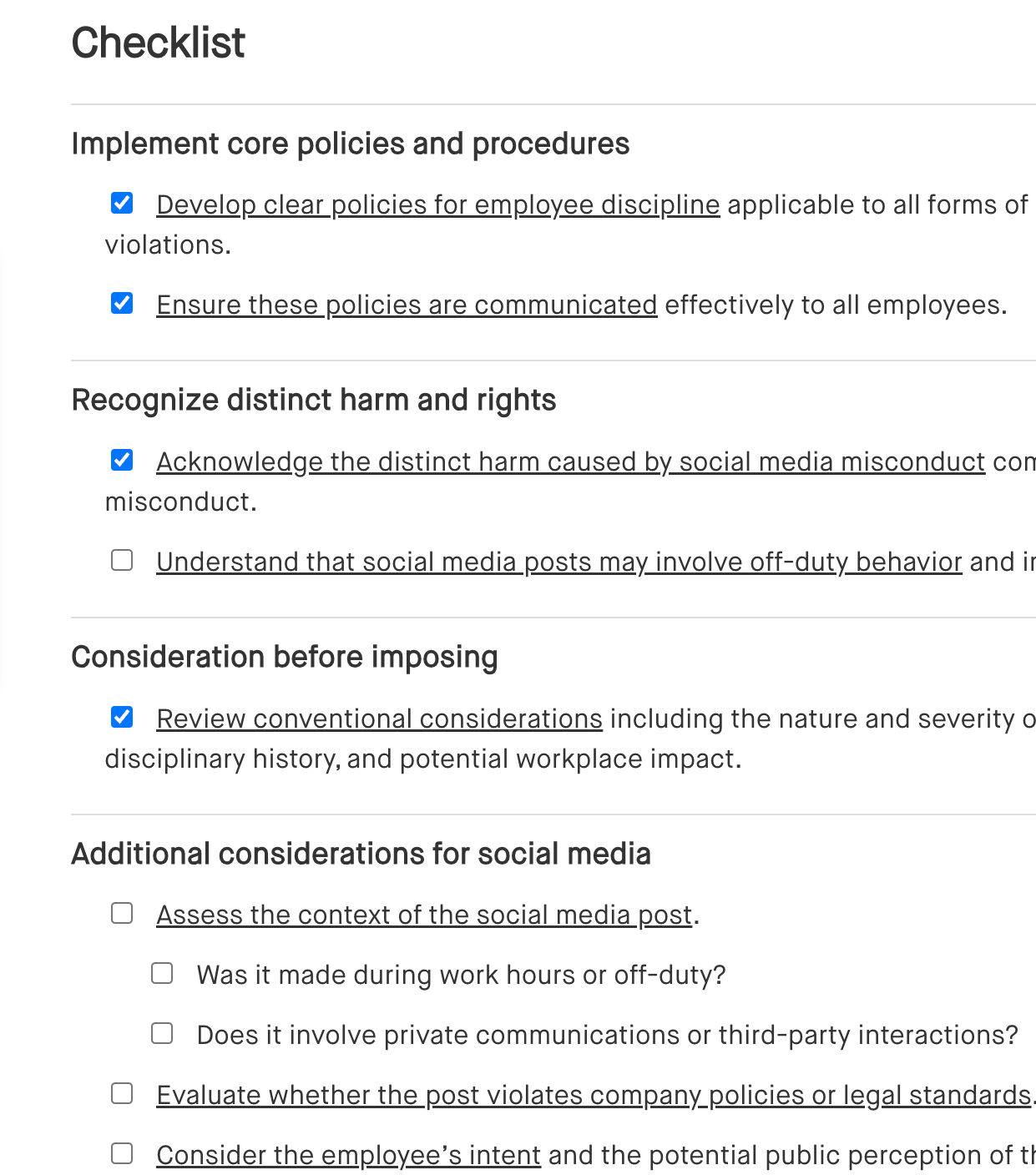
Identifies steps for addressing employee misconduct on social media, including reviewing the content, assessing impact, and determining appropriate disciplinary action.