Start a new document with this content. Open the editor to build from scratch — paste in what you need and keep writing.
Remote employees best practices checklist
Effectively managing remote employees requires attention to key areas like compliance, productivity, and communication. This remote employees best practices checklist simplifies the process, helping businesses maintain smooth operations with a remote workforce. It covers essential tasks like adhering to wage and hour laws, managing performance, and ensuring legal compliance—all while creating a productive and connected work environment.
Whether your team works from home or other offsite locations, this checklist provides a straightforward guide to keeping everything running smoothly.
How to use this remote employees best practices checklist
This remote employees best practices checklist is a step-by-step guide to help you manage and support your remote workforce effectively. Here’s how to use it.
- Start with policy development: Begin by reviewing sections related to creating a clear remote work policy. This ensures that your company has clear guidelines in place for remote work eligibility, expectations, and compliance with legal requirements like wage and hour laws.
- Follow the checklist for legal compliance: Make sure you're meeting all necessary legal requirements by going through sections such as ADA accommodations, immigration laws, and wage and hour regulations. Each step helps you protect both the company and your remote employees.
- Use it to support daily operations: As you manage remote employees, refer to the checklist for areas like time tracking, managing performance, and handling remote work requests. This ensures consistent practices and helps avoid any potential disputes.
- Ensure employee well-being: Review the sections on workers’ compensation and providing a healthy and safe workplace to make sure you're fulfilling your obligations to remote employees' safety and health.
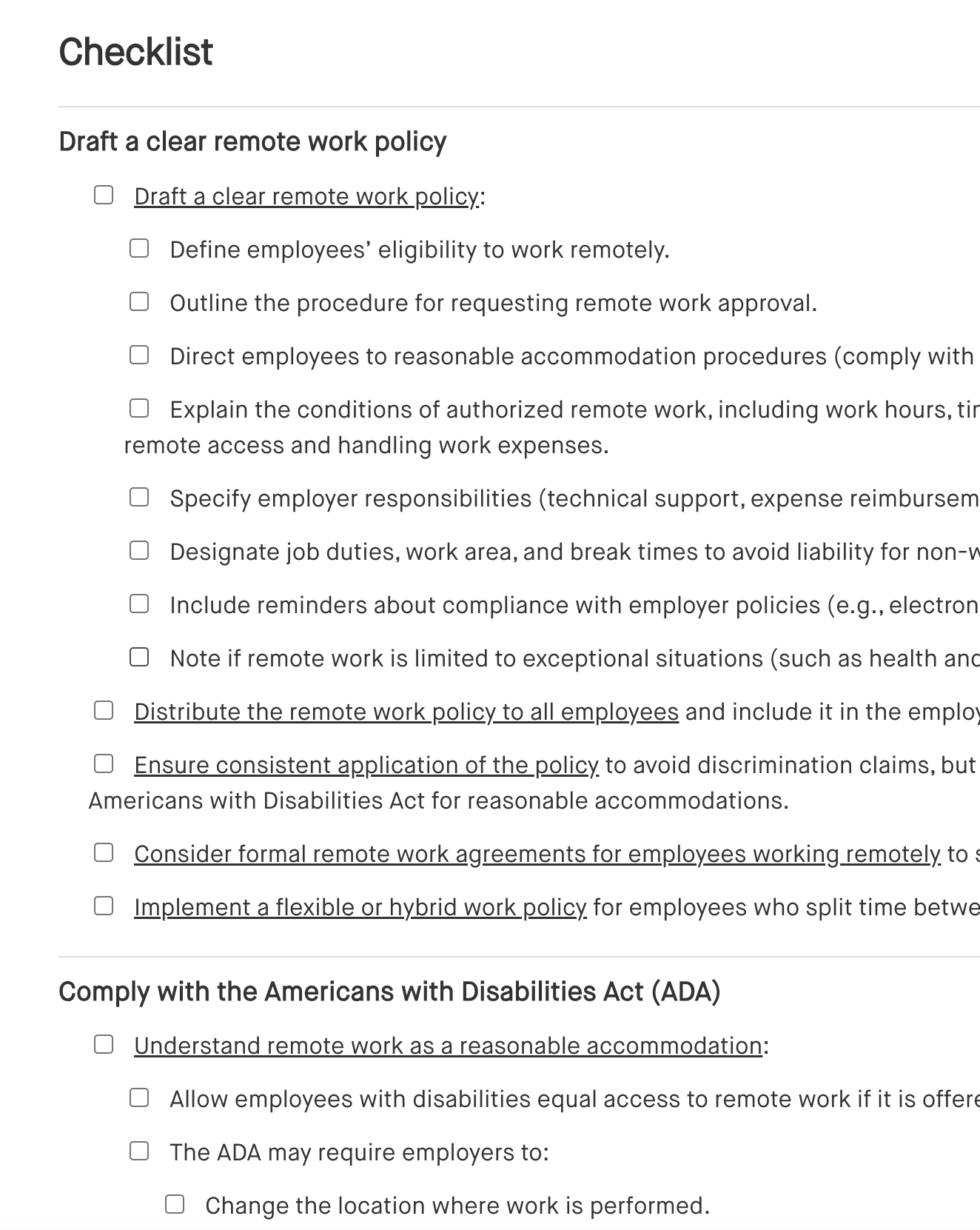
Checklist
Draft a clear remote work policy
[ ] Draft a clear remote work policy:
[ ] Define employees’ eligibility to work remotely.
[ ] Outline the procedure for requesting remote work approval.
[ ] Direct employees to reasonable accommodation procedures (comply with Americans with Disabilities Act).
[ ] Explain the conditions of authorized remote work, including work hours, timekeeping, accessibility, secure remote access and handling work expenses.
[ ] Specify employer responsibilities (technical support, expense reimbursement).
[ ] Designate job duties, work area, and break times to avoid liability for non-work-related injuries.
[ ] Include reminders about compliance with employer policies (e.g., electronic communications).
[ ] Note if remote work is limited to exceptional situations (such as health and safety concerns).
[ ] Distribute the remote work policy to all employees and include it in the employee handbook.
[ ] Ensure consistent application of the policy to avoid discrimination claims, but allow exceptions under the Americans with Disabilities Act for reasonable accommodations.
[ ] Consider formal remote work agreements for employees working remotely to set clear expectations.
[ ] Implement a flexible or hybrid work policy for employees who split time between the office and remote work.
Comply with the Americans with Disabilities Act (ADA)
[ ] Understand remote work as a reasonable accommodation:
[ ] Allow employees with disabilities equal access to remote work if it is offered.
[ ] The ADA may require employers to:
[ ] Change the location where work is performed.
[ ] Modify policies (e.g., waive a one-year eligibility rule for remote work).
[ ] Engage in an interactive process to determine if remote work is a suitable accommodation:
[ ] Identify essential job functions.
[ ] Consider the employee’s disability and its impact on performing job functions at the workplace.
[ ] Assess if some or all duties can be performed remotely and if part-time remote work is feasible.
[ ] Determine the need for technology or equipment (e.g., computers, technical support) for remote work.
[ ] Explore alternative accommodations if full-time remote work isn't feasible.
[ ] Avoid denying remote work requests solely due to:
[ ] Job contact with other employees if communication can be done via phone or email.
[ ] Reassign minor job duties that cannot be performed remotely if they are the only barrier to remote work.
[ ] Include onsite attendance in job descriptions if it is essential for the position.
[ ] Ensure fairness by not denying a remote work request from a disabled employee if others in the same role are allowed to work remotely.
[ ] Review state anti-discrimination laws that may provide more protections than the ADA.
[ ] Implement a written policy on reasonable accommodations and distribute it to all employees.
Make online employment applications ADA accessible
[ ] Ensure accessibility for applicants with disabilities by:
[ ] Following the Web Content Accessibility Guidelines (WCAG) to ensure the website is compatible with assistive technologies like screen readers and captions.
[ ] Making information about reasonable accommodations easily available to applicants with disabilities.
[ ] Providing alternative methods for applicants whose disabilities prevent them from completing an online application.
[ ] Improve accessibility for applicants who are:
[ ] Blind or visually impaired.
[ ] Deaf or hearing impaired.
[ ] Physically disabled, especially those with manual dexterity challenges.
Avoid discrimination claims
[ ] Handle remote work requests consistently to reduce the risk of discrimination claims by:
[ ] Clearly defining eligibility for remote work in the company's policy (see Implement and Distribute a Remote Work Policy).
[ ] Ensuring that remote work decisions are consistent with the policy, while also allowing flexibility for ADA accommodations if necessary (see Understand When Remote Work May Be a Reasonable Accommodation).
[ ] Require written requests for remote work to be submitted to both managers and the HR department to maintain transparency and proper documentation.
[ ] Train managers on how to properly evaluate and respond to remote work requests, ensuring they follow company policies and legal guidelines.
Use electronic signatures appropriately
[ ] Review laws governing e-signatures, including:
[ ] The Electronic Signatures in Global and National Commerce Act (E-Sign Act).
[ ] The Uniform Electronic Transactions Act (UETA), adopted by most states.
[ ] Utilize e-signatures when collecting hard copies is impractical. Common use cases include:
[ ] Employment applications.
[ ] Consent for background checks.
[ ] New hire paperwork, such as tax forms, employee benefits enrolment, and employee handbook acknowledgments.
[ ] Acknowledgment of performance evaluations and disciplinary actions.
[ ] Timekeeping records.
[ ] Include compliant consent language when using e-signatures, ensuring compliance with the E-Sign Act or state law.
[ ] Ensure documents are signed by the remote employee through an approved electronic method to avoid missing signatures.
[ ] Consider using technology or vendors that guarantee e-signatures are unique and verifiable to prevent claims of invalid signatures.
[ ] Confirm documents remain unaltered prior to the remote employee signing electronically.
[ ] Review state-specific laws governing e-signatures in the jurisdiction where the employee resides or the employer operates.
Comply with immigration laws
[ ] Ensure Form I-9 compliance for remote workers, even if they are not at a nearby employer worksite:
[ ] Deputize a trustworthy agent to verify documents and sign Form I-9 on behalf of the employer.
[ ] Provide clear instructions to remote employees and agents on how to properly complete the employment eligibility verification process.
[ ] Check state-specific laws that may restrict who can complete immigration forms (e.g., California’s regulations under Cal. Bus. & Prof. Code § 22441(a)(1)).
[ ] Review and follow federal guidelines to ensure compliance with all immigration-related processes for remote employees.
Obtain and provide new hire information
[ ] Ensure remote employees receive the same documents and information as other newly hired employees, such as:
[ ] Tax forms.
[ ] Wage theft protection act notices.
[ ] Employee handbooks and policies.
[ ] Offer virtual training and orientation sessions for remote employees if they cannot attend in person.
[ ] Collect written consent or acknowledgment from remote employees for policies requiring proof of understanding or agreement, including:
[ ] Mandatory arbitration procedures.
[ ] Electronic communications policies.
[ ] Anti-harassment policies.
[ ] Comply with new hire reporting requirements in any state where the employer operates or employs remote workers.
Comply with wage and hour requirements
[ ] Compensate nonexempt remote employees for all hours worked, including work done at home or any remote location under the Fair Labor Standards Act (FLSA).
[ ] Review DOL guidance (Field Assistance Bulletin 2020-5) to understand your obligations for tracking compensable time worked by remote employees. Ensure there is a reasonable procedure for reporting unscheduled work.
[ ] Count any work performed remotely as time worked if the employer knows or has reason to believe that the employee is working.
[ ] Prohibit unauthorized work: Remote employees should be explicitly told not to perform work outside of scheduled hours. However, if they do work, they must be paid for it.
[ ] Enforce disciplinary measures for employees who perform unauthorized or off-the-clock work, but still ensure payment for all hours worked.
[ ] Maintain accurate records of hours worked each day and week for nonexempt remote employees.
[ ] Incorporate timekeeping policies into payroll, compensation, and remote work policies. These should:
[ ] Explain how employees must record their working hours.
[ ] Prohibit off-the-clock work and the falsification of time records.
[ ] Regularly review and verify time records submitted by remote employees on a daily or weekly basis.
[ ] Comply with state-specific wage and hour laws, which may have different or additional requirements regarding timekeeping and recordkeeping.
Fulfil workplace posting requirements
[ ] Notify remote employees of their rights under federal employment laws by ensuring they receive the same required workplace notices as on-site employees.
[ ] Post required notices in central offices that remote employees may visit.
[ ] Provide notices through email, company website, or intranet where electronic notice is allowed.
[ ] Mail physical copies of required posters to remote employees working from home or other remote locations.
[ ] Continue to display hard copies of required notices in the employer’s premises, even when providing electronic or mailed copies to remote workers.
Comply with workers’ compensation laws
[ ] Understand eligibility: Remote employees may qualify for workers’ compensation if they suffer work-related injuries or illnesses at home, as long as the injury or illness arises out of and during the course of employment.
[ ] Define job specifics: Clearly outline the employee’s job duties, designated work area, work hours, and break times in the remote work agreement, job description, or another formal document to reduce liability for non-work-related injuries at home.
[ ] Clarify workers’ compensation limits: In the telecommuting policy, specify that:
[ ] Workers’ compensation does not apply to injuries sustained by third parties or family members on the employee's premises.
[ ] Remote employees must report any job-related injuries to their manager immediately, following company reporting procedures.
Record work-related injuries and illnesses under the Occupational Safety and Health Act (OSH Act)
[ ] Record injuries and illnesses: Ensure that work-related injuries or illnesses occurring at a remote employee’s home are documented in compliance with the OSH Act if:
[ ] The injury or illness happens while the employee is performing work duties for pay or compensation.
[ ] The cause is directly related to the employee’s work, not the general home environment.
[ ] Notify employees of reporting obligations: Make sure remote employees understand their responsibility to report any work-related injury or illness promptly to their manager or HR.
Provide a healthy and safe workplace
[ ] Understand OSH Act policies for remote work:
[ ] OSHA does not inspect employees’ home offices or hold employers liable for the safety of home offices.
[ ] OSHA may inspect other home-based worksites (e.g., home manufacturing) only if there’s a complaint about serious hazards or imminent danger.
[ ] Employers are responsible for safety hazards caused by materials, equipment, or work processes they provide or require for remote employees.
[ ] Ensure safety of materials and equipment:
[ ] Confirm that any materials or equipment provided meet OSHA safety standards.
[ ] Provide training for remote employees on safe use of equipment.
[ ] Encourage injury and hazard reporting:
[ ] Promote a culture of safety by encouraging remote employees to report any workplace injuries or unsafe conditions.
[ ] Clearly outline the procedures for reporting workplace hazards and injuries.
Manage conduct and performance effectively
[ ] Ensure compliance with company policies:
[ ] Clearly state in the remote work policy or agreement that remote employees must follow all employer policies.
[ ] Mention key policies, especially those relevant to remote work, and outline potential consequences for non-compliance, such as disciplinary action or termination.
[ ] Handle misconduct or policy violations the same way you would with on-site employees, maintaining consistency.
[ ] Maintain employee engagement and productivity:
[ ] Set clear goals and communicate how performance will be measured.
[ ] Offer regular training, performance feedback, and ongoing communication to keep remote employees aligned with business objectives.
[ ] Implement an electronic communications policy:
[ ] Inform employees that there is no expectation of privacy when using employer-provided systems or tools.
[ ] Notify them that the employer may review emails, monitor internet usage, track keystrokes, and log login activity to ensure compliance with business protocols.
[ ] Understand and comply with state laws that may limit employee monitoring.
[ ] Protect confidential information:
[ ] Require secure remote access protocols, such as using a Virtual Private Network (VPN).
[ ] Train remote employees on data security best practices, including restricting access to sensitive information, updating software, and securely disposing of confidential documents.
Account for remote employees properly
[ ] Track remote employees to meet federal law requirements:
[ ] Ensure accurate tracking of remote employees when determining application of laws like the Family and Medical Leave Act (FMLA).
[ ] Count remote employees towards the 50-employee threshold for FMLA coverage, including those who report to or receive assignments from a specific worksite.
[ ] Include remote employees when calculating FMLA coverage:
[ ] Remote employees count toward the 50 employees required within 75 miles of a worksite under FMLA guidelines. Ensure remote workers are included in these calculations when determining FMLA requirements.
[ ] Account for remote employees in mass layoffs or plant closings:
[ ] Before a mass layoff or plant closing, ensure remote employees are considered when determining compliance with the Worker Adjustment and Retraining Notification Act (WARN Act).
[ ] Understand that a remote employee’s "worksite" can be defined as their home base, where they receive assignments, or where they report to.
[ ] Ensure compliance with WARN Act regulations:
[ ] Properly account for remote employees during layoffs to avoid triggering WARN Act requirements.
Determine which state and local laws apply to remote employees
[ ] Analyze applicable state and local employment laws:
[ ] Review laws governing key areas like hiring, training, paid sick leave, wages, overtime, meal/rest breaks, and required disclosures.
[ ] Determine law applicability based on remote work location:
[ ] Evaluate which state and local laws apply to employees based on where they perform remote work.
[ ] Assess tax implications:
[ ] Understand tax obligations for remote employees based on their work location, and ensure proper tax withholdings are in place.
[ ] Clarify that the employer does not offer tax advice, encouraging employees to consult their personal tax advisors.
[ ] Ensure compliance in employee handbooks:
[ ] Draft or update the employee handbook to reflect the specific state and local laws governing remote workers in different jurisdictions.
Frequently asked questions (FAQs)
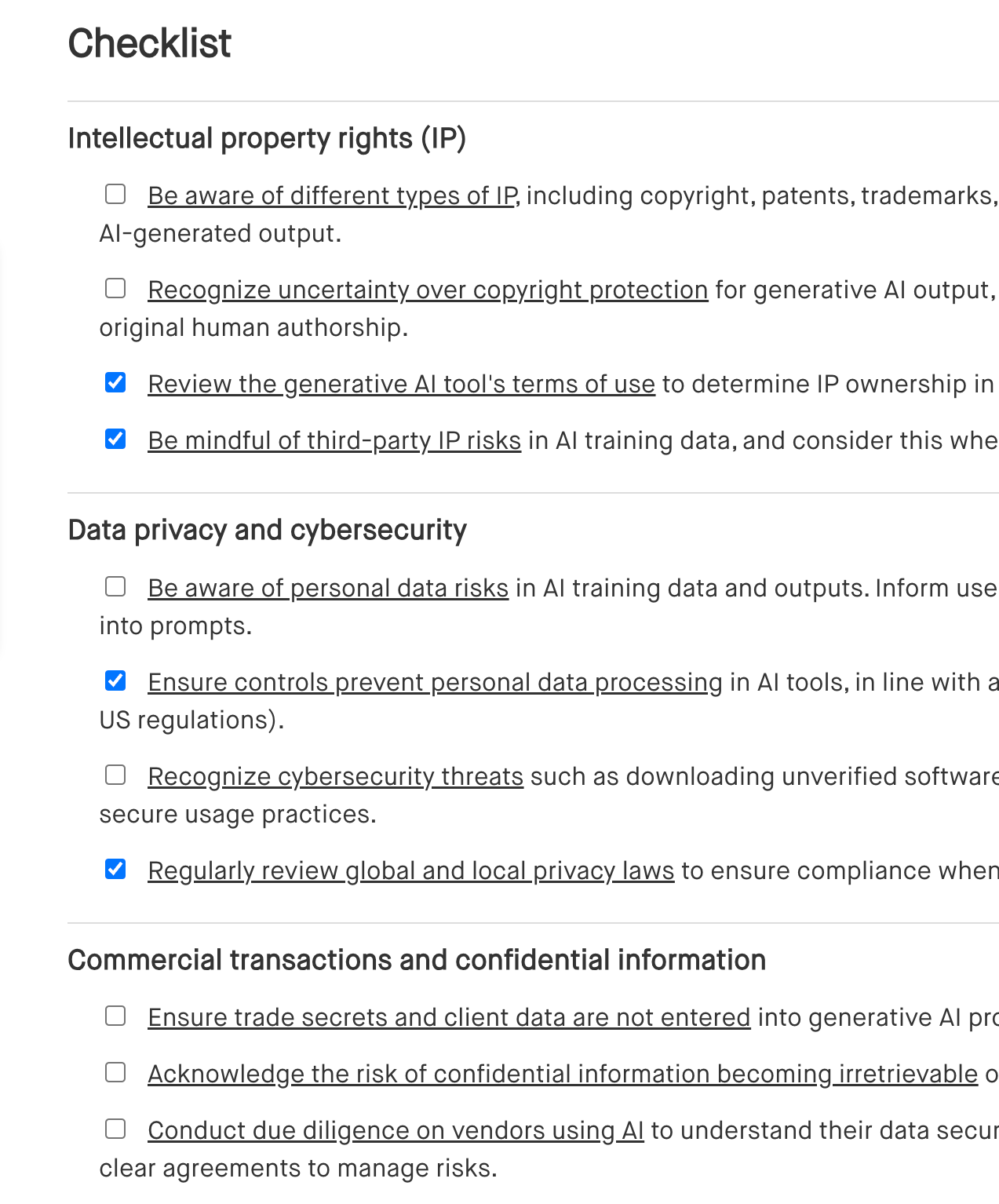
Lists key considerations for using generative AI in the workplace, including data privacy, ethical guidelines, employee training, and potential impact on productivity.
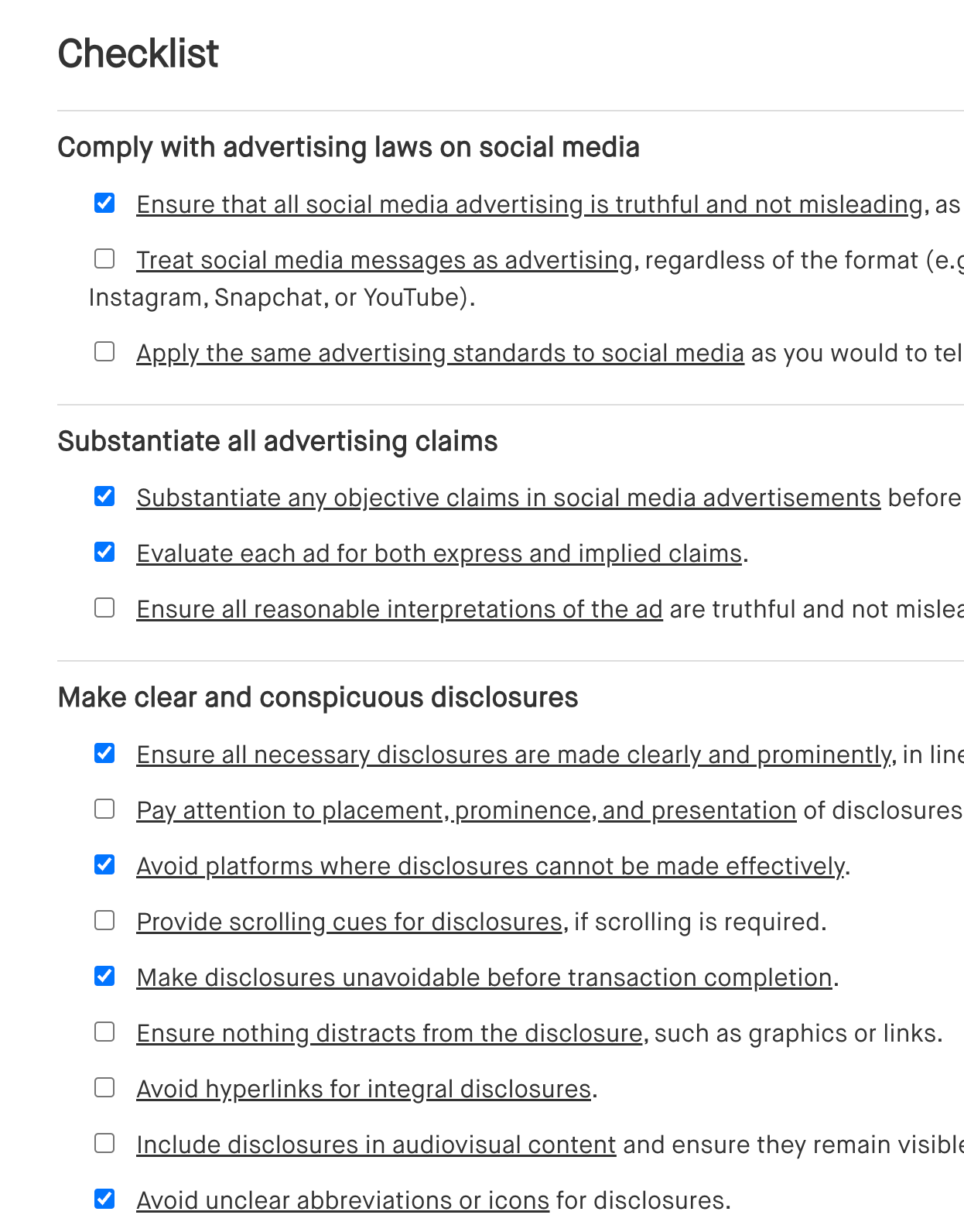
Outlines the essential steps for planning and executing advertising and promotions on social media, promoting compliance, effective targeting, and tracking of results.
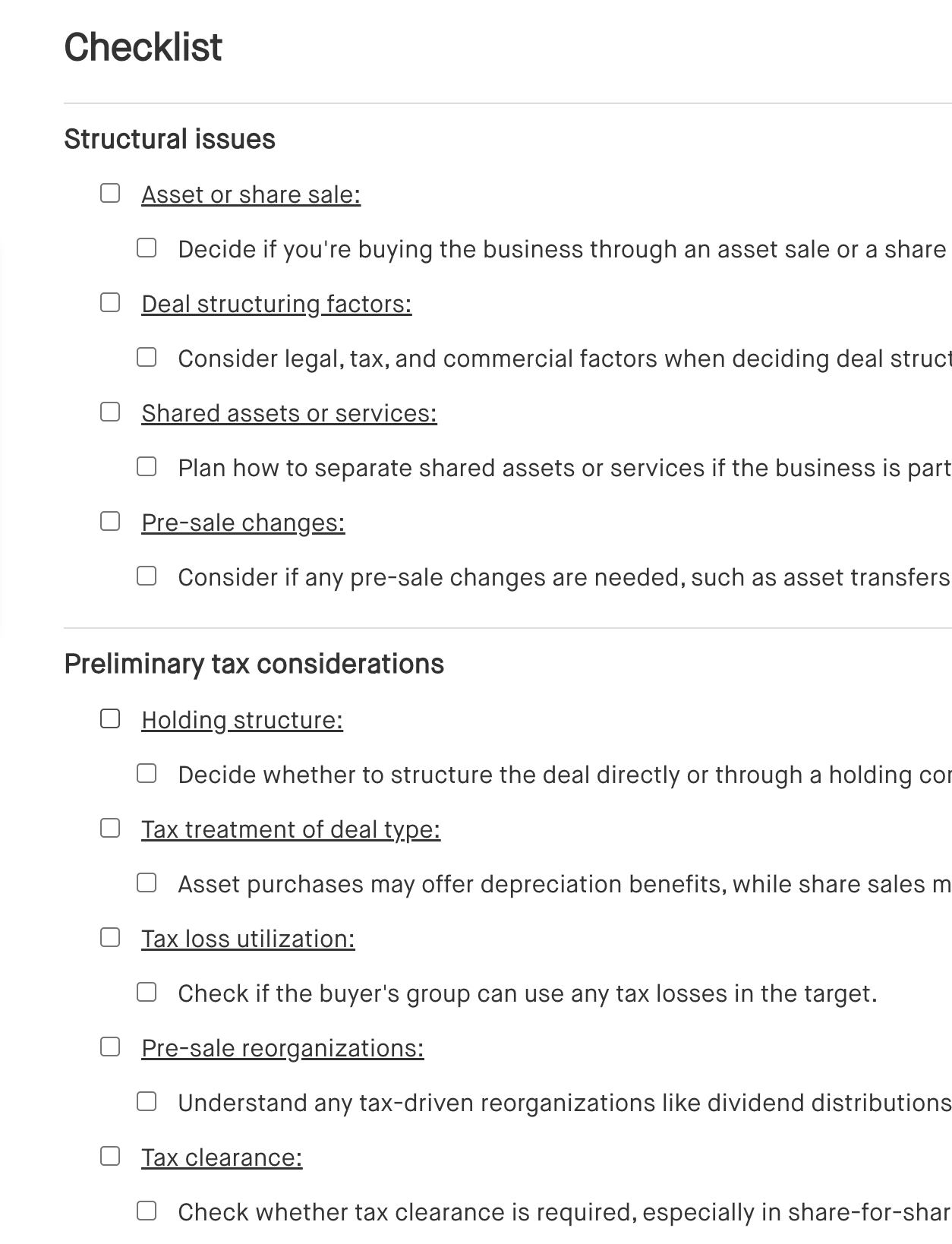
Details the essential steps for a business acquisition, including due diligence, valuation, negotiation, integration planning, and legal documentation.