Start a new document with this content. Open the editor to build from scratch — paste in what you need and keep writing.
Vendor due diligence checklist
This vendor checklist template is designed to guide your organization through a a comprehensive vendor due diligence process, assuming there is an request for proposal in connection with the vendor selection. Whether you’re conducting a vendor audit, assessing vendor risk, or qualifying a new vendor, this checklist ensures you cover all essential steps.
By using this template, you’ll be able to effectively manage vendor risk and compliance, ensuring the selected vendor aligns with your business requirements.
How to use this vendor checklist
To get the most value from this vendor risk management checklist, follow these steps:
- Familiarize yourself with the checklist: Start by reading through the entire vendor checklist to understand the vendor due diligence and risk assessment process.
- Tailor it to your needs: Modify the checklist as needed to fit your specific vendor qualification or compliance requirements, such as additional background checks or data security measures.
- Follow the steps carefully: Work through each section methodically, whether you're conducting a vendor risk assessment or a vendor audit. Each step is crucial to ensure you assess all potential risks.
- Collaborate with your team: Involve relevant departments, such as legal, IT, or procurement, to ensure all aspects of vendor compliance and qualification are covered.
- Document everything: Keep a detailed record of your findings during the vendor risk management process, including the vendor’s compliance status and background checks.
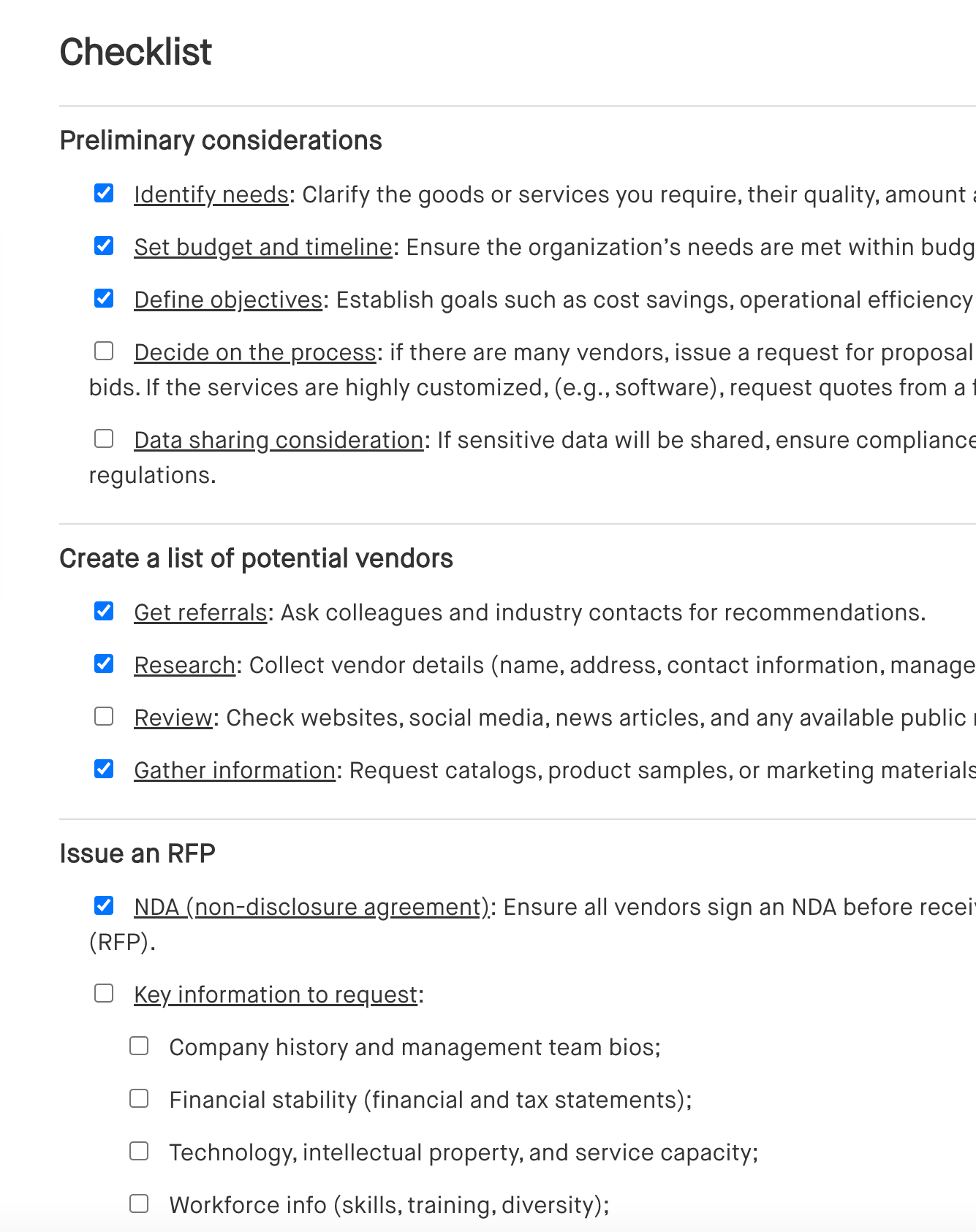
Checklist
Preliminary considerations
[ ] Identify needs: Clarify the goods or services you require, their quality, amount and location.
[ ] Set budget and timeline: Ensure the organization’s needs are met within budget and time.
[ ] Define objectives: Establish goals such as cost savings, operational efficiency or improving customer service.
[ ] Decide on the process: if there are many vendors, issue a request for proposal (RFP) to collective competitive bids. If the services are highly customized, (e.g., software), request quotes from a few vendors.
[ ] Data sharing consideration: If sensitive data will be shared, ensure compliance with privacy and data security regulations.
Create a list of potential vendors
[ ] Get referrals: Ask colleagues and industry contacts for recommendations.
[ ] Research: Collect vendor details (name, address, contact information, management information, etc).
[ ] Review: Check websites, social media, news articles, and any available public records.
[ ] Gather information: Request catalogs, product samples, or marketing materials from vendors.
Issue an RFP
[ ] NDA (non-disclosure agreement): Ensure all vendors sign an NDA before receiving the request for proposal (RFP).
[ ] Key information to request:
[ ] Company history and management team bios;
[ ] Financial stability (financial and tax statements);
[ ] Technology, intellectual property, and service capacity;
[ ] Workforce info (skills, training, diversity);
[ ] Regulatory compliance, certifications, and legal history;
[ ] Pricing structure, including potential price changes.
Review vendor proposals
[ ] Evaluate bids: Review all proposals after the submission deadline.
[ ] Meet with vendors: Schedule meetings to clarify questions or specifics.
[ ] On-site visits: If needed, visit the vendors’ offices or facilities.
Shortlist vendors
[ ] Top three bidders: Narrow down to the top three vendors.
[ ] Request revised bids: Share details of the best bids with shortlisted vendors to get updated proposals.
Assess privacy and data security risks
[ ] Due diligence questionnaire: Issue a questionnaire covering the vendor’s data security policies and practices.
[ ] Key points to review:
[ ] IT systems, privacy programs, and compliance with regulations;
[ ] Past security incidents and remediation efforts;
[ ] Litigation or penalties related to privacy or security.
Assess reputational risks
[ ] Litigation history: Review the vendor’s legal history.
[ ] Business credit report: Obtain a credit report to check the vendor’s financial health.
[ ] Code of ethics: Confirm the vendor has ethical standards and policies.
[ ] Check references: Ask at least three references about their experience with the vendor:
[ ] Did they deliver on time and within budget?
[ ] Were there any complaints or disputes?
[ ] Would they hire the vendor again?
Select the winning vendor
[ ] Final decision: After evaluating revised bids and references, select the best vendor.
[ ] Finalize the contract: Work with legal counsel to complete the agreement.
[ ] Notify unsuccessful bidders: Maintain good relationships for future needs.
Benefits of using a vendor due diligence checklist
This vendor checklist is a simple but powerful tool for small and medium-sized businesses (SMBs) to make smarter decisions when selecting vendors. Here’s how it helps.
- Save time: This checklist cuts through the clutter, giving you a clear, step-by-step process to follow. It helps you get through the vendor due diligence stage faster without missing any key details.
- Reduce risk: By using this vendor risk management checklist, you can identify and avoid common risks like data breaches or compliance issues. It helps you check a vendor’s background, ensure they meet legal standards, and make sure they’re financially stable.
- Make better decisions: The checklist standardizes your process, so every vendor is evaluated on the same criteria. Whether you’re using an RFP or direct quotes, it helps keep decision-making clear and organized.
- Stay compliant: This vendor compliance checklist walks you through all the steps to ensure your vendors follow privacy laws and data security regulations, reducing the chance of any legal headaches later.
- Build stronger vendor relationships: By setting clear expectations from the start, this checklist can help you form solid, long-lasting vendor relationships. It minimizes misunderstandings and makes sure your chosen vendor can meet your needs long-term.
Frequently asked questions (FAQs)

Outlines the key factors to consider when selecting a new vendor, ensuring a thorough evaluation of their capabilities, reliability, and alignment with your business needs.
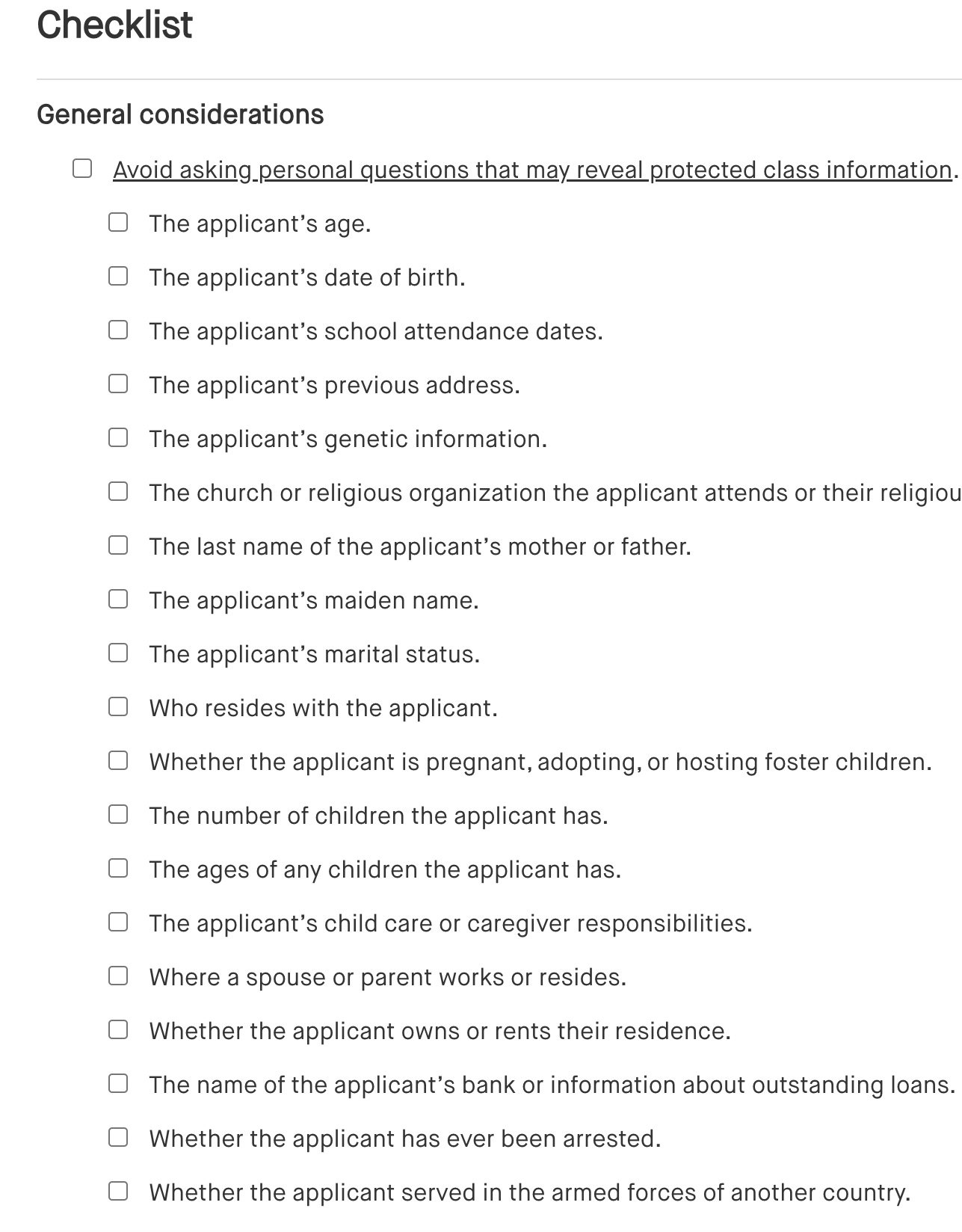
Lists common interview questions to avoid, focusing on those that may unintentionally discriminate based on race, gender, age, or other protected characteristics.
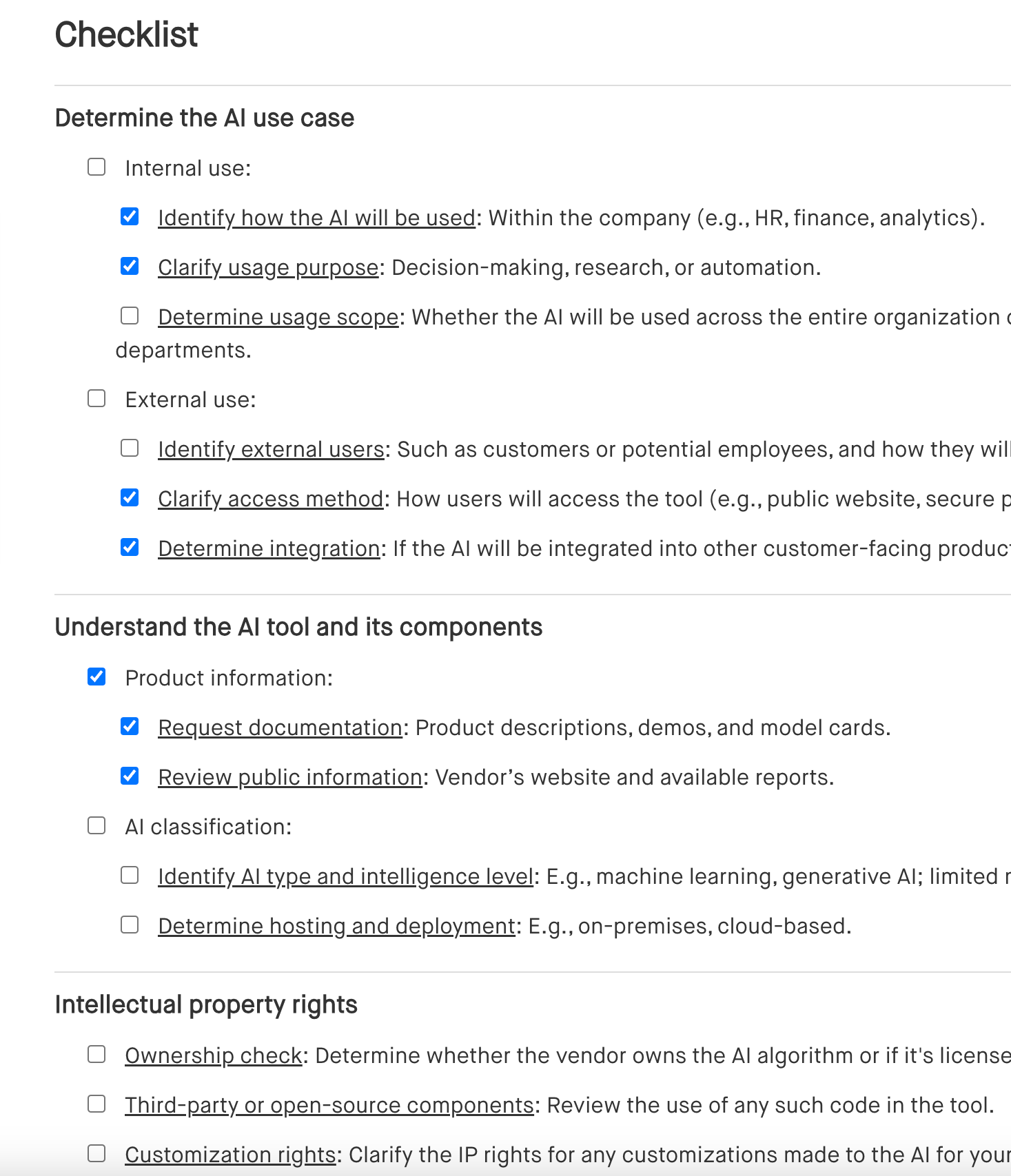
Outlines key steps for AI vendor due diligence, including evaluating the vendor’s technology, assessing data security measures, reviewing compliance with regulations, and verifying their track record and support capabilities.