Start a new document with this content. Open the editor to build from scratch — paste in what you need and keep writing.
Vendor management compliance checklist
This checklist helps financial institutions create a vendor management program for consumer-facing vendors and their compliance with federal consumer financial laws. It outlines the main responsibilities involved in selecting, onboarding, and overseeing vendors to ensure they follow federal consumer financial laws. Covering everything from assessing regulatory risks to ongoing monitoring, this checklist offers a clear process for managing vendor relationships and protecting consumer interests.
By following this checklist, institutions can set up effective vendor management practices that promote accountability, reduce regulatory risks, and keep consumer protections in place.
How to use this vendor management compliance checklist
To build and maintain an effective vendor management program, follow these steps to get the most out of the checklist:
- Work through each step in order: Begin by assessing risks associated with each vendor, then proceed through due diligence, contracting, and monitoring for ongoing compliance. This step-by-step process ensures thorough vetting and oversight.
- Involve the right teams: A successful vendor management program requires collaboration across departments. Engage legal, compliance, risk management, and relevant business units to ensure vendors align with your institution’s regulatory and consumer protection standards.
- Document all actions and decisions: Keep a comprehensive record of risk assessments, contracts, monitoring outcomes, and corrective actions. Documentation serves as an audit trail, demonstrating compliance with regulatory requirements.
- Customize for your institution’s needs: Adapt this checklist to suit your institution’s specific vendor relationships and risk profile. Different types of vendors and services may need unique compliance checks or monitoring protocols.
- Regularly review and update policies: Laws, regulations, and best practices for vendor management evolve over time. Periodically review and update your vendor management processes to ensure they remain compliant and effective in mitigating risks.
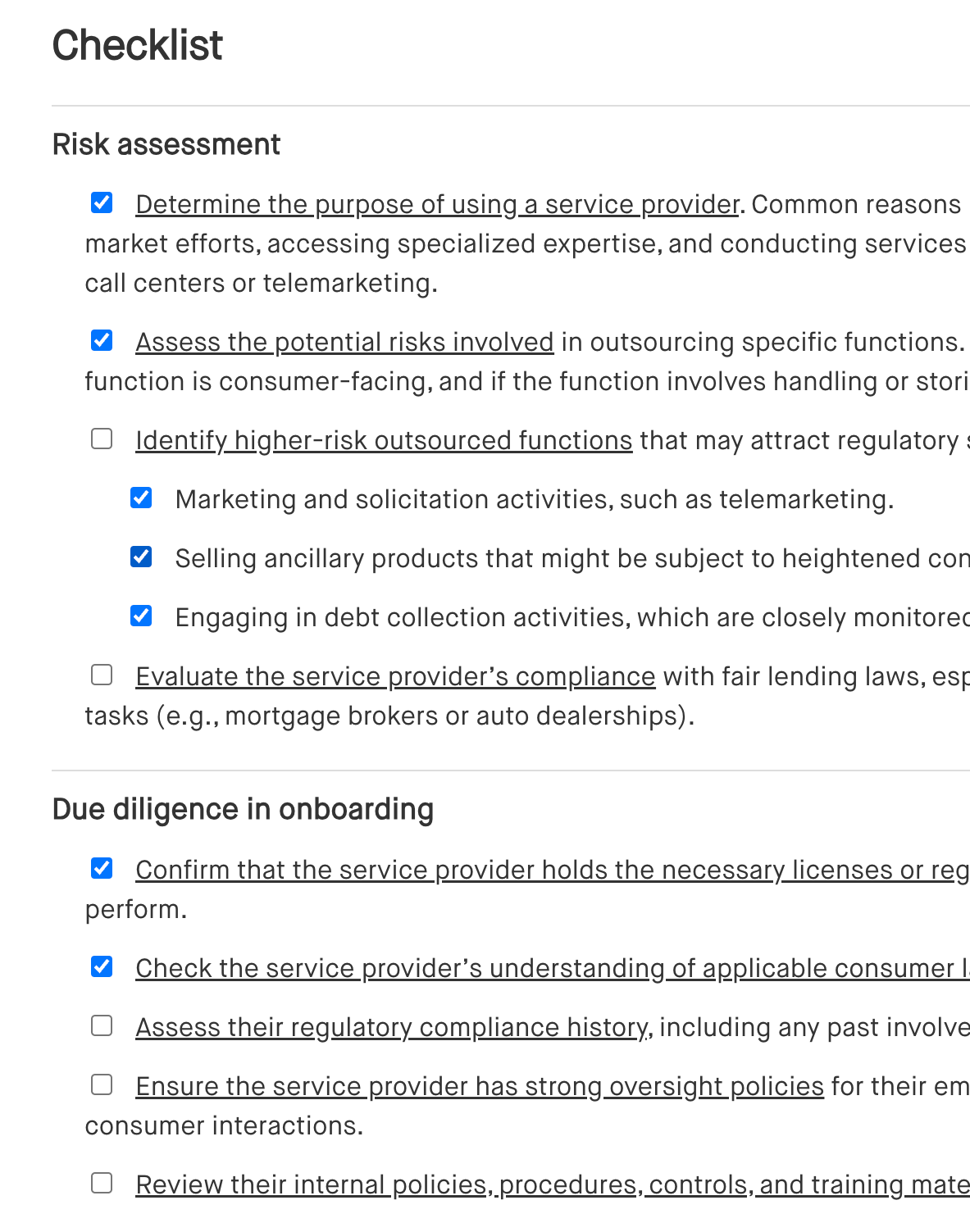
Checklist
Risk assessment
[ ] Determine the purpose of using a service provider. Common reasons may include expanding product offerings or market efforts, accessing specialized expertise, and conducting services that require external resources, such as call centers or telemarketing.
[ ] Assess the potential risks involved in outsourcing specific functions. Key considerations include whether the function is consumer-facing, and if the function involves handling or storing confidential consumer information.
[ ] Identify higher-risk outsourced functions that may attract regulatory scrutiny, including:
[ ] Marketing and solicitation activities, such as telemarketing.
[ ] Selling ancillary products that might be subject to heightened consumer protection regulations.
[ ] Engaging in debt collection activities, which are closely monitored for regulatory compliance.
[ ] Evaluate the service provider’s compliance with fair lending laws, especially if they handle consumer financing tasks (e.g., mortgage brokers or auto dealerships).
Due diligence in onboarding
[ ] Confirm that the service provider holds the necessary licenses or registrations for the services they will perform.
[ ] Check the service provider’s understanding of applicable consumer laws and regulations.
[ ] Assess their regulatory compliance history, including any past involvement in enforcement actions.
[ ] Ensure the service provider has strong oversight policies for their employees and agents, especially in consumer interactions.
[ ] Review their internal policies, procedures, controls, and training materials for compliance standards.
Contract requirements
[ ] Clearly outline each party’s role in protecting consumer data, including documented policies for data security and privacy.
[ ] Require the service provider to perform background checks on all employees handling consumer data.
[ ] Specify that the service provider must train employees on:
[ ] Relevant state and federal consumer financial laws;
[ ] Compliance procedures and policies; and
[ ] Information security best practices.
[ ] Ensure the service provider seeks approval before sharing any consumer data.
[ ] Require immediate notification in the event of a suspected data breach.
[ ] Include a clause that allows your institution to end the contract with reasonable notice and without penalties if necessary.
Policies and procedures
[ ] Ensure the Board of Directors and management actively oversee vendor compliance with federal consumer financial laws.
[ ] Develop clear policies covering data security and consumer privacy, especially regarding the sharing of consumer eligibility information for marketing between affiliates, as per the Fair Credit Reporting Act (FCRA) and Regulation V.
[ ] Verify that service provider compensation does not unintentionally incentivize actions that could lead to violations of consumer financial laws, such as:
[ ] Unfair, deceptive, or abusive acts or practices (UDAAP); and
[ ] Violations of the Equal Credit Opportunity Act (ECOA) anti-discrimination provisions.
[ ] Maintain policies for regular audits and monitoring of service providers, including clear procedures for contract termination and secure data destruction when necessary.
Monitoring and corrective action
[ ] Implement internal controls and periodic monitoring to ensure the service provider’s compliance with federal consumer financial laws.
[ ] Compliance terms to monitor:
[ ] Verify adherence to the terms outlined in the written contract.
[ ] Ensure the service provider’s internal policies are followed.
[ ] Confirm compliance with your institution’s own policies.
[ ] Specific monitoring practices:
[ ] Regularly review recordings between the service provider and consumers to ensure:
[ ] No misleading or aggressive tactics are used that could violate UDAAP or the Truth in Lending Act (TILA).
[ ] Fair treatment of all consumers without targeting based on prohibited factors.
[ ] Monitor training provided by the service provider to ensure it aligns with compliance standards.
[ ] Review the service provider’s employee evaluations to confirm adherence to expected practices.
[ ] Track complaints about the service provider, resolve them promptly, and report any trends to management. Ensure the service provider also addresses its complaints fully and promptly.
[ ] If issues arise, take immediate action to resolve them, including terminating the relationship with the service provider if necessary.
Benefits of using a vendor management compliance checklist
Using this checklist brings several benefits for managing your consumer-facing vendors effectively:
- Ensure regulatory compliance: This checklist helps you stay aligned with federal consumer financial laws, reducing the risk of penalties or compliance issues.
- Protect consumers: By setting standards for data security, privacy, and fair treatment, you’re better positioned to protect consumer rights and build trust.
- Reduce risk: Clear guidelines and regular oversight lower the chances of legal or reputational issues due to vendor actions.
- Set clear expectations: With defined roles and responsibilities in your contracts and policies, you can make sure vendors understand and meet compliance requirements.
- Simplify oversight: This checklist provides a structured approach to consistently monitor vendors, making it easier to spot and address any issues early.
Frequently asked questions (FAQs)
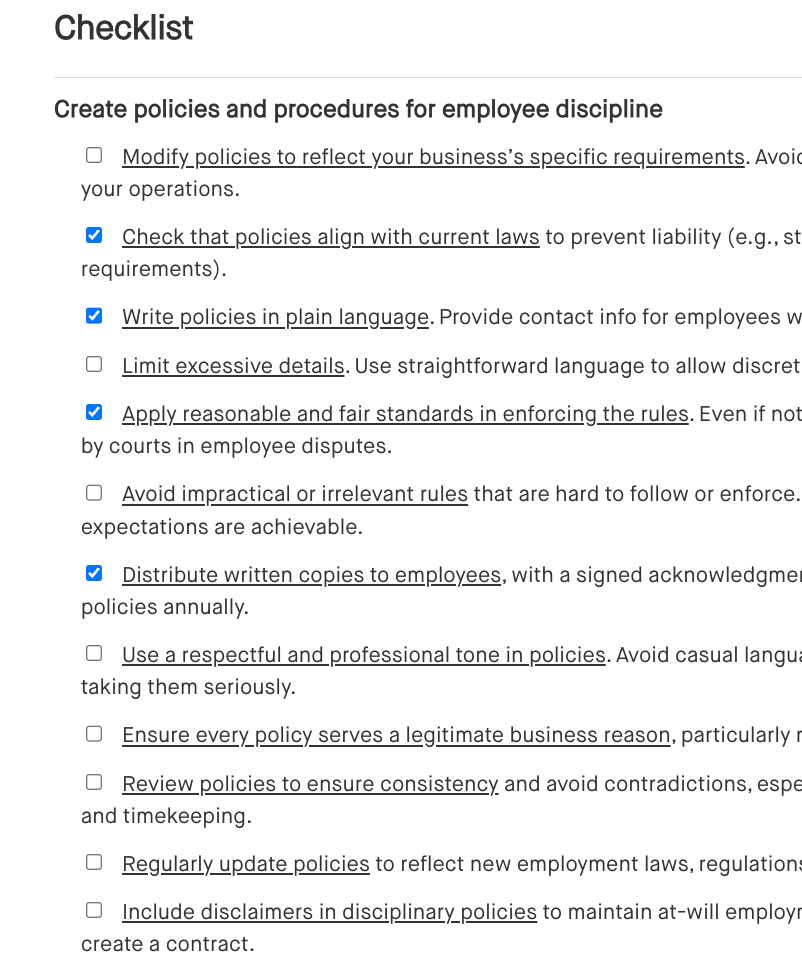
Outlines steps to address employee behavior or performance issues, ensuring fair, consistent, and documented disciplinary actions.

Outlines the key factors to consider when selecting a new vendor, ensuring a thorough evaluation of their capabilities, reliability, and alignment with your business needs.
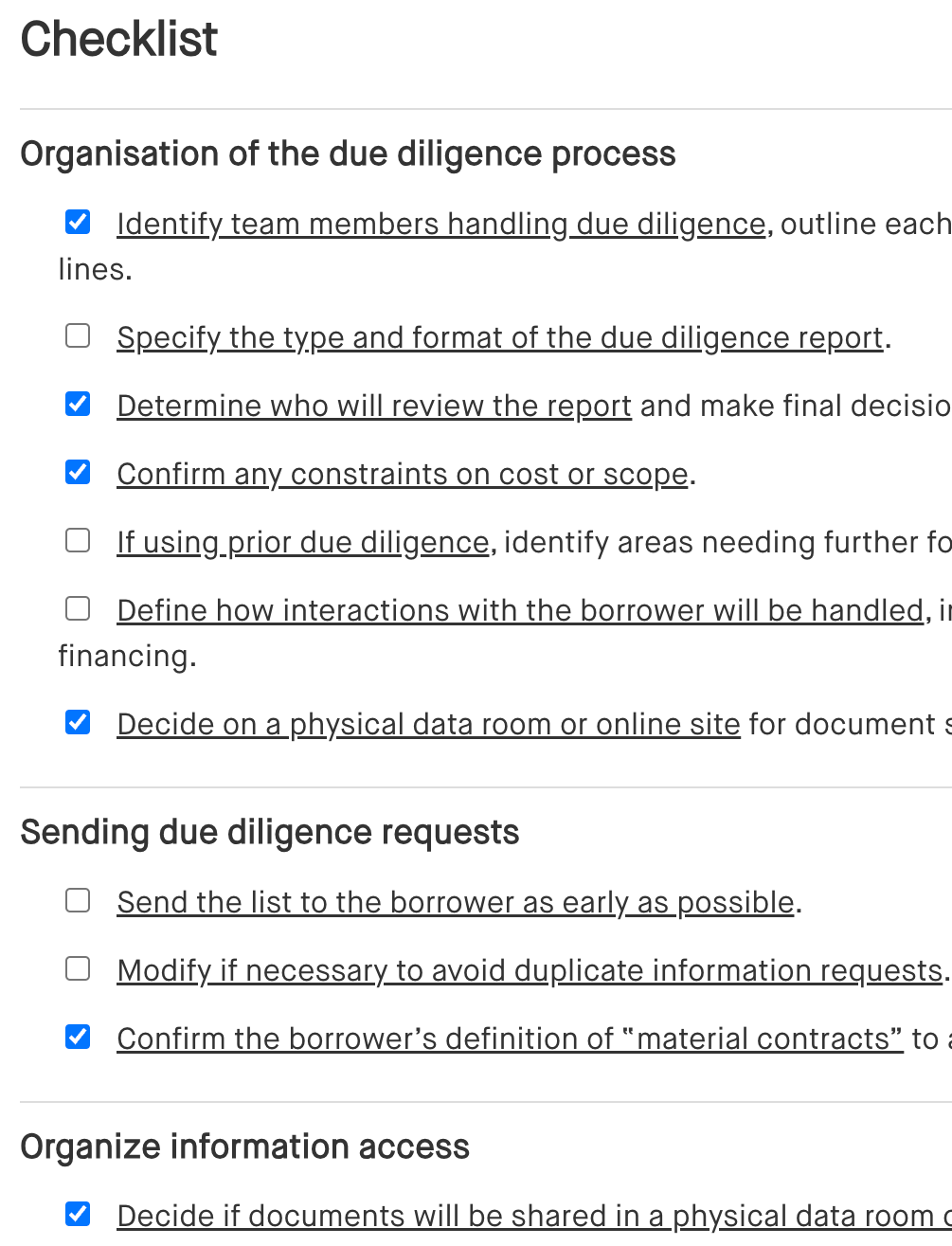
Outlines key areas for lenders to review during legal due diligence, ensuring thorough assessment of the borrower’s legal standing, risks, and obligations.