Business Collaboration Agreement (Alaska): Free template
Got contracts to review? While you're here for contracts, let Cobrief make contract review effortless—start your free review now.
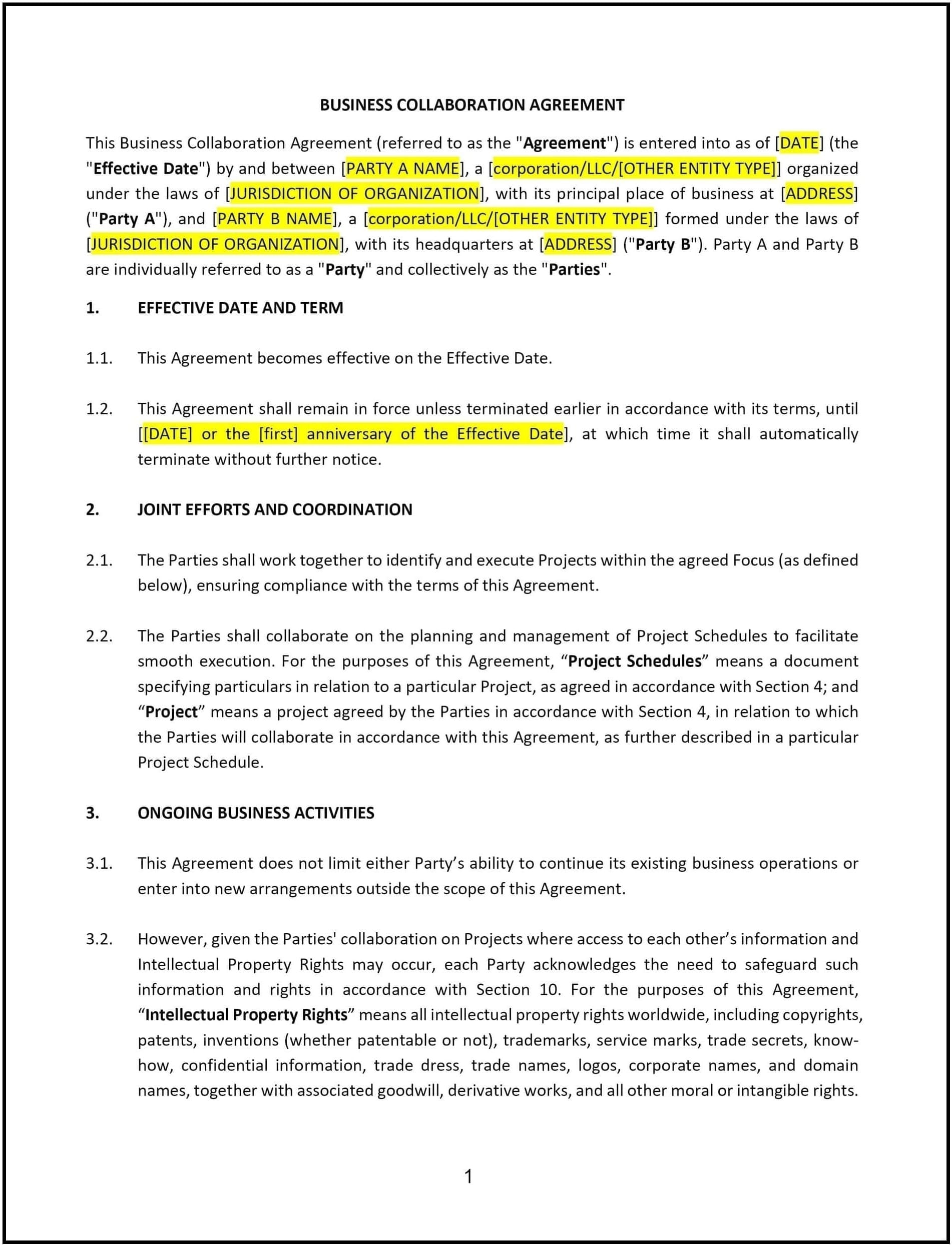
Customize this template for free
Business Collaboration Agreement (Alaska)
A Business Collaboration Agreement is a legally binding contract between two or more parties that outlines the terms and conditions for working together on a specific business project, initiative, or venture. In Alaska, this type of agreement is commonly used in industries like energy, tourism, technology, retail, and healthcare to ensure clear expectations and accountability.
This agreement ensures that all parties understand their roles, responsibilities, and obligations, including financial contributions, intellectual property ownership, and dispute resolution mechanisms. For example, an Anchorage-based tech startup might use a Business Collaboration Agreement to partner with a university for software development, while a Fairbanks-based retailer might collaborate with a supplier to launch a co-branded product line. A well-drafted Business Collaboration Agreement protects all parties by minimizing misunderstandings and fostering trust.
Tips for drafting and maintaining a Business Collaboration Agreement in Alaska
- Define the scope of the collaboration clearly: Specify the goals, objectives, and deliverables of the collaboration. Include details such as timelines, milestones, and expected outcomes. For example, outline whether the collaboration involves joint marketing efforts, product development, or research initiatives.
- Assign roles and responsibilities: Clearly specify the tasks and responsibilities of each party involved in the collaboration. For instance, state which party will handle logistics, technical development, or customer outreach.
- Outline financial terms: Detail the financial contributions, profit-sharing arrangements, and expense allocations. Ensure these terms are realistic and agreed upon by all parties. For example, specify that Party A will contribute $50,000, while Party B will provide resources, with profits split 60/40.
- Address intellectual property ownership: Clearly define ownership of intellectual property created during the collaboration. Specify whether IP will be jointly owned, exclusively owned by one party, or licensed to another. Include provisions for handling pre-existing IP and any improvements made during the collaboration.
- Include termination clauses: Specify the conditions under which the agreement can be terminated, such as breach of terms, failure to meet deadlines, or mutual agreement. For example, state that either party may terminate the agreement with 30 days’ written notice if the other party fails to fulfill its obligations.
- Comply with Alaska laws: Ensure the agreement adheres to Alaska’s contract laws and any industry-specific regulations. For example, if the collaboration involves consumer-facing products, ensure compliance with Alaska’s Unfair Trade Practices Act.
- Regularly review and update: Periodically update the agreement to reflect changes in the scope of work, business needs, or legal requirements. For example, if new goals or deliverables arise, amend the agreement to include these.
Frequently asked questions (FAQs)