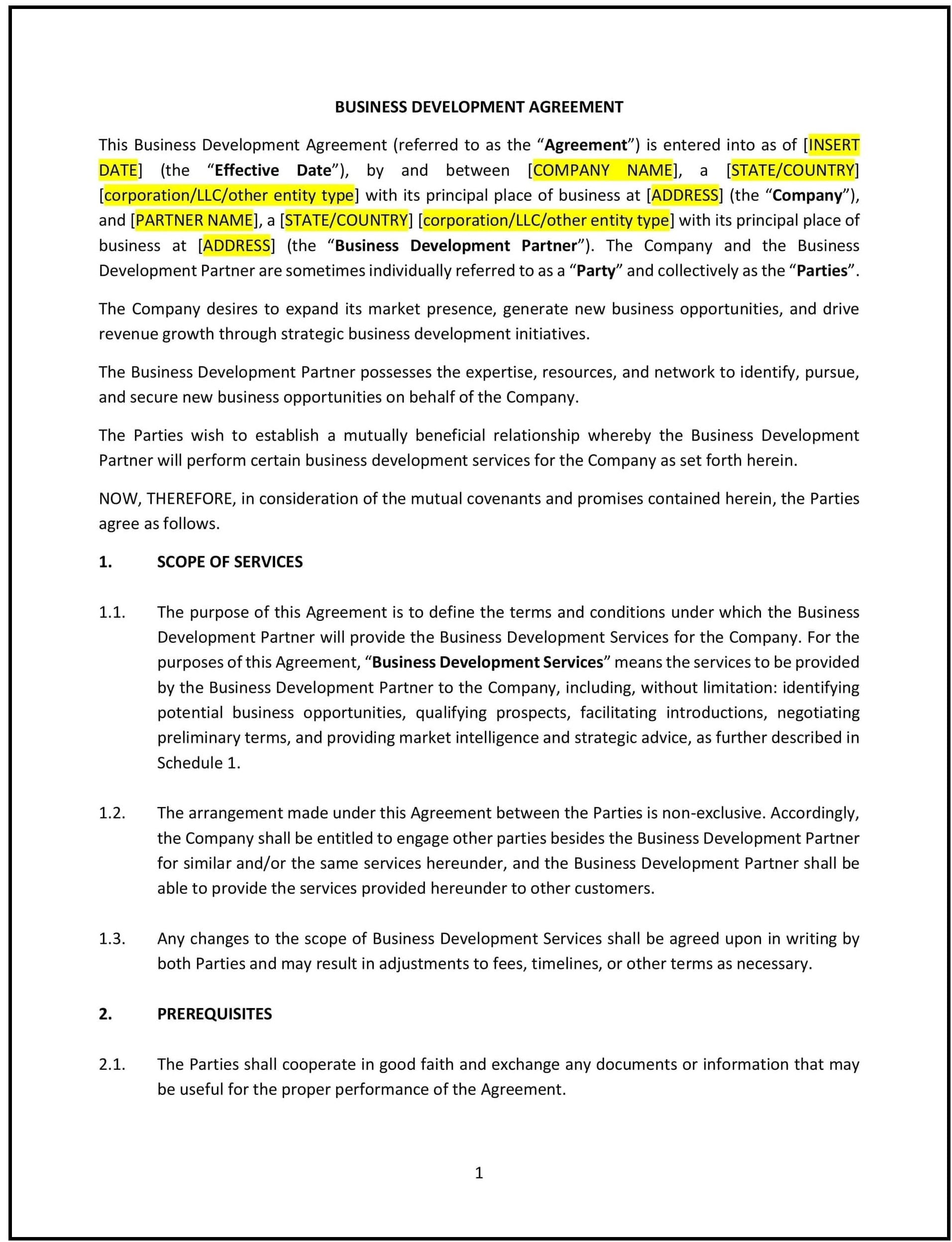
Business Development Agreement (Rhode Island): Free template
Defines terms for business development services in Rhode Island, covering scope, payment, performance, IP rights, confidentiality, termination, and compliance.
- Contracts
- Rhode Island
Business Development Agreement (Rhode Island)
A Business Development Agreement is a formal contract that outlines how one party will assist another in expanding their business, increasing revenue, or entering new markets. In Rhode Island, these agreements are governed by state contract laws and must comply with consumer protection regulations, including the Rhode Island Deceptive Trade Practices Act. It is essential for businesses to establish clear agreements that specify deliverables, payment terms, and performance expectations.
For example, a Providence-based manufacturing company might hire a consultant from Newport to explore opportunities in the advanced materials market. A well-drafted Business Development Agreement ensures clarity on objectives, timelines, and compliance with Rhode Island’s legal framework.
Tips for drafting and maintaining a Business Development Agreement in Rhode Island
- Define the scope of services: Clearly describe the business development activities to be performed, such as lead generation, market research, partnership building, or strategic planning. Include specific milestones and deadlines.
- Example: “The Provider agrees to secure at least four new partnerships for the Client within the first year of the agreement.”
- Establish payment terms: Specify the payment structure, whether it’s a fixed fee, commission-based, or tied to performance metrics. Include invoicing schedules, due dates, and late payment penalties.
- Example: “The Client agrees to pay the Provider a monthly retainer of $6,000, plus a 10% commission on all revenue generated from new partnerships.”
- Include performance metrics: Outline how success will be measured, using key performance indicators (KPIs) such as new client acquisitions, revenue growth, or deals closed.
- Example: “The Provider will submit a quarterly report detailing progress on KPIs, including new partnerships and revenue impact.”
- Address intellectual property rights: Clarify ownership of any strategies, materials, or content created during the engagement. Typically, the Client retains ownership, while the Provider may retain rights to pre-existing work.
- Example: “All intellectual property developed under this agreement will be owned by the Client upon full payment. The Provider retains rights to pre-existing materials.”
- Set confidentiality obligations: Protect sensitive information shared during the engagement with a confidentiality clause that aligns with Rhode Island’s trade secret laws.
- Example: “Both parties agree to maintain the confidentiality of all proprietary information for a period of five years after the agreement ends.”
- Outline termination provisions: Specify the conditions under which the agreement can be terminated, such as breach of terms, mutual consent, or failure to meet performance goals.
- Example: “Either party may terminate this agreement with 30 days’ written notice if the other party violates any terms outlined herein.”
- Align with Rhode Island-specific laws: Ensure the agreement complies with Rhode Island’s contract laws and consumer protection statutes, including the Rhode Island Deceptive Trade Practices Act.
- Example: “This agreement is governed by the laws of the State of Rhode Island. Both parties agree to adhere to all applicable state and federal regulations.”
Frequently asked questions (FAQs)
Similar templates
Where deals go from offer to paid
