Independent Contractor Agreement (Vermont): Free template
Got contracts to review? While you're here for contracts, let Cobrief make contract review effortless—start your free review now.
Customize this template for free
Independent Contractor Agreement (Vermont)
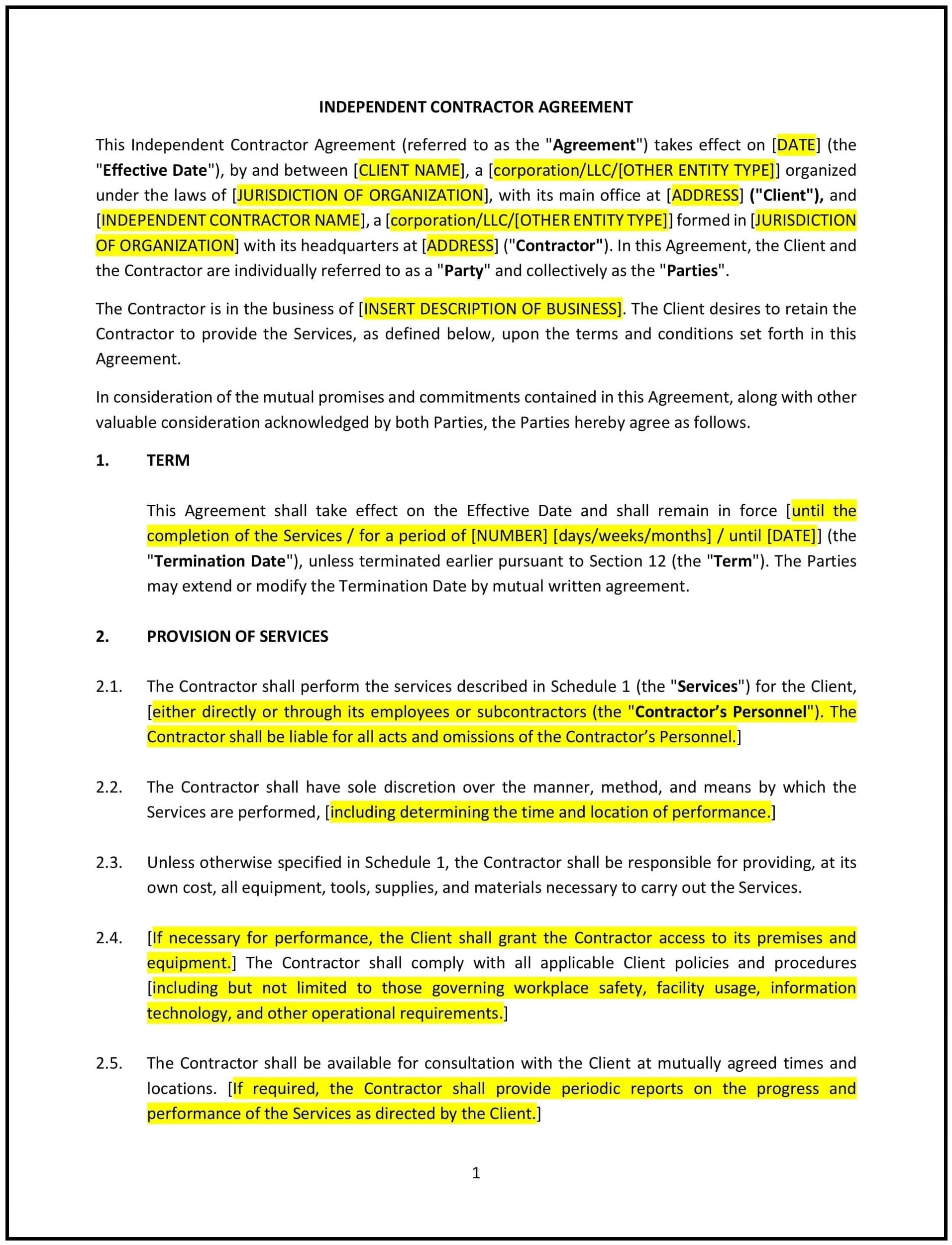
An Independent Contractor Agreement in Vermont is a legally binding contract that defines the terms under which an independent contractor provides services to a business. Unlike employees, independent contractors operate as self-employed professionals responsible for their taxes, insurance, and business expenses. This agreement is essential for ensuring clear expectations between businesses and contractors while protecting both parties from misclassification risks under Vermont labor laws.
Vermont businesses use independent contractor agreements to engage specialized talent without the obligations of full-time employment. The agreement helps define work scope, payment terms, confidentiality obligations, intellectual property (IP) ownership, and liability limitations. Vermont follows IRS guidelines and Vermont Department of Labor (VDOL) regulations to determine whether a worker qualifies as an independent contractor. Businesses must ensure proper classification to avoid penalties and potential back taxes.
Industries such as technology, construction, consulting, healthcare, and creative services in Vermont frequently rely on independent contractors for project-based work. A well-structured agreement ensures that contractors maintain their independent status while protecting business interests.
Tips for drafting and maintaining an Independent Contractor Agreement in Vermont
- Clearly define the scope of work, including deliverables, timelines, and project objectives to prevent disputes over expectations.
- Specify payment terms, including invoicing procedures, rates, due dates, and penalties for late payments. Vermont law allows flexible compensation structures for independent contractors.
- Include a contractor status clause that affirms the independent nature of the contractor’s work, ensuring they are not classified as an employee under Vermont labor laws.
- Protect confidential business information by incorporating non-disclosure clauses. Vermont law supports enforceable NDAs when they are reasonable in scope and duration.
- Clarify intellectual property ownership, specifying whether any work created during the contract belongs to the contractor or the hiring business. Vermont businesses should include work-for-hire clauses when necessary.
- Address dispute resolution, specifying whether conflicts will be handled through Vermont courts, arbitration, or mediation. Many Vermont businesses opt for arbitration to streamline dispute resolution.