Letter of Intent (LOI) (Wisconsin): Free template
Got contracts to review? While you're here for contracts, let Cobrief make contract review effortless—start your free review now.
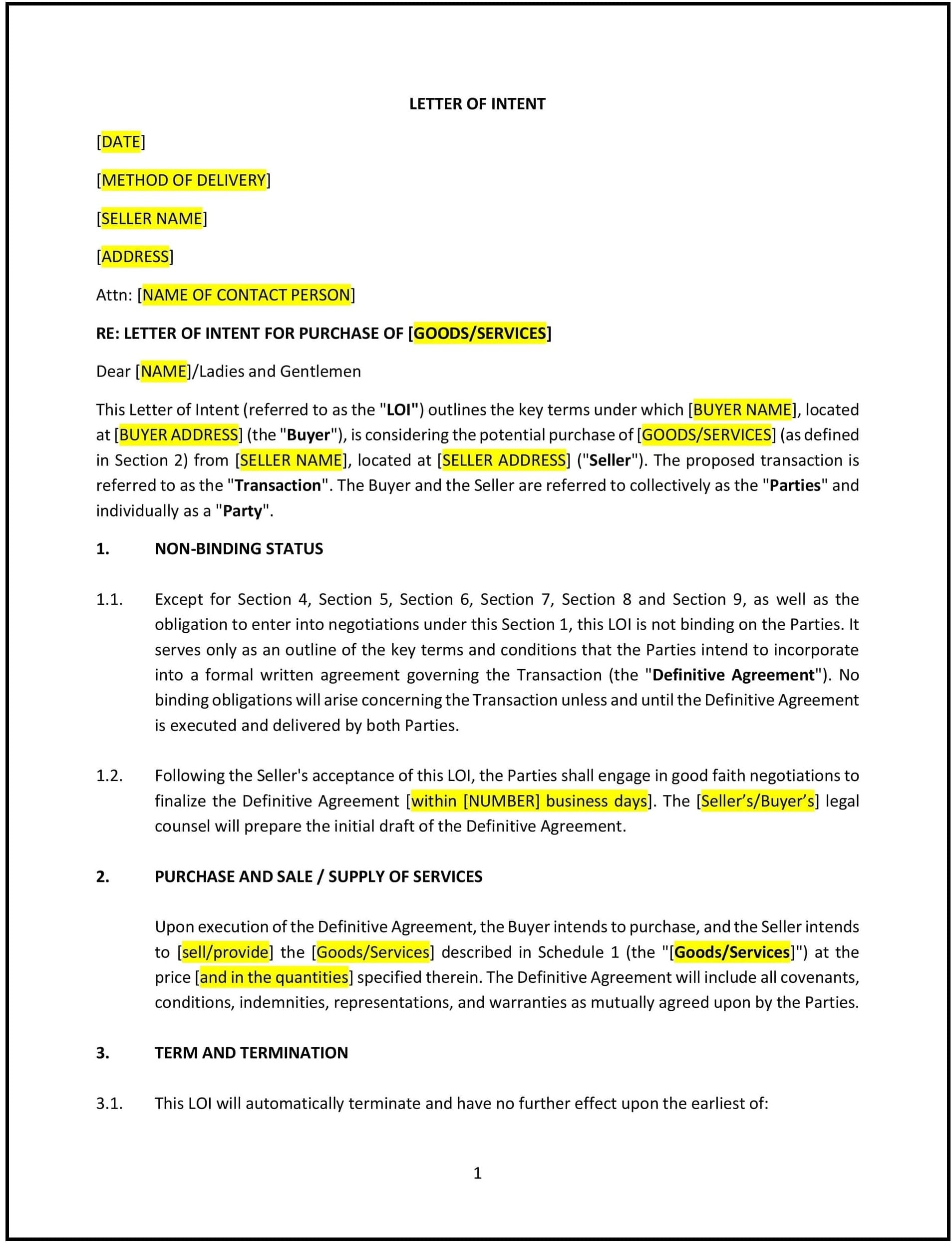
Customize this template for free
Letter of Intent (LOI) (Wisconsin)
A Letter of Intent (LOI) is a non-binding document that outlines the preliminary terms and conditions of a proposed agreement between two or more parties. In Wisconsin, LOIs are commonly used in industries like manufacturing, agriculture, and real estate to establish a framework for future negotiations. Wisconsin’s diverse economy, with its strong focus on manufacturing and agriculture, makes LOIs particularly useful for businesses looking to formalize their intentions before entering into a binding contract.
An LOI ensures that all parties are on the same page regarding key terms, such as pricing, timelines, and responsibilities. For example, a manufacturing company in Wisconsin might use an LOI to outline the terms of a joint venture with another company, while a real estate developer might use it to propose the purchase of land for a new project. A well-drafted LOI fosters trust and clarity, paving the way for a successful partnership.
Tips for drafting and maintaining a Letter of Intent in Wisconsin
- Clearly state the purpose of the LOI: Specify that the document is non-binding and intended to outline the preliminary terms of a future agreement. For example, state that the LOI is a “statement of intent” and not a legally enforceable contract.
- Include key terms and conditions: Outline the proposed terms, such as pricing, timelines, and responsibilities. For instance, if the LOI is for a real estate transaction, include the purchase price, closing date, and any contingencies.
- Address confidentiality: Include a confidentiality clause to protect sensitive information shared during negotiations. For example, state that all discussions and documents related to the LOI must remain confidential.
- Specify governing law: Indicate that the LOI is governed by Wisconsin law. This ensures that any disputes related to the LOI will be resolved according to Wisconsin’s legal framework, including adherence to the Wisconsin Uniform Commercial Code.
- Include a termination clause: Specify the conditions under which the LOI can be terminated. For example, state that either party can terminate the LOI with written notice if negotiations fail to result in a binding agreement.
- Regularly review and update: Periodically review the LOI to ensure it reflects the current state of negotiations. For example, if the parties agree to new terms, amend the LOI to include these.
Frequently asked questions (FAQs)