Master Services Agreement (Vermont): Free template
Got contracts to review? While you're here for contracts, let Cobrief make contract review effortless—start your free review now.
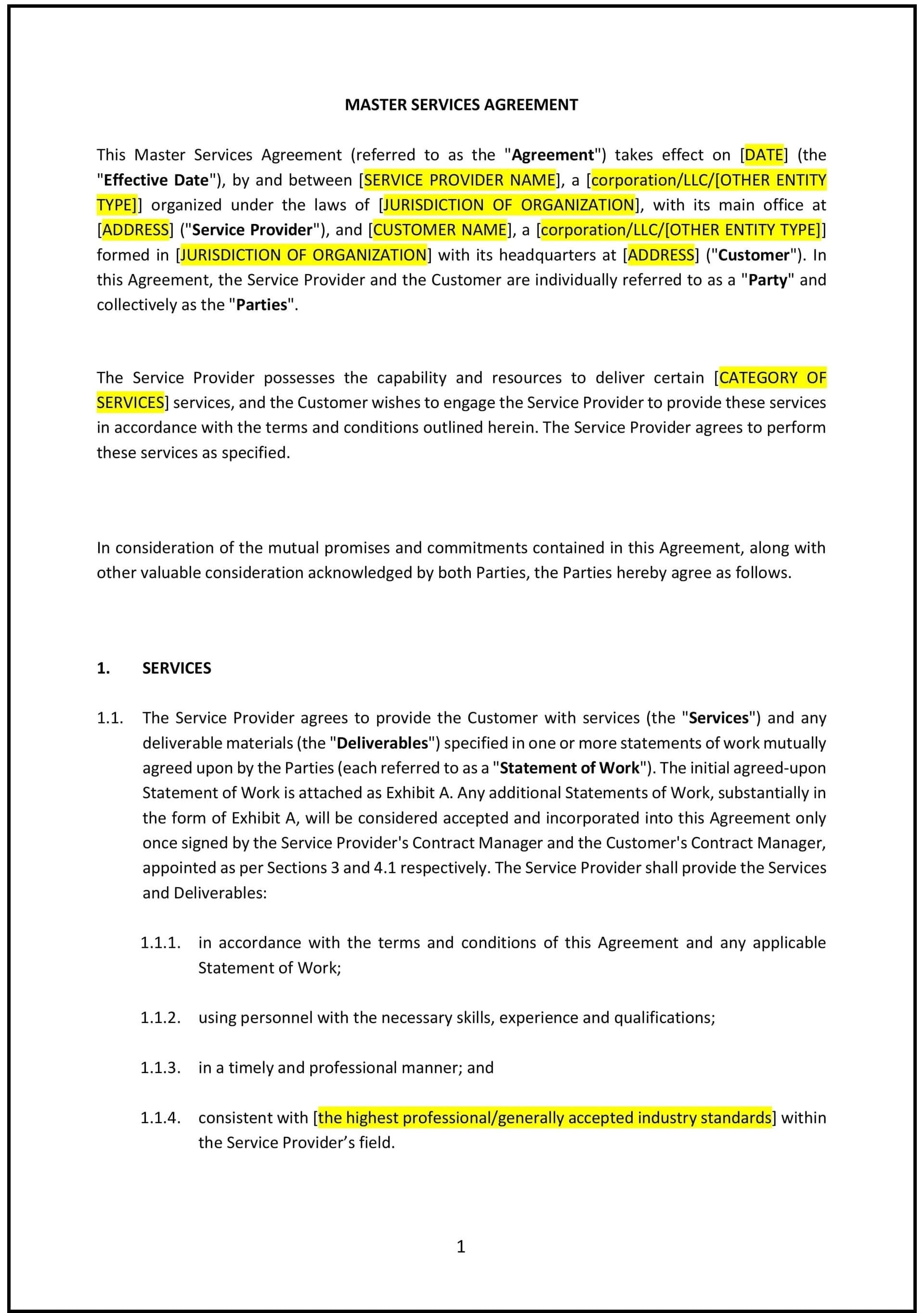
Customize this template for free
Master Services Agreement (Vermont)
A Master Services Agreement (MSA) in Vermont is a legally binding contract that establishes the overarching terms between a service provider and a client for multiple projects or long-term engagements. This agreement is widely used in industries such as technology, consulting, professional services, and manufacturing, where businesses require ongoing service relationships.
Vermont businesses use an MSA to streamline contract negotiations, reduce legal risks, and create consistency in service engagements. Instead of renegotiating terms for each project, businesses can rely on a standardized agreement while handling specific project details in separate Statements of Work (SOWs). Vermont contract law allows flexibility in structuring MSAs, making them an effective tool for businesses to protect their interests through clearly defined payment terms, liability limitations, and dispute resolution mechanisms.
For companies operating in Vermont, an MSA provides legal clarity, helps manage service-based relationships, ensures prompt payments, and minimizes legal disputes. Vermont’s contract laws generally favor well-defined agreements, but businesses should ensure that their MSAs comply with state labor laws and industry regulations.
Tips for drafting and maintaining a Master Services Agreement in Vermont
- Clearly define the scope of services to prevent misunderstandings and disputes. Businesses should specify deliverables, timelines, and expectations upfront.
- Establish payment terms, including invoicing procedures, late payment penalties, and any required deposits. Vermont law enforces written payment terms to ensure contractual clarity.
- Include limitation of liability clauses to minimize financial exposure. Vermont law upholds contractually agreed-upon liability limits as long as they are reasonable.
- Specify intellectual property (IP) ownership, ensuring clarity on who owns deliverables and any associated rights. Businesses should include work-for-hire clauses if they expect to retain ownership of all deliverables.
- Address dispute resolution, specifying whether conflicts will be handled through Vermont courts, arbitration, or mediation. Many Vermont businesses opt for arbitration to resolve disputes efficiently.
- Incorporate a force majeure clause to protect against liability if unforeseen events, such as natural disasters or supply chain disruptions, prevent service completion.