Non-Disclosure Agreement (Mutual) (West Virginia): Free template
Got contracts to review? While you're here for contracts, let Cobrief make contract review effortless—start your free review now.
Customize this template for free
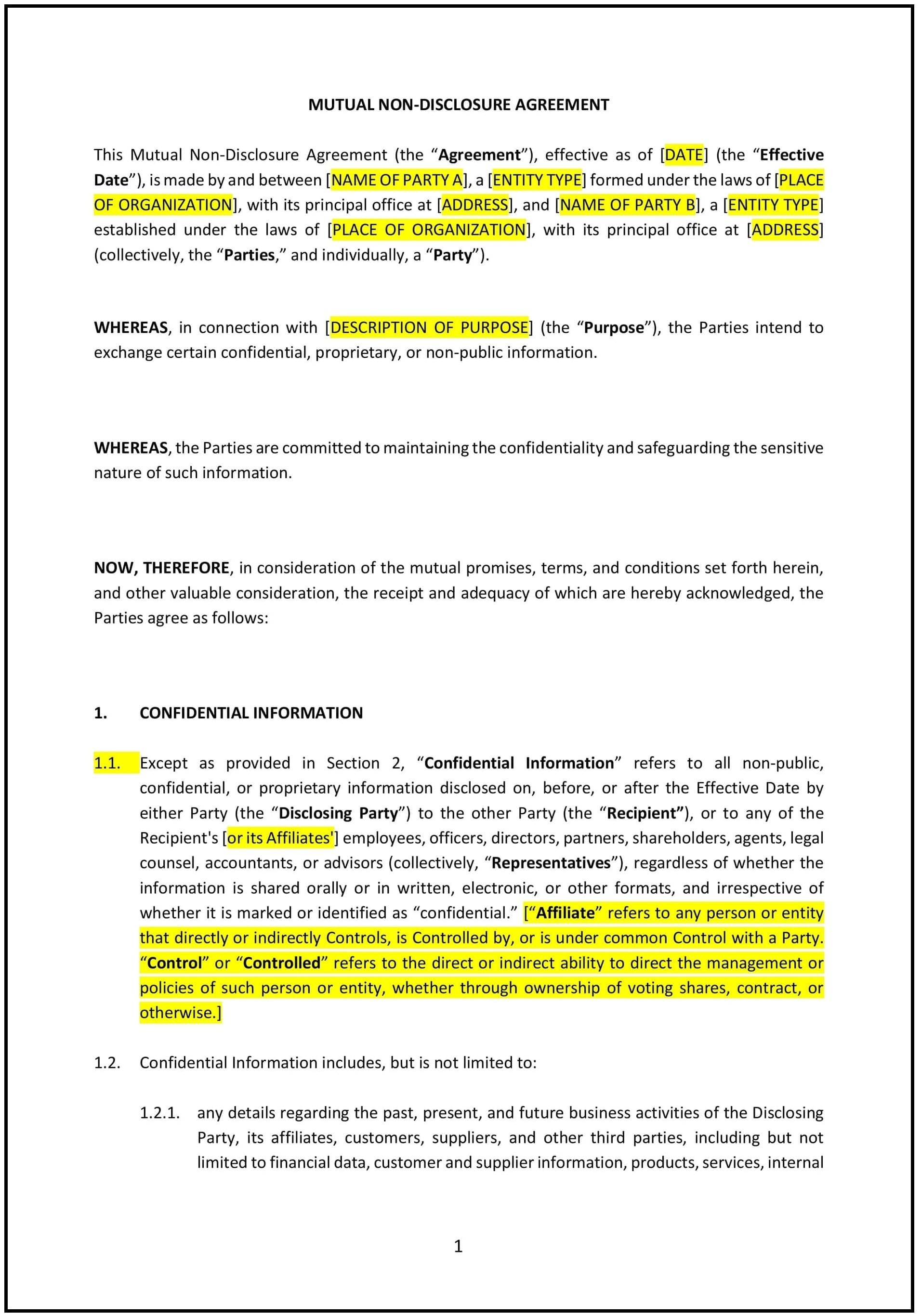
Non-Disclosure Agreement (Mutual) (West Virginia)
A Non-Disclosure Agreement (Mutual) in West Virginia is a legally binding contract that ensures both parties protect and do not disclose shared confidential information. This agreement is commonly used in business negotiations, partnerships, joint ventures, mergers and acquisitions, and collaborations where sensitive business data, trade secrets, or proprietary information are exchanged.
West Virginia businesses use mutual NDAs to protect valuable business information, reduce the risk of competitive leaks, and establish clear confidentiality obligations for both parties. West Virginia law recognizes and enforces NDAs when they are specific, reasonable in scope and duration, and compliant with the West Virginia Uniform Trade Secrets Act (WVUTSA), which provides legal protections against the misappropriation of proprietary business information.
Industries such as energy, technology, healthcare, and professional services frequently rely on NDAs in West Virginia to safeguard intellectual property, customer data, and internal business strategies. A well-drafted NDA ensures that confidential information remains protected and provides businesses with legal recourse in case of a breach.
Tips for drafting and maintaining a Non-Disclosure Agreement (Mutual) in West Virginia
- Define confidential information clearly to avoid ambiguity and disputes over interpretation. West Virginia courts require specificity in NDAs for enforceability.
- Establish a reasonable duration for confidentiality obligations. While most NDAs last between two to five years, trade secrets may require indefinite protection under West Virginia law.
- Outline permitted disclosures, such as those required by law, court orders, or with prior written consent.
- Specify legal remedies for breaches, such as injunctive relief, financial damages, or termination of business relationships.
- Ensure compliance with the West Virginia Uniform Trade Secrets Act (WVUTSA) to strengthen legal protections for confidential business information.