Got contracts to review? While you're here for contracts, let Cobrief make contract review effortless—start your free review now.
Customize this template for free
Reseller Agreement (Louisiana)
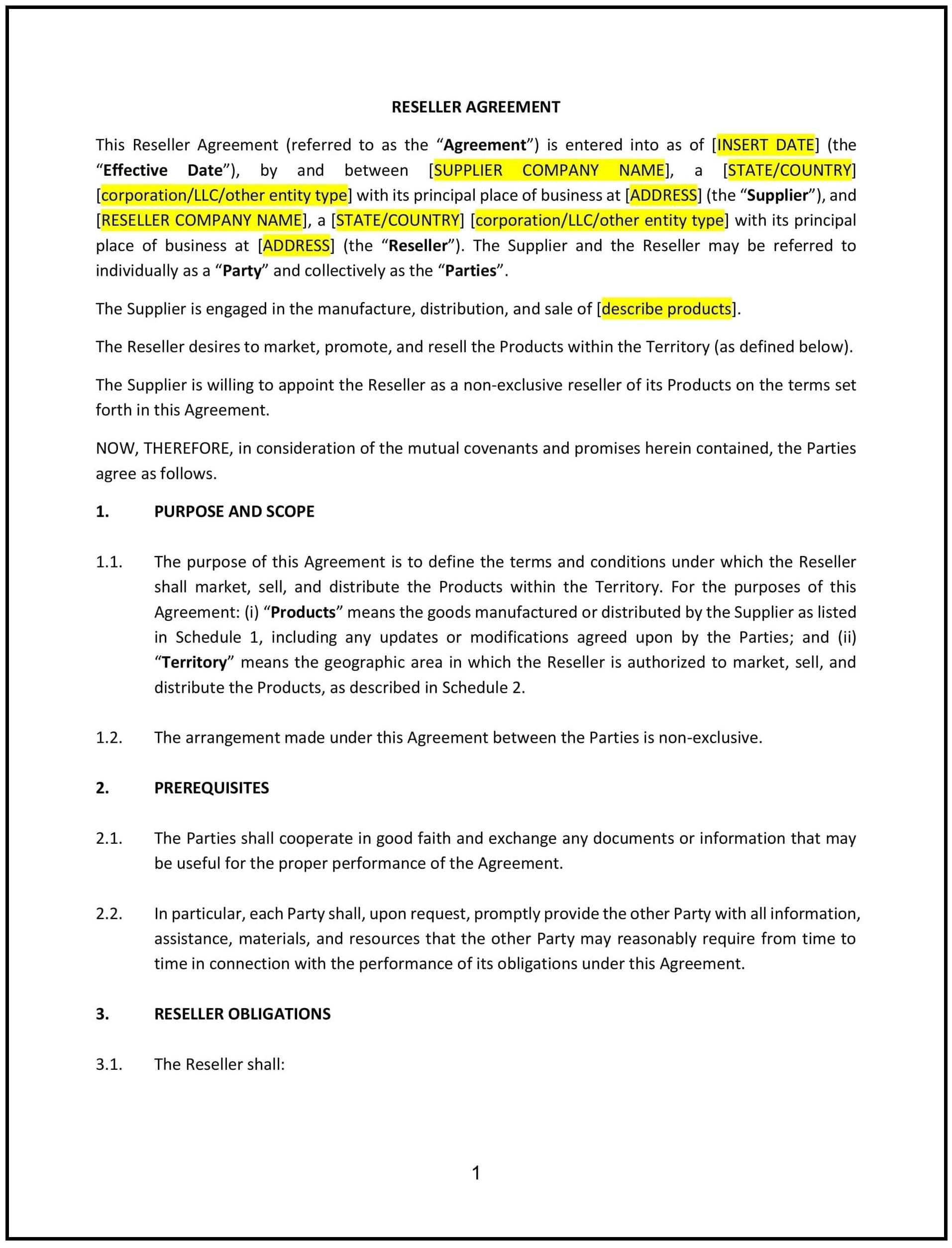
A Reseller Agreement is a legally binding contract between a supplier or manufacturer (the "Vendor") and a third-party reseller (the "Reseller") that outlines the terms under which the Reseller can sell the Vendor’s products or services. In Louisiana, Reseller Agreements are commonly used in industries such as agriculture, technology, manufacturing, retail, and e-commerce. Louisiana’s unique legal system, which incorporates elements of civil law due to its French and Spanish heritage, requires careful attention to ensure compliance with state-specific regulations, including consumer protection laws and the Louisiana Civil Code.
For example, a New Orleans-based software company might use a Reseller Agreement to authorize a local IT firm to sell its products, while a Baton Rouge-based agricultural supplier might partner with a distributor to expand its market reach. A well-drafted Reseller Agreement ensures clarity on pricing, intellectual property rights, and compliance with Louisiana’s legal framework.
Tips for drafting and maintaining a Reseller Agreement in Louisiana
- Define the relationship: Clearly specify that the Reseller is an independent contractor and not an employee or agent of the Vendor. This distinction is particularly important in Louisiana, where misclassification of workers can lead to significant penalties under labor laws.
- Example: “The Reseller is an independent contractor and shall have no authority to bind the Vendor in any way.”
- Outline product details: Specify the products or services the Reseller is authorized to sell, including any limitations on exclusivity or geographic restrictions. Ensure compliance with Louisiana’s consumer protection laws, which prohibit deceptive trade practices.
- Example: “The Reseller is authorized to sell the Vendor’s products within the state of Louisiana and may not sell outside this territory without prior written consent.”
- Set pricing and payment terms: Detail how the Reseller will be compensated, whether through commissions, discounts, or other arrangements. Include payment schedules and invoicing procedures. Ensure transparency in pricing to comply with Louisiana’s Unfair Trade Practices and Consumer Protection Law.
- Example: “The Reseller will receive a 20% discount on all products purchased from the Vendor and will remit payment within 30 days of invoice receipt.”
- Address intellectual property rights: Clarify ownership of trademarks, logos, and other intellectual property used by the Reseller. Ensure compliance with federal and Louisiana state laws regarding intellectual property.
- Example: “All trademarks and branding materials provided by the Vendor remain the sole property of the Vendor and must be used in accordance with the Vendor’s guidelines.”
- Include performance metrics: Establish minimum sales targets or performance expectations for the Reseller. This ensures accountability and aligns incentives. Performance metrics should be realistic and measurable to avoid disputes.
- Example: “The Reseller agrees to achieve a minimum monthly sales volume of $10,000 or risk termination of this agreement.”
- Specify termination clauses: Define the conditions under which the agreement can be terminated, such as breach of terms, failure to meet performance metrics, or mutual agreement. Include provisions for winding down the relationship, such as returning unsold inventory or ceasing use of intellectual property.
- Example: “Either party may terminate this agreement with 30 days’ written notice if the other party fails to fulfill its obligations.”
- Comply with Louisiana laws: Ensure the agreement adheres to Louisiana’s contract laws, including the Louisiana Civil Code and the Louisiana Uniform Commercial Code (UCC) for transactions involving goods. Additionally, address compliance with consumer protection statutes and data privacy laws.