Sale of Goods Agreement (Pro-Seller) (Nebraska): Free template
Got contracts to review? While you're here for contracts, let Cobrief make contract review effortless—start your free review now.
Customize this template for free
Sale of Goods Agreement (Pro-Seller) (Nebraska)
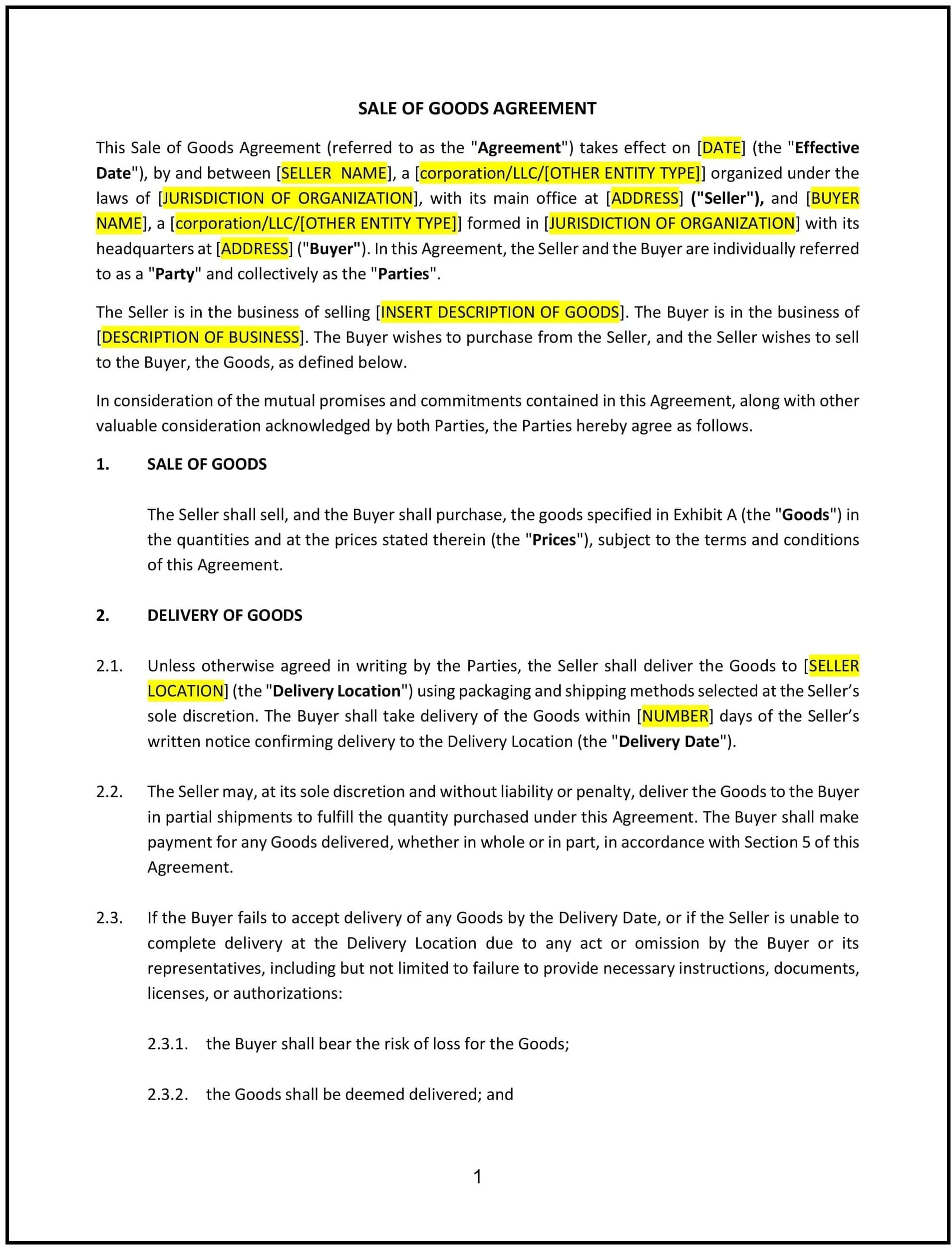
A Sale of Goods Agreement (Pro-Seller) in Nebraska is a legally binding contract that establishes the terms under which a seller provides goods to a buyer. This agreement is designed to protect the seller’s interests by defining payment terms, delivery obligations, risk allocation, and liability limitations. It is commonly used in industries such as manufacturing, wholesale distribution, retail, and e-commerce, where businesses regularly sell physical goods.
Nebraska businesses use this agreement to secure payments, prevent disputes over product quality, and establish enforceable sales terms. Nebraska follows Uniform Commercial Code (UCC) Article 2, which governs the sale of goods and allows sellers to disclaim certain warranties, enforce payment terms, and set delivery obligations. A well-drafted agreement helps sellers prevent issues related to late payments, product returns, and liability for lost or damaged goods.
For sellers operating in Nebraska, this agreement provides a structured framework that ensures smooth transactions, reduces financial risks, and protects revenue. While Nebraska contract law generally upholds clearly drafted agreements, businesses must ensure that their terms comply with UCC provisions and Nebraska-specific commercial regulations.
Tips for drafting and maintaining a Sale of Goods Agreement (Pro-Seller) in Nebraska
- Clearly define the goods being sold, including specifications, quantity, pricing, and acceptable quality standards to prevent disputes.
- Establish payment terms, including required deposits, invoicing timelines, penalties for late payments, and acceptable payment methods. Nebraska law allows sellers to enforce clear payment obligations.
- Specify delivery terms, including shipping responsibilities, risk transfer, and liability for lost or damaged goods. Under Nebraska UCC Article 2, risk of loss generally passes to the buyer upon delivery unless otherwise stated.
- Limit seller liability by disclaiming implied warranties, unless the seller explicitly offers guarantees. Nebraska law allows sellers to exclude warranties of merchantability and fitness for a particular purpose, provided the disclaimer is clearly stated in writing.
- Include a return and refund policy that specifies whether returns are allowed and under what conditions. Nebraska law permits sellers to establish "no return" policies, as long as they are clearly disclosed to the buyer.
- Incorporate a force majeure clause to protect the seller from liability if unforeseen events, such as natural disasters or supply chain disruptions, delay or prevent fulfillment of the agreement.