Service Level Agreement (SLA) (Oklahoma): Free template
Got contracts to review? While you're here for contracts, let Cobrief make contract review effortless—start your free review now.
Customize this template for free
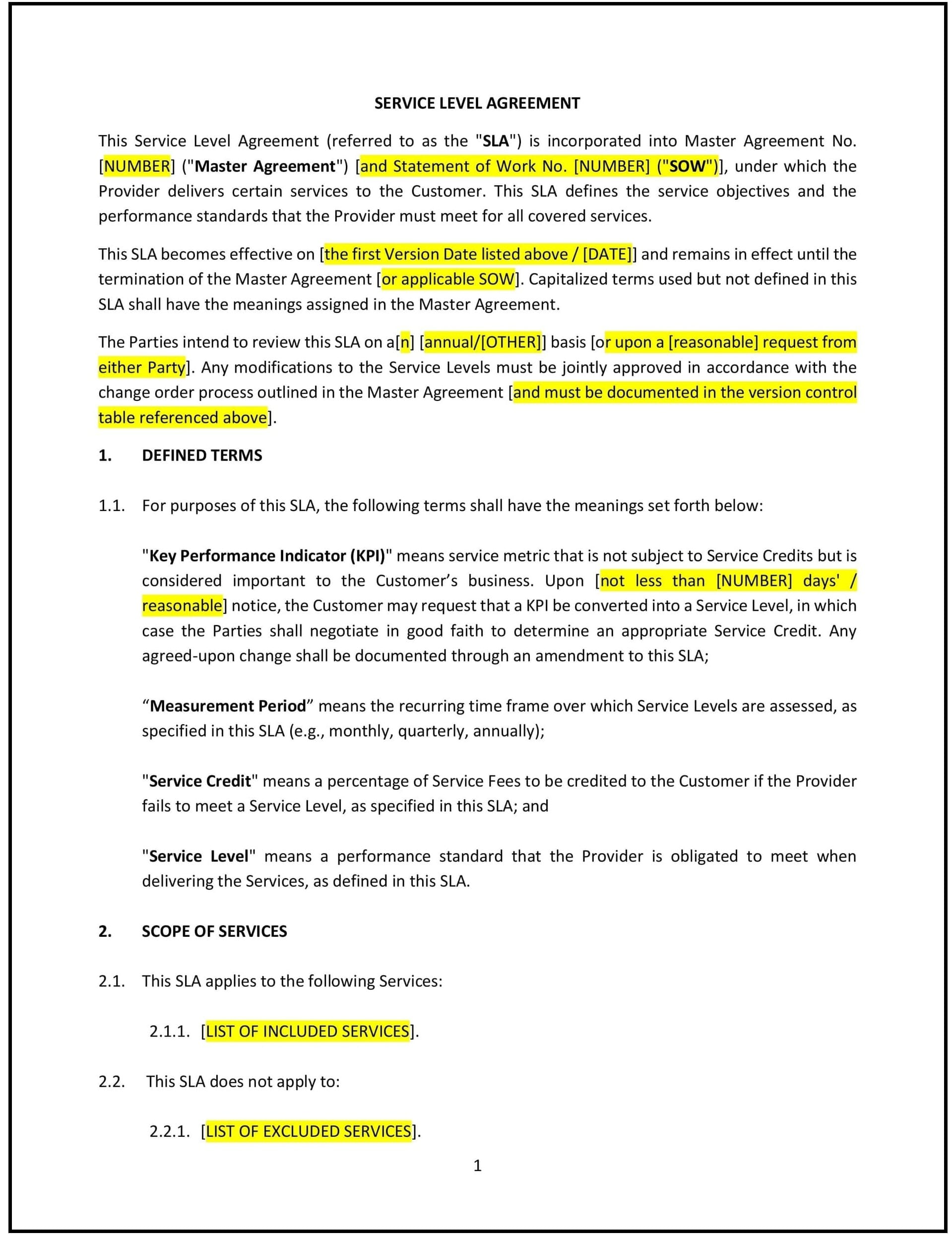
Service Level Agreement (SLA) (Oklahoma)
A Service Level Agreement (SLA) in Oklahoma is a legally binding contract that sets clear expectations for service performance, accountability, and remedies between a service provider and a client. This agreement is essential for businesses that rely on external service providers for critical operations, such as IT services, cloud computing, consulting, managed services, and maintenance contracts. By defining performance metrics, response times, and penalties for service failures, an SLA helps businesses protect their interests and ensure consistent service delivery.
Oklahoma contract law governs SLAs, but businesses operating in regulated industries such as healthcare, finance, and telecommunications must also comply with federal and industry-specific regulations. While there are no specific state laws for SLAs, companies handling sensitive consumer data or providing essential business services should align with best practices to avoid disputes and legal risks. A properly structured SLA offers legal protection, ensures service quality, and enhances business relationships by clearly outlining the obligations of both parties.
Tips for drafting and maintaining a Service Level Agreement in Oklahoma
- Clearly define service scope: Provide a detailed breakdown of the services covered, including any exclusions or limitations, to prevent misunderstandings. Be specific about what the provider is responsible for delivering.
- Set measurable performance standards: Include key performance indicators (KPIs) such as system uptime percentages, response times for support tickets, and issue resolution deadlines to track service quality.
- Establish client responsibilities: Define any obligations the client must fulfill, such as providing necessary access, data, or infrastructure to enable the provider to meet performance standards.
- Specify remedies for service failures: Outline penalties such as service credits, partial refunds, or the right to terminate the contract if performance benchmarks are not met. Oklahoma contract law allows businesses to negotiate these terms freely.
- Include a dispute resolution process: Specify whether disputes will be handled through Oklahoma courts, mediation, or arbitration. Many businesses prefer arbitration for faster, cost-effective resolution.
- Address confidentiality and data security: If the provider handles sensitive customer data, ensure that confidentiality clauses and security standards are included. Businesses working in finance, healthcare, or technology may also need to comply with federal data protection laws.
- Review and update the SLA regularly: As business needs evolve, the SLA should be reviewed periodically to ensure it remains relevant, aligned with industry standards, and legally enforceable.