Trademark License Agreement (Pro-Licensee) (Kentucky): Free template
Got contracts to review? While you're here for contracts, let Cobrief make contract review effortless—start your free review now.
Customize this template for free
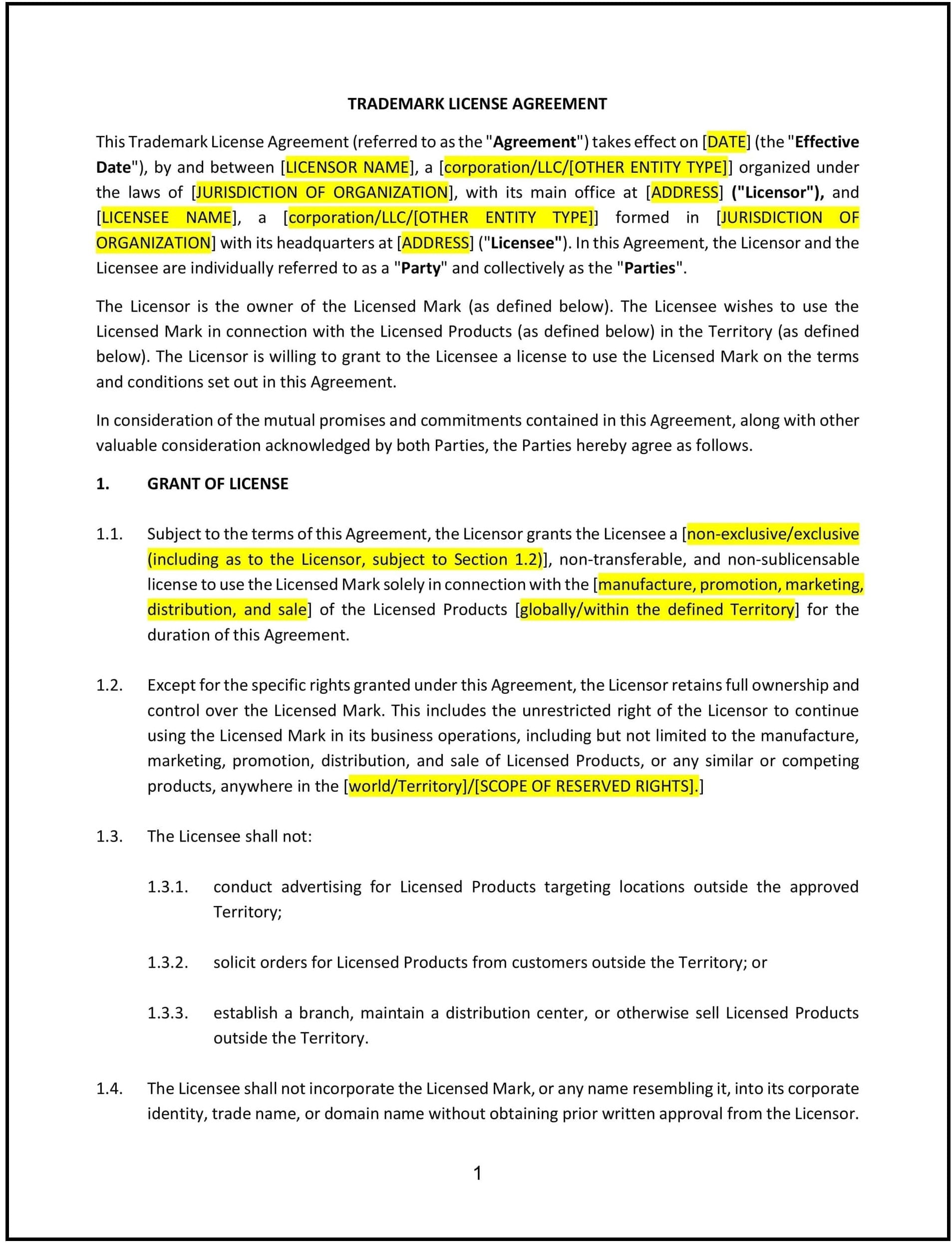
Trademark License Agreement (Pro-Licensee) (Kentucky)
A Trademark License Agreement is a legally binding contract between a trademark owner (licensor) and a third party (licensee), granting the licensee the right to use the trademark under specific terms and conditions. In Kentucky, this type of agreement is commonly used in industries like manufacturing, agriculture, and retail to allow the licensee to leverage a well-known brand while generating revenue. A Pro-Licensee Trademark License Agreement prioritizes the licensee’s interests, ensuring flexibility and protection in the use of the trademark.
Kentucky’s strong manufacturing and agricultural sectors make trademark licensing an attractive option for businesses looking to expand their product offerings. However, licensees must ensure compliance with state-specific laws, such as Kentucky’s trademark registration requirements and consumer protection statutes.
Tips for drafting and maintaining a Trademark License Agreement in Kentucky (Pro-Licensee)
- Define the scope of the license clearly: Specify the trademark(s) being licensed, the geographic area of use, and the products or services covered. For example, if the trademark is for a beverage product, outline whether the license applies to all beverages or specific categories like soft drinks.
- Include flexibility in quality control provisions: Ensure the licensor’s quality standards are reasonable and achievable. For instance, negotiate the right to modify products or services to meet market demands without excessive restrictions.
- Address royalty payments: Negotiate favorable royalty rates, payment deadlines, and reporting requirements. For example, specify that royalties will be paid quarterly based on net sales.
- Include termination clauses: Specify the conditions under which the licensee can terminate the agreement, such as breach of contract or failure to provide adequate support. Outline any penalties or payments due upon termination.
- Comply with Kentucky laws: Ensure the agreement adheres to Kentucky’s trademark registration requirements and consumer protection statutes. This ensures enforceability and protects the licensee’s interests.
- Regularly review and update: Periodically update the agreement to reflect changes in the scope of the license, business needs, or legal requirements. For example, if the licensee expands into new product categories, amend the agreement to include these.