Website Development Agreement (Delaware): Free template
Got contracts to review? While you're here for contracts, let Cobrief make contract review effortless—start your free review now.
Customize this template for free
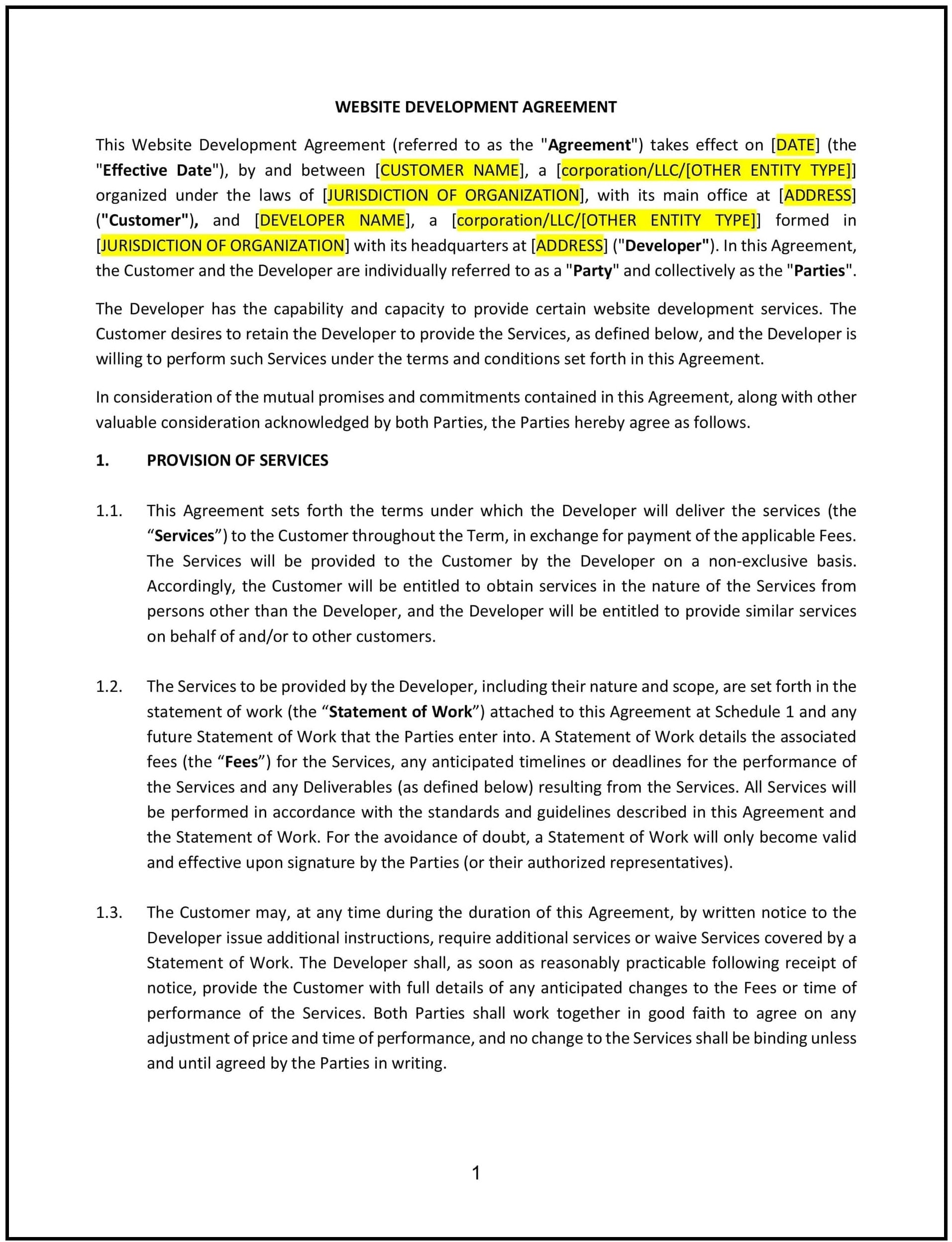
Website Development Agreement (Delaware)
A Website Development Agreement is a legally binding contract between a website developer and a client, outlining the terms and conditions for the design, development, and delivery of a website. In Delaware, this type of agreement is commonly used in industries like technology, retail, healthcare, tourism, and professional services to ensure clear expectations and accountability.
This agreement ensures that both parties understand their obligations, including project timelines, payment terms, intellectual property ownership, and dispute resolution mechanisms. For example, a small business in Wilmington might use a Website Development Agreement to hire a developer to create an e-commerce site, while a healthcare provider in Dover might use it to build a patient portal. A well-drafted Website Development Agreement protects both the developer and the client by minimizing misunderstandings and fostering trust.
Tips for drafting and maintaining a Website Development Agreement in Delaware
- Define the scope of work clearly: Specify the services to be provided, including design, development, testing, and maintenance. For example, outline whether the agreement includes SEO optimization, mobile responsiveness, or ongoing support.
- Include detailed payment terms: Outline the payment structure, whether fixed-price, hourly, or milestone-based. Specify invoicing procedures, payment deadlines, and any penalties for late payments. For instance, state that payments will be made in three installments: 30% upfront, 40% upon completion of the design phase, and 30% upon final delivery.
- Address intellectual property ownership: Ensure that the client owns the final website and its content, while the developer retains ownership of any pre-existing tools or code used. Include clauses that transfer ownership upon full payment.
- Include termination clauses: Specify the conditions under which either party can terminate the agreement, such as breach of contract or failure to meet deadlines. Outline any payments due upon termination.
- Comply with Delaware laws: Ensure the agreement adheres to Delaware’s contract laws and any industry-specific regulations. For example, if the website collects user data, ensure compliance with privacy laws and regulations, such as the Delaware Online Privacy and Protection Act (DOPPA).
- Regularly review and update: Periodically update the agreement to reflect changes in the scope of work, business needs, or legal requirements. For example, if the client requests additional features, amend the agreement to include these.