Confidentiality obligations clarification request letter: Free template
Got contracts to review? While you're here for letters, let Cobrief make contract review effortless—start your free review now.
Customize this template for free
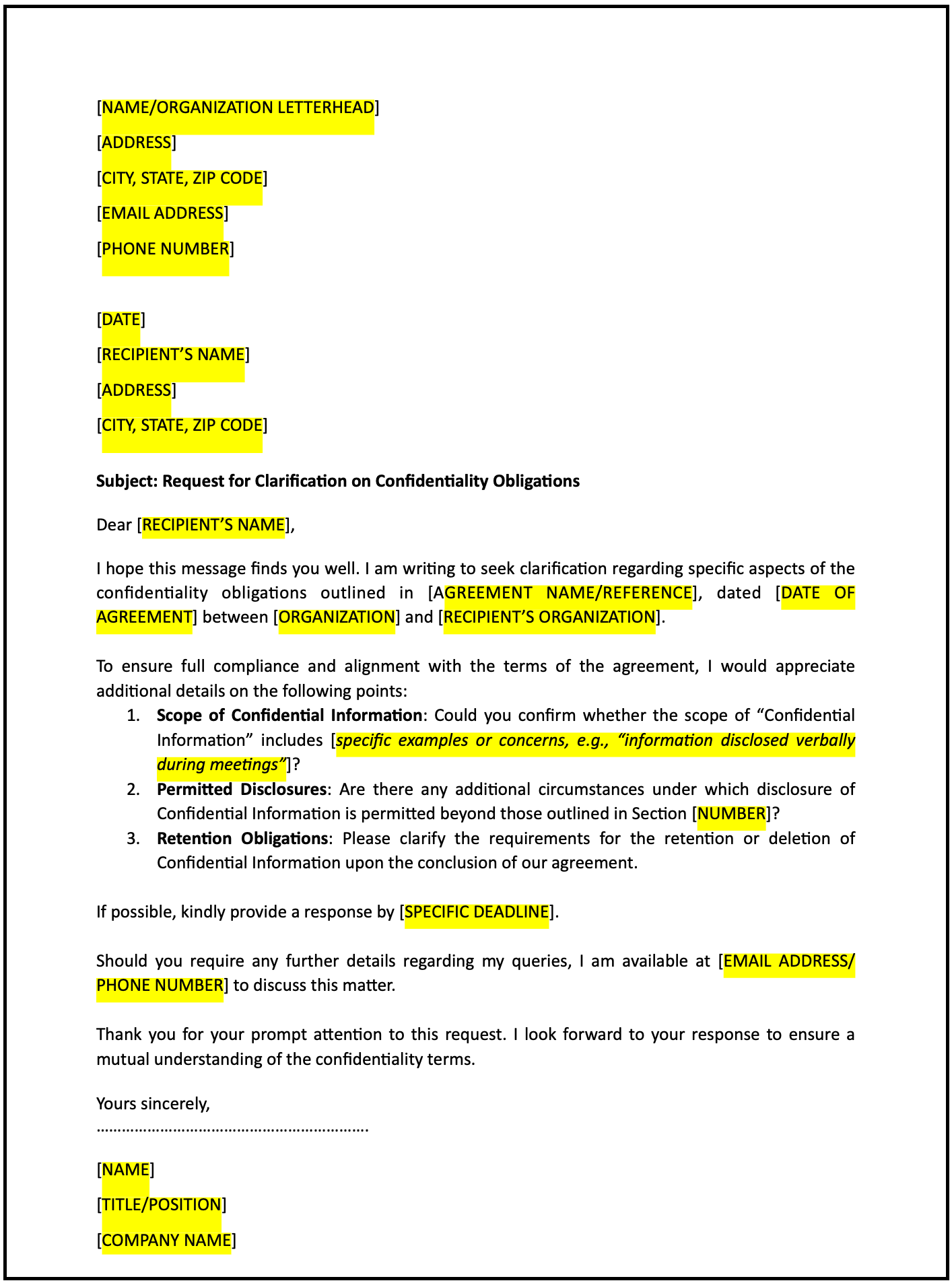
Confidentiality obligations clarification request letter
A confidentiality obligations clarification request letter is a formal communication used to seek further explanation about the confidentiality terms in an agreement. When the scope, exceptions, or application of confidentiality terms are unclear, this letter helps you document your questions and request clarification in a professional and structured way.
It is commonly used when businesses want to confirm their understanding of permitted disclosures, duration of obligations, exclusions, or how certain scenarios are covered under the agreement. This type of letter promotes shared understanding, reduces the risk of misinterpretation, and supports ongoing compliance with contractual terms.
How to use this confidentiality obligations clarification request letter
- Open with an introduction: Address the recipient respectfully and reference the relevant confidentiality agreement. Include identifying details such as the agreement’s title, effective date, and parties involved.
- State the purpose: Clearly explain that you are seeking clarification on certain confidentiality obligations within the agreement to ensure full understanding and compliance.
- Specify areas of concern: Identify the specific clauses, terms, or provisions that require clarification. These may include disclosure exceptions, time limits, obligations after termination, or treatment of third-party information.
- Provide context: Briefly describe why the clarification is important—for example, internal compliance reviews, operational procedures, or preparation for an upcoming transaction or collaboration.
- Request a response: Ask the recipient to provide a written explanation or further detail regarding the specific areas you’ve raised. You may also invite them to propose a meeting or call for discussion if preferred.
- Reaffirm commitment: Emphasize your intention to comply with all confidentiality terms and your commitment to protecting confidential information in good faith.
- Maintain a professional tone: Keep your message constructive, clear, and respectful. The goal is to promote open dialogue and mutual understanding.
- Provide contact information: Include your name, title, company name, email address, and phone number to make it easy for the recipient to respond or arrange a discussion.
Benefits of using a confidentiality obligations clarification request letter
- Promotes alignment: Helps both parties confirm their understanding of key confidentiality terms and avoid misinterpretation.
- Reflects professionalism: Shows that your business takes its confidentiality responsibilities seriously and is committed to transparency.
- Encourages open communication: Facilitates a collaborative approach to addressing contractual uncertainties.
- Builds trust: Strengthens the working relationship by demonstrating your willingness to resolve ambiguities proactively.
- Supports compliance: Helps your team adhere to contractual and regulatory requirements with confidence and clarity.
Tips for writing an effective confidentiality obligations clarification request letter
- Be specific: Identify the precise clauses or terms you’re asking about and explain any related scenarios that are unclear.
- Use professional language: Keep your tone polite, collaborative, and focused on resolution rather than criticism.
- Provide context: Explain why you need clarification—whether it’s for legal compliance, risk management, or internal policy alignment.
- Highlight mutual benefits: Emphasize that clearer interpretation benefits both parties by reducing the chance of disputes or errors.
- Include actionable steps: Suggest a written response or propose a follow-up call if needed. Make it easy for the recipient to address your concerns.
- Keep it concise: Focus on clarity and structure, avoiding unnecessary repetition or legal jargon.