Letter confirming mutual goals and KPIs for collaboration: Free template
Got contracts to review? While you're here for letters, let Cobrief make contract review effortless—start your free review now.
Customize this template for free
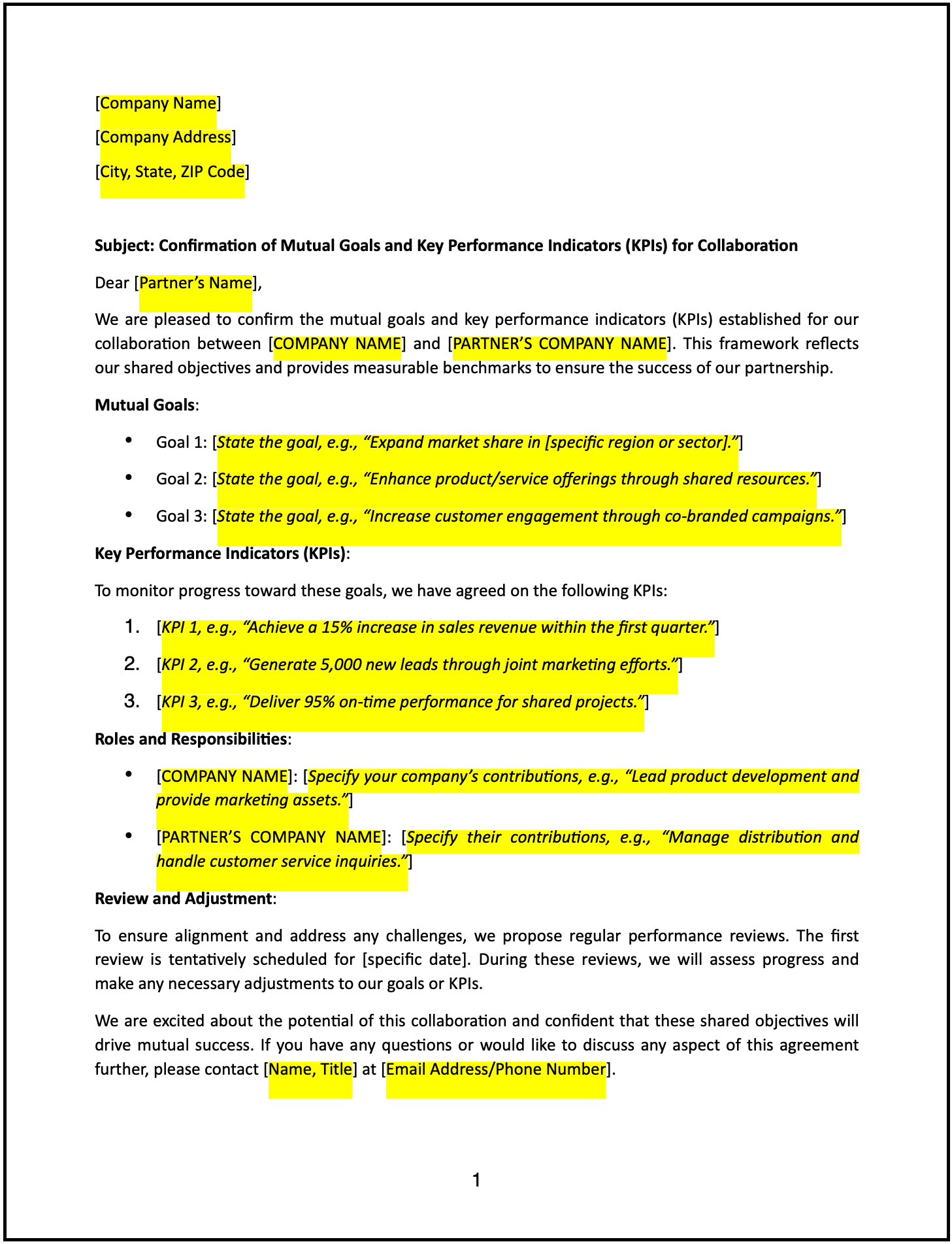
Letter confirming mutual goals and KPIs for collaboration
A letter confirming mutual goals and KPIs for collaboration is a formal communication used to establish alignment between parties in a partnership or project. This letter outlines the agreed objectives, key performance indicators (KPIs), and responsibilities to ensure clarity, accountability, and a shared understanding.
How to use this letter confirming mutual goals and KPIs for collaboration
- Open with an introduction: Address the recipient respectfully and provide context for the collaboration, referencing prior discussions or agreements.
- Confirm mutual goals: Clearly outline the overarching objectives of the collaboration, emphasizing the shared purpose and desired outcomes.
- Specify the KPIs: Detail the key performance indicators agreed upon to measure the success of the collaboration. These might include metrics like timelines, deliverables, revenue targets, or audience engagement benchmarks.
- Outline responsibilities: Briefly describe the roles and responsibilities of each party to ensure accountability.
- Reiterate the benefits: Highlight how achieving these goals will create value for all parties involved.
- Include a confirmation request: Invite the recipient to confirm their agreement with the outlined goals and KPIs or suggest adjustments.
- Maintain a professional tone: Ensure the letter is clear, respectful, and focused on fostering alignment.
- Provide contact information: Include details for the recipient to reach out with questions or discuss any refinements.
Benefits of using a letter confirming mutual goals and KPIs for collaboration
This letter ensures a structured and professional way to align expectations and foster accountability in partnerships. Here’s how it helps:
- Promotes clarity: Clearly outlining goals and KPIs ensures all parties understand the collaboration’s purpose.
- Reflects professionalism: A well-crafted letter demonstrates respect and commitment to a successful partnership.
- Encourages accountability: Documenting roles and KPIs ensures all parties take ownership of their responsibilities.
- Fosters alignment: Highlighting shared objectives strengthens the foundation of the collaboration.
- Supports success: Establishing measurable KPIs provides a roadmap for achieving collaboration goals.
Tips for writing an effective letter confirming mutual goals and KPIs for collaboration
- Be specific: Clearly describe the goals, KPIs, and responsibilities to avoid ambiguity.
- Use professional language: Maintain a respectful and collaborative tone to build trust and alignment.
- Provide context: Briefly explain how the goals and KPIs support the overall purpose of the collaboration.
- Highlight mutual benefits: Emphasize how achieving the objectives will benefit all parties involved.
- Include actionable steps: Share instructions for confirming the agreement or providing feedback.
- Keep it concise: Focus on the key points while ensuring the tone is professional and engaging.