Letter informing stakeholders of a data breach: Free template
Customize it in Cobrief and see the moment it's opened, signed, or actioned.
Customize this template for free
TL;DR
A formal letter template for notifying stakeholders about a data breach, detailing the incident, its impact, and the organization's response. It is primarily used by compliance officers and communication teams to ensure transparency, accountability, and adherence to legal requirements while fostering trust among affected parties.
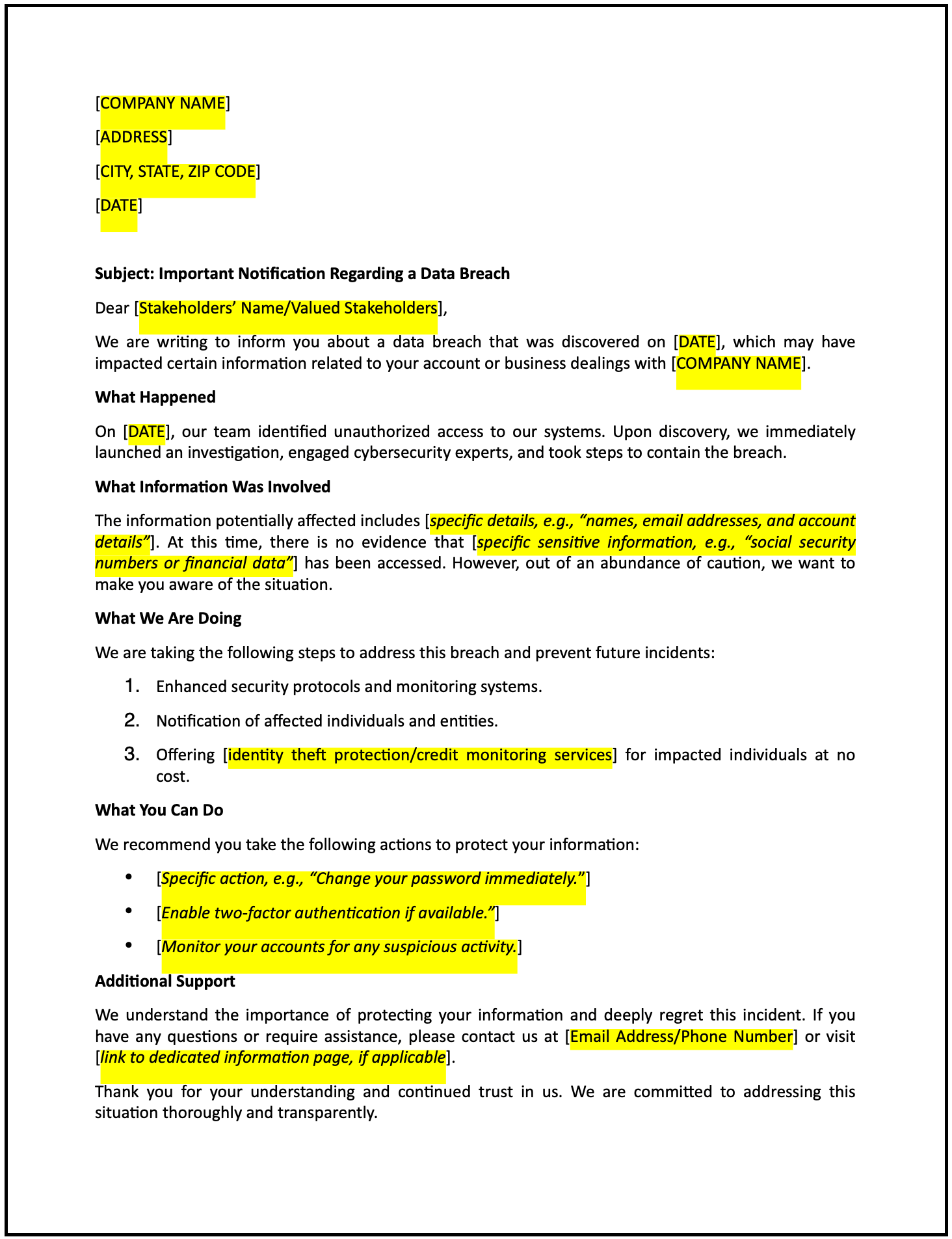
Letter informing stakeholders of a data breach
A letter informing stakeholders of a data breach is a formal communication to notify affected parties about a security incident that may impact their data. This letter provides transparency, details about the breach, and steps being taken to mitigate its impact, fostering trust and compliance.
How to use this letter informing stakeholders of a data breach
- Open with the purpose: Begin by acknowledging the data breach and the organization’s commitment to transparency and security.
- Provide details of the breach: Clearly explain what happened, including when the breach occurred, the type of data affected, and the scope of the incident.
- Outline the response: Describe the immediate actions taken to address the breach, such as containing the incident, investigating the cause, and enhancing security measures.
- Highlight stakeholder impact: Explain how the breach may affect the stakeholders and any potential risks they should be aware of.
- Offer guidance: Provide specific steps stakeholders can take to protect themselves, such as changing passwords, monitoring accounts, or contacting relevant authorities.
- Reaffirm commitment: Emphasize the organization’s dedication to resolving the issue and preventing future breaches.
- Provide contact information: Include details for stakeholders to reach out with questions or concerns about the breach.
Benefits of using a letter informing stakeholders of a data breach
This letter template ensures a structured and professional way to address data breaches while fostering transparency and trust. Here’s how it helps:
- Promotes accountability: Acknowledging the breach demonstrates the organization’s responsibility and commitment to resolving the issue.
- Encourages trust: Transparent communication fosters stakeholder confidence during challenging situations.
- Reflects professionalism: A well-crafted letter ensures clarity and reassures stakeholders of the organization’s competence.
- Provides actionable guidance: Offering clear steps helps stakeholders protect themselves from potential harm.
- Supports compliance: Notifying stakeholders aligns with legal and regulatory requirements for data breaches.
Tips for writing an effective letter informing stakeholders of a data breach
- Be specific: Clearly describe the breach, the data affected, and the potential impact.
- Use professional language: Maintain a respectful and empathetic tone to reassure stakeholders.
- Highlight actions: Emphasize the steps being taken to resolve the issue and enhance security.
- Include actionable advice: Provide clear instructions for stakeholders to minimize their risk.
- Keep it concise: Focus on the key points while ensuring the tone is professional and transparent.
Frequently asked questions (FAQs)
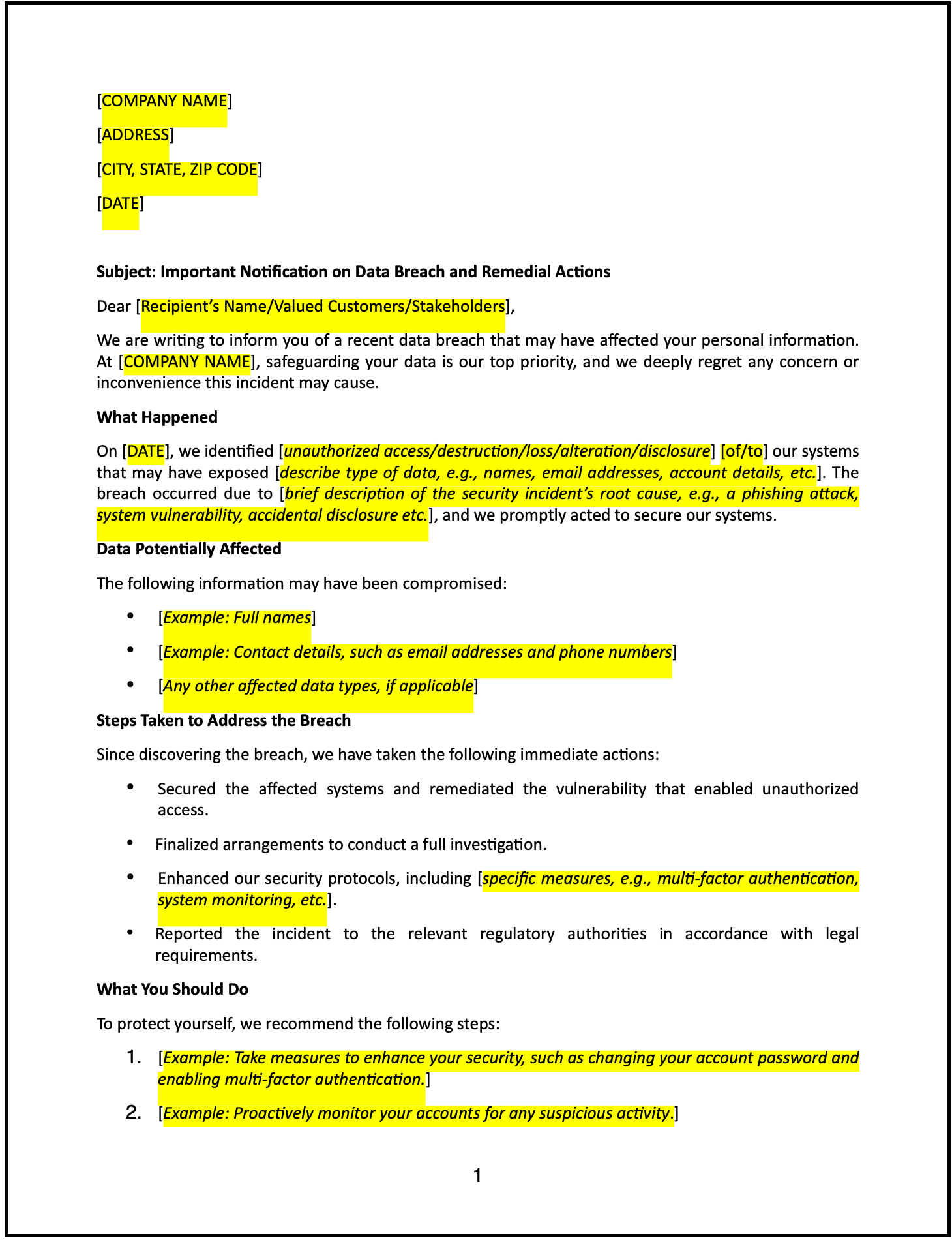
Notifies the recipient of a data breach, outlining the details of the breach, the data affected, and the steps taken to address the issue and prevent future incidents.
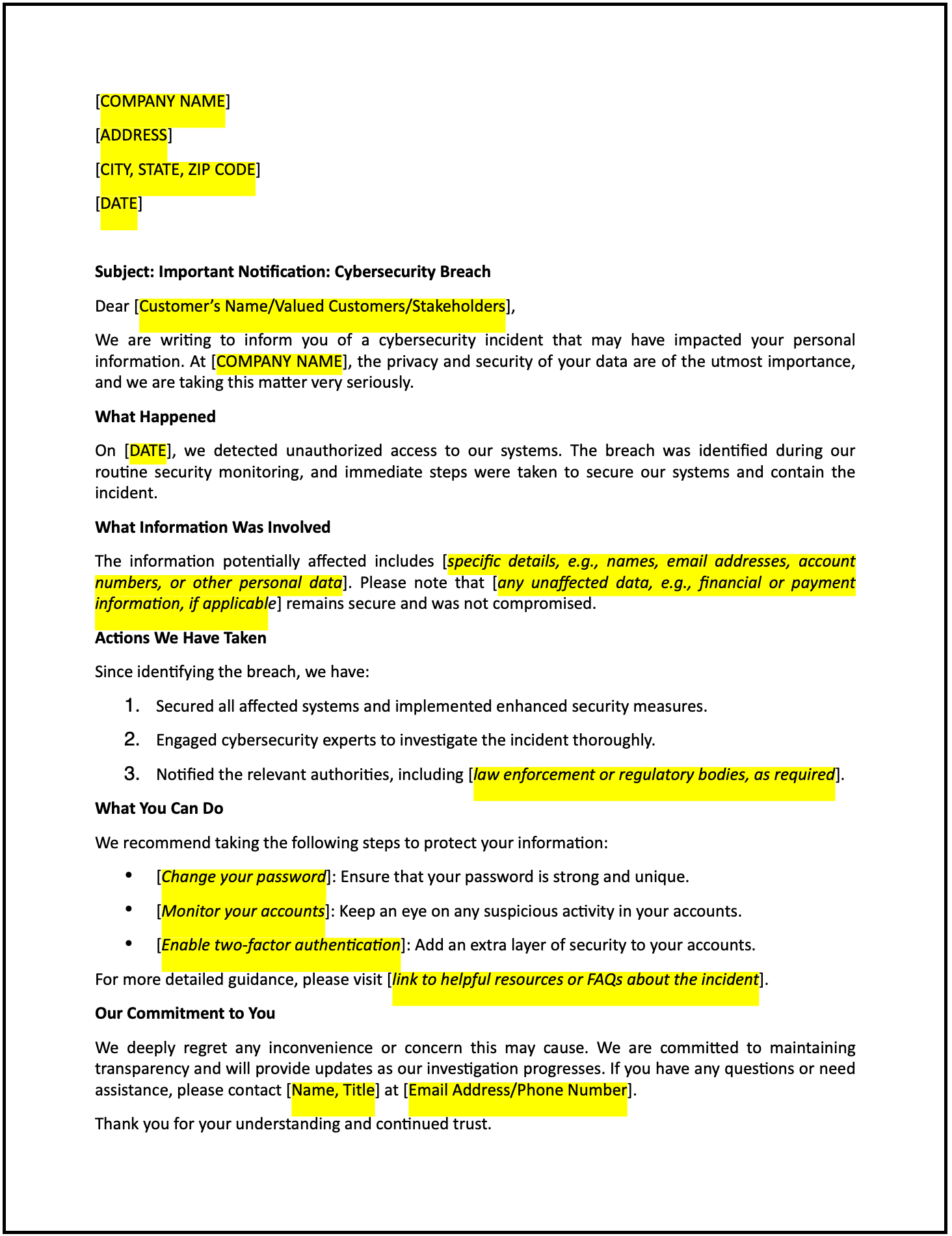
Notifies recipients of a cybersecurity breach, detailing the scope of the breach, potential impact, and steps being taken to address the issue.
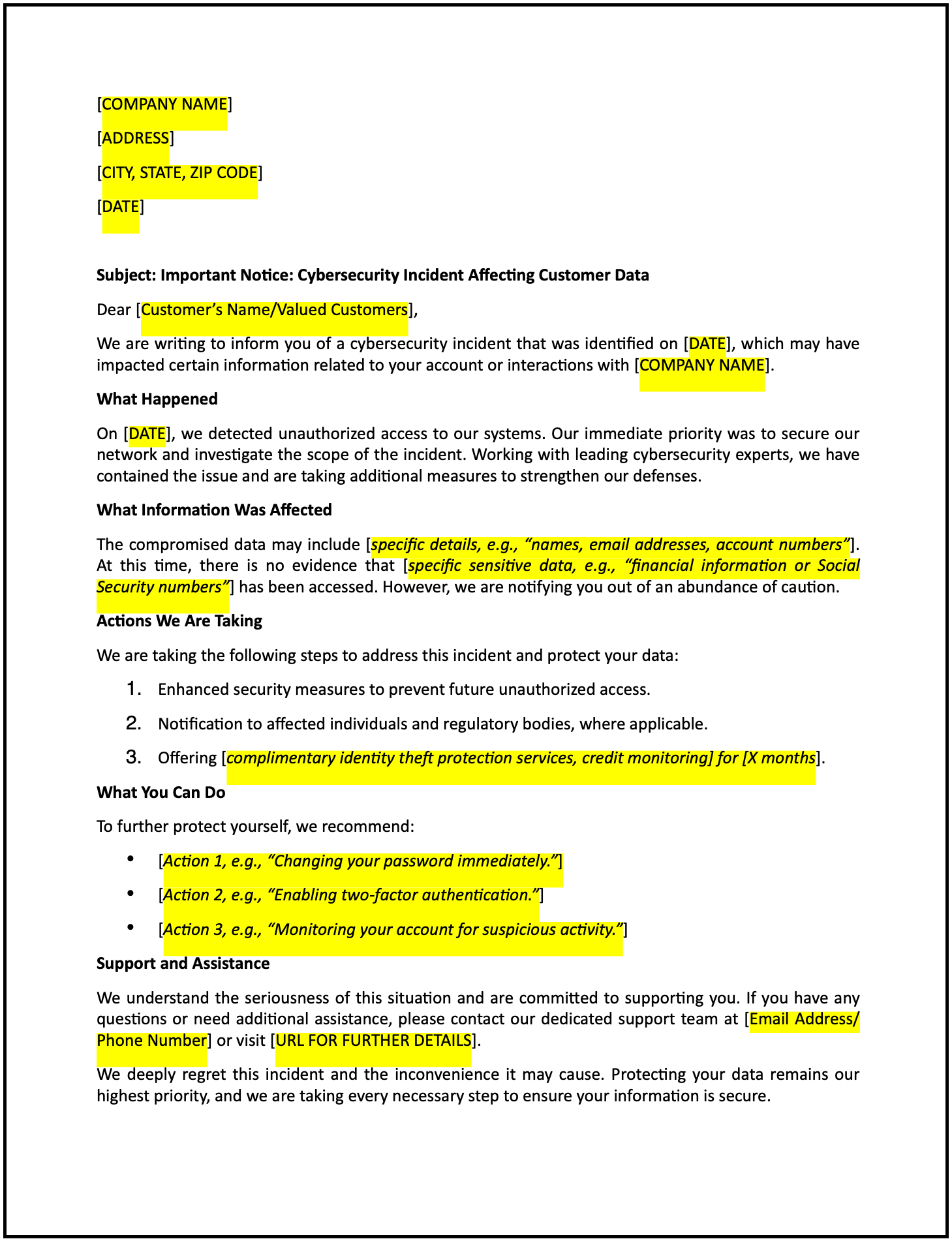
Notifies customers of a cybersecurity incident affecting their data, detailing the nature of the breach, the steps taken to secure the data, and any actions customers should take.
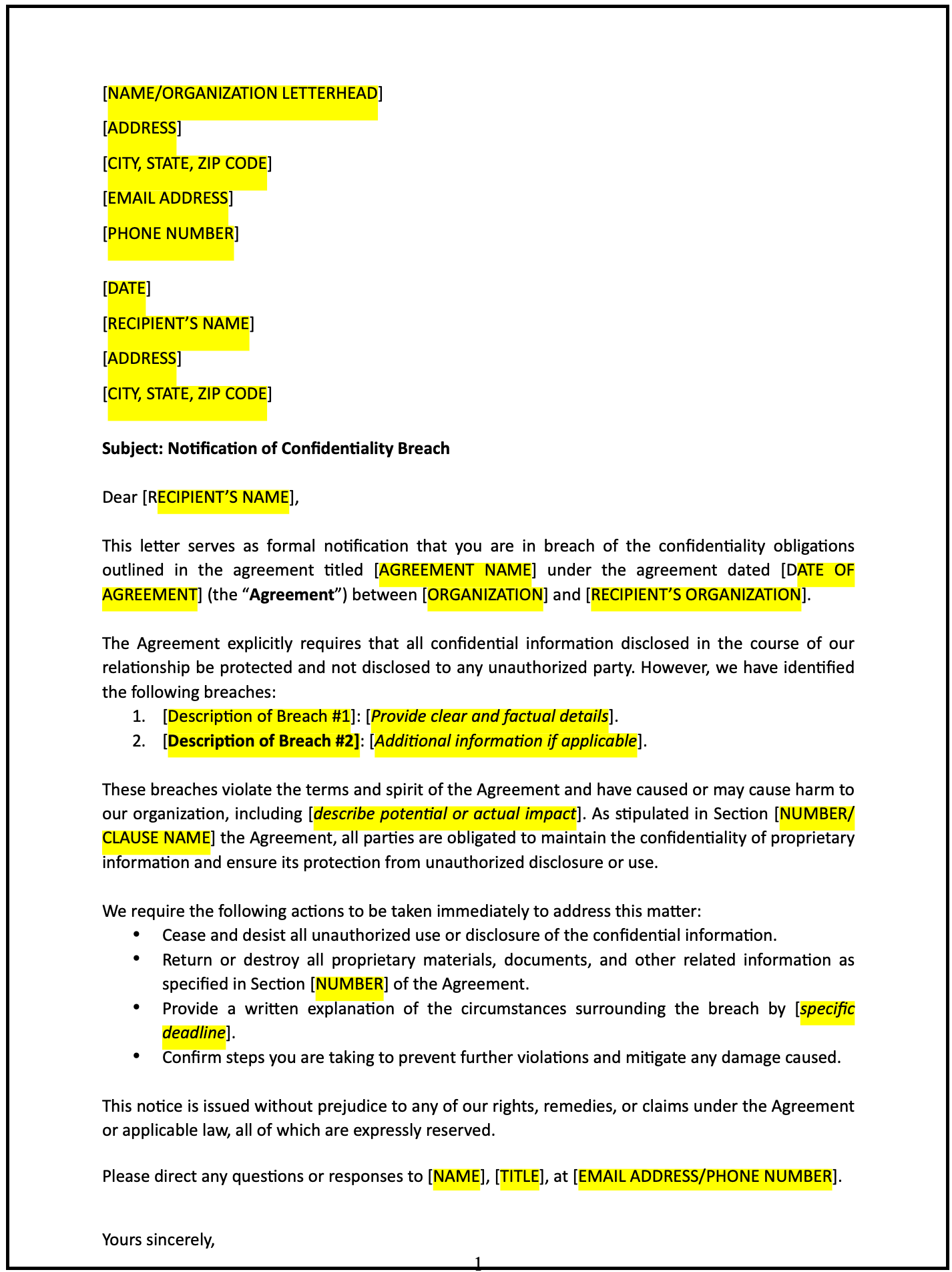
Notifies the recipient of a confidentiality breach, outlining the specifics of the breach and requesting immediate corrective action to prevent further incidents.
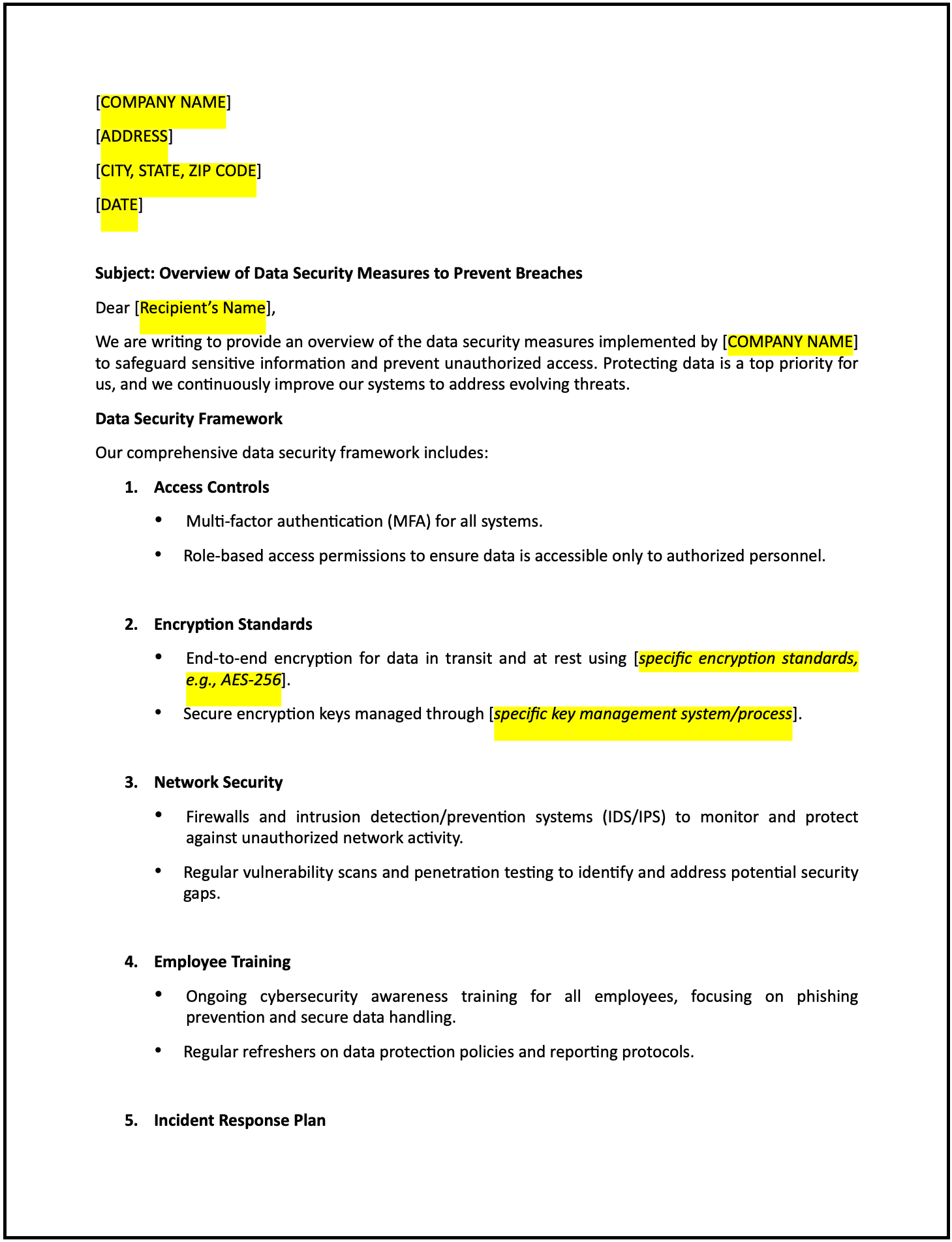
Outlines the data security measures implemented to prevent breaches, detailing protocols, tools, and practices in place to safeguard sensitive information.