Letter of corrected invoice or billing details: Free template
Customize it in Cobrief and see the moment it's opened, signed, or actioned.
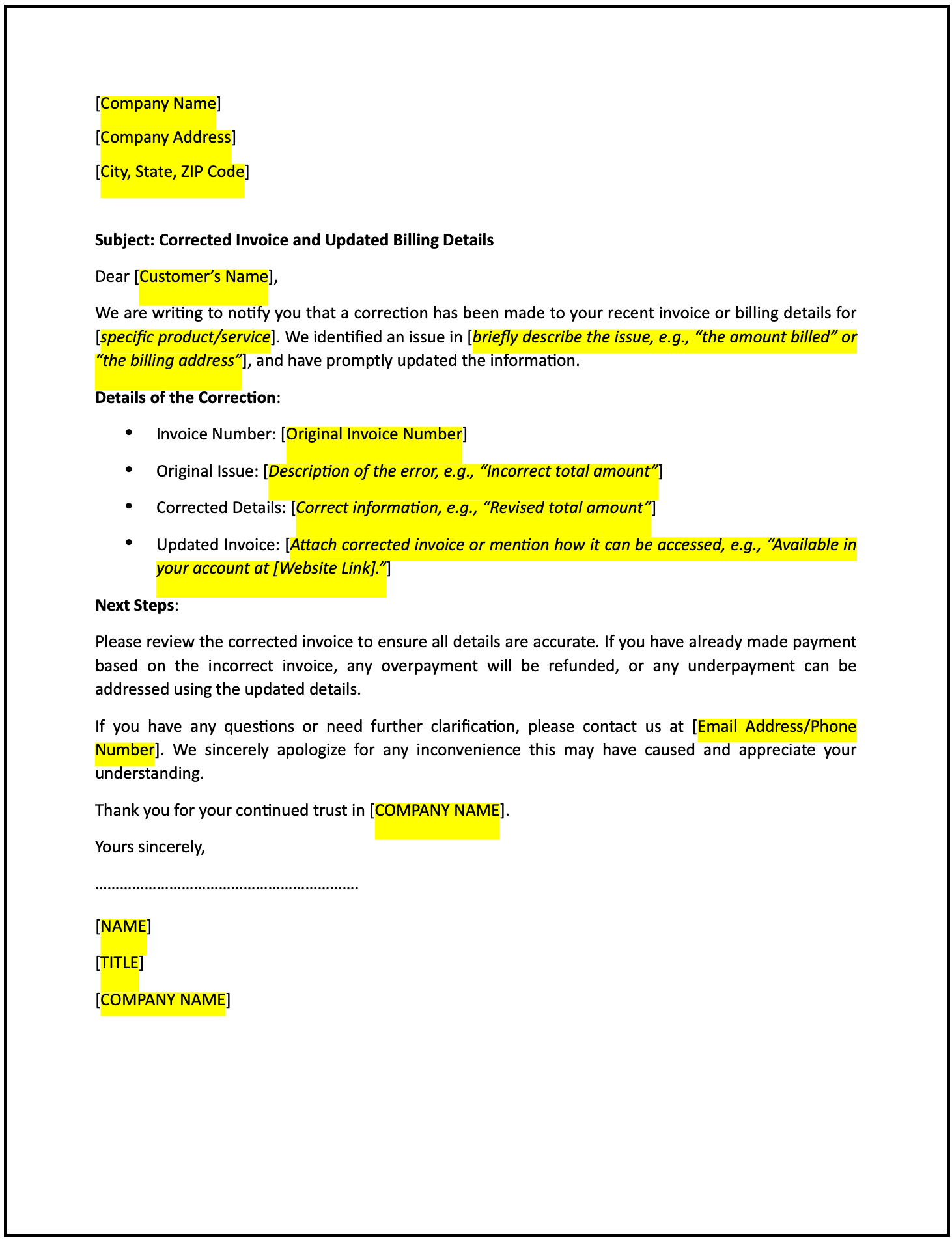
Customize this template for free
TL;DR
A letter used to formally notify clients or vendors of changes to a previously issued invoice or billing document. It details the original billing information, explains the corrections made, and provides updated details to ensure transparency and maintain professionalism, typically employed when billing errors are identified.
Letter of corrected invoice or billing details
A corrected invoice or billing details letter is a formal communication used to notify a customer, client, or vendor of changes to a previously issued invoice or billing document. This letter outlines the original billing information, explains the correction, and provides the updated invoice or billing details for review and payment.
Sending this letter ensures transparency, maintains professionalism, and helps prevent disputes or delays in payment. It is typically used when billing errors are identified, such as incorrect charges, wrong dates, misapplied taxes, or duplicate items.
How to use this corrected invoice or billing details letter
- Open with an introduction: Address the recipient respectfully and reference the original invoice by number and date.
- State the purpose: Clearly explain that you are issuing a corrected invoice or updating billing details due to an identified error or discrepancy.
- Summarize the correction: Briefly describe what was incorrect in the original invoice and what has been amended (e.g., pricing error, incorrect service dates, tax adjustments).
- Attach or reference the corrected document: Include the corrected invoice with the letter or provide a direct reference or link to it.
- Provide instructions for next steps: Clarify whether any action is required from the recipient, such as adjusting payment, reprocessing the invoice, or confirming receipt.
- Reaffirm appreciation and professionalism: Acknowledge the importance of accurate billing and thank the recipient for their understanding.
- Provide contact information: Include your full name, title, company name, phone number, and email address so the recipient can reach out with questions or concerns.
Benefits of using a corrected invoice or billing details letter
- Promotes accuracy: Ensures the billing records reflect the correct details, reducing confusion or payment delays.
- Reflects professionalism: Demonstrates accountability and a commitment to clear communication.
- Encourages trust: Transparent correction of errors strengthens the customer or vendor relationship.
- Prevents disputes: Promptly addressing billing issues helps avoid misunderstandings or escalation.
- Supports accounting integrity: Maintains accurate documentation for financial and audit purposes.
Tips for writing an effective corrected invoice or billing details letter
- Be specific: Reference the original invoice number, issue date, and clearly outline the corrections made.
- Use professional language: Maintain a respectful and concise tone, especially when acknowledging the error.
- Provide context: Briefly explain why the correction was necessary, such as a clerical error or misapplied fee.
- Highlight next steps: Let the recipient know whether any action is needed, such as issuing a revised payment.
- Include supporting documents: Attach the corrected invoice or updated billing information for clarity.
- Keep it concise: Focus on the correction and resolution without unnecessary detail.
Frequently asked questions (FAQs)
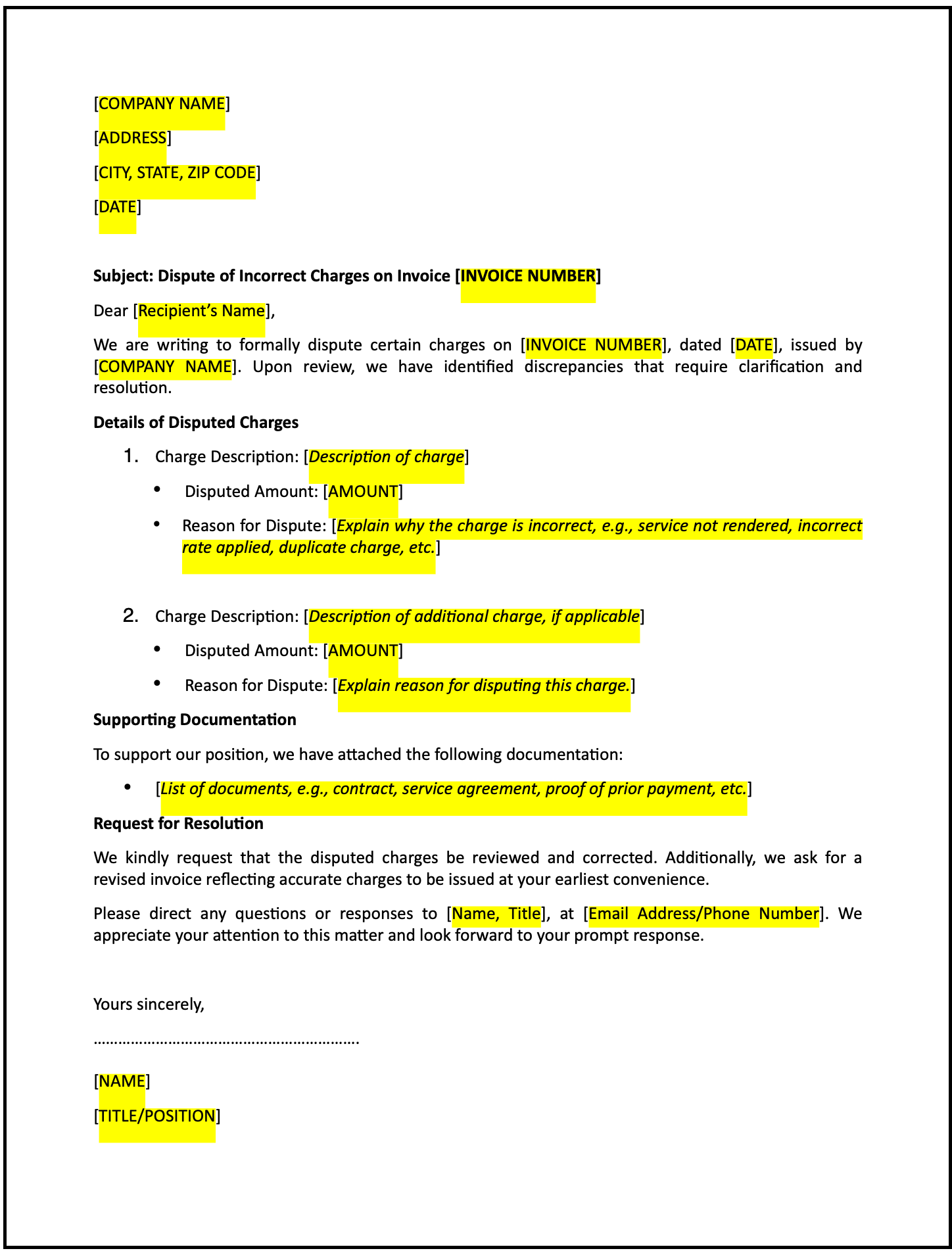
Disputes incorrect charges on an invoice, outlining the specific discrepancies and requesting a corrected invoice or clarification.
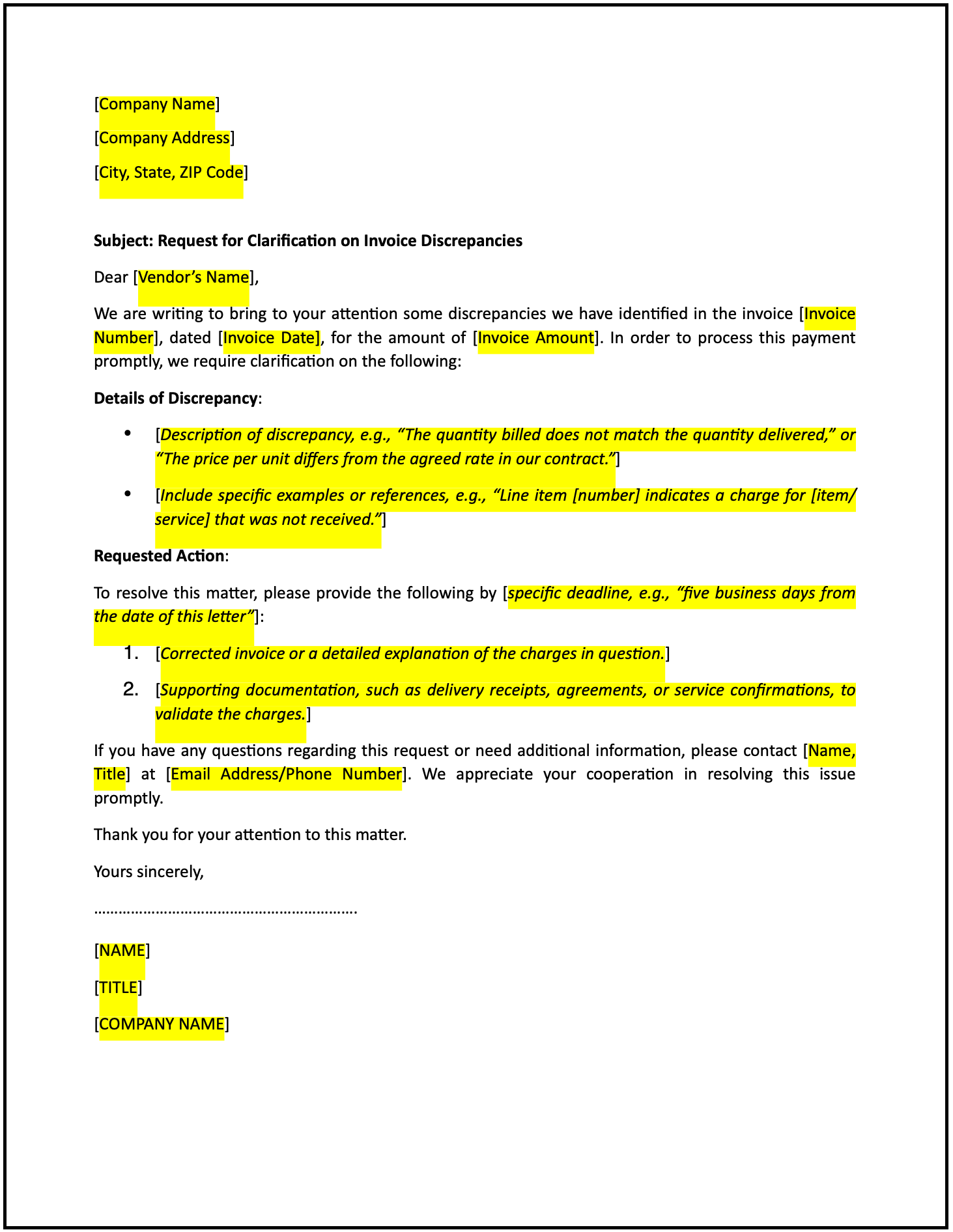
Requests clarification on invoice discrepancies, outlining the specific items or charges in question and seeking a detailed explanation or correction.
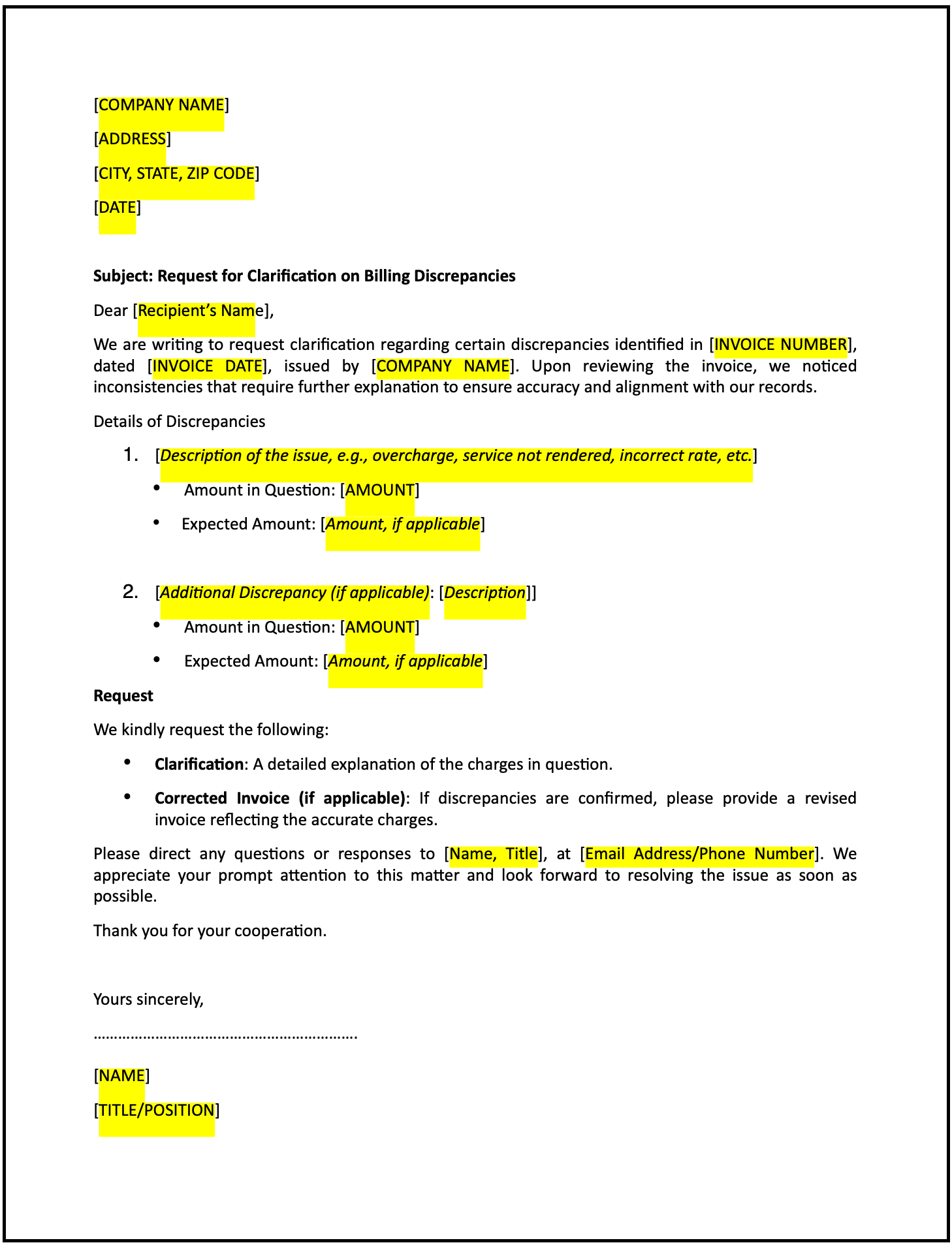
Requests clarification regarding billing discrepancies, specifying the discrepancies and asking for a detailed explanation.
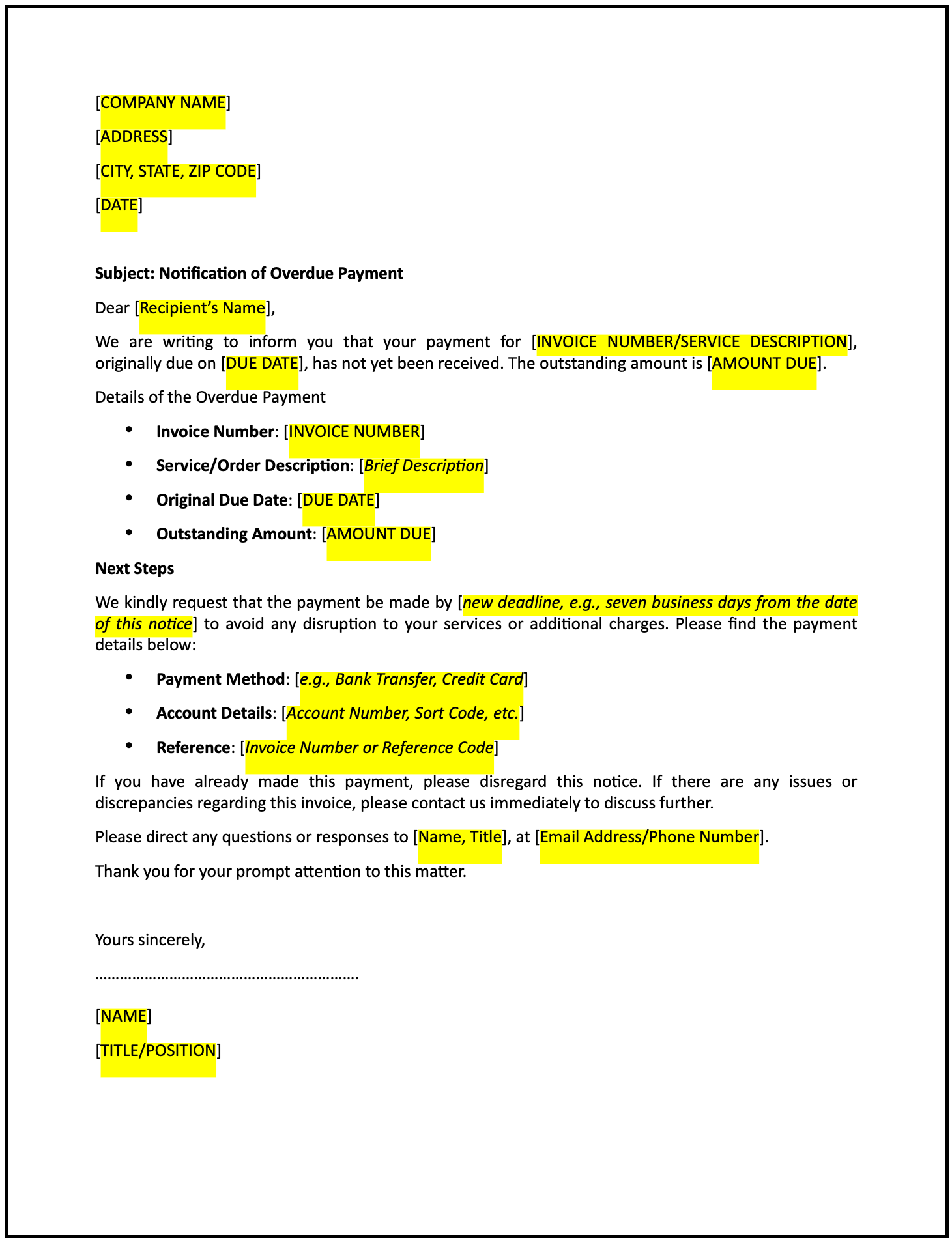
Notifies the recipient of an overdue payment, outlining the amount due, the original due date, and requesting prompt payment or an update on the payment status.
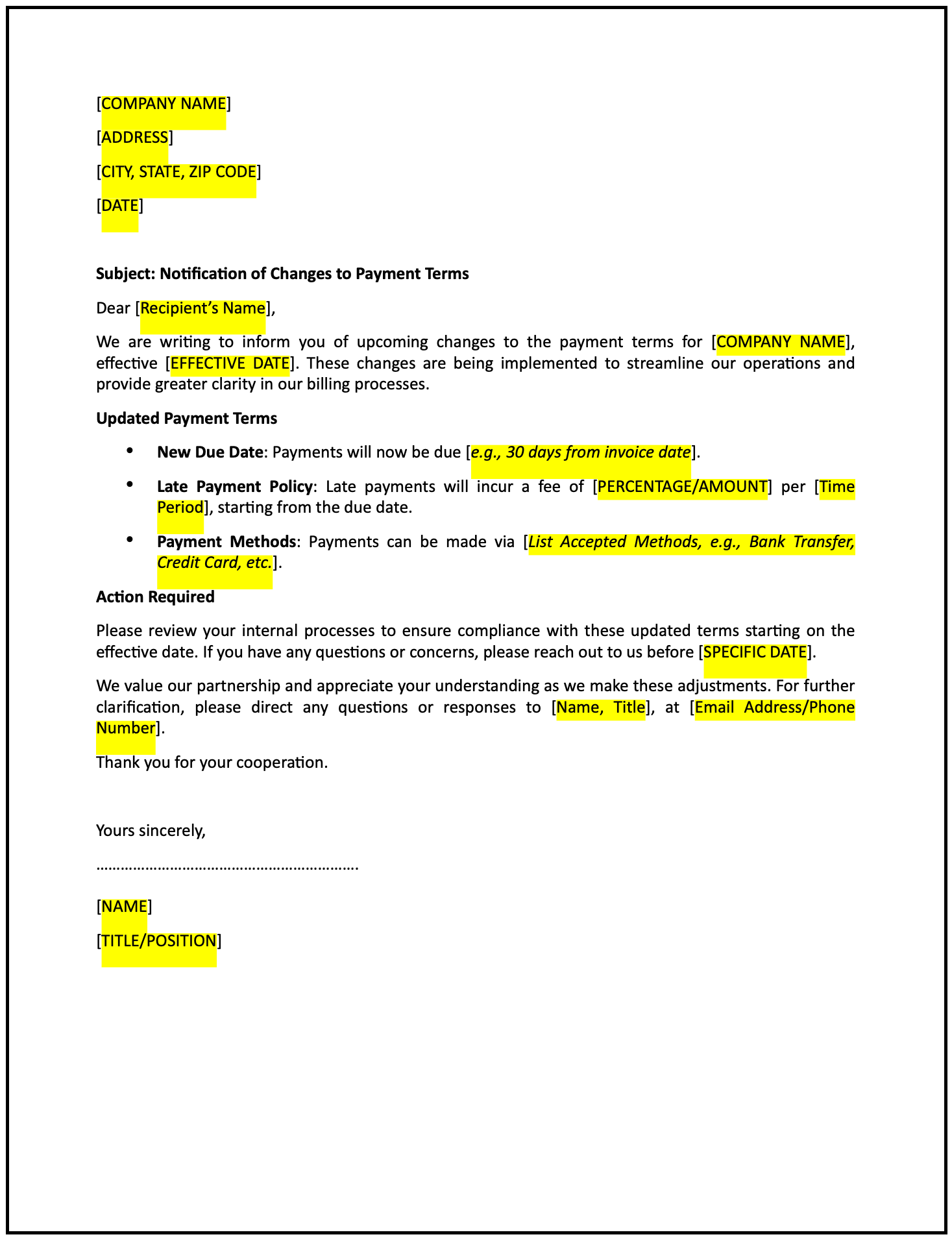
Notifies the recipient of changes to payment terms, outlining the new terms and the effective date of the changes.