Notification letter of breach of restrictive covenant: Free template
Got contracts to review? While you're here for letters, let Cobrief make contract review effortless—start your free review now.
Customize this template for free
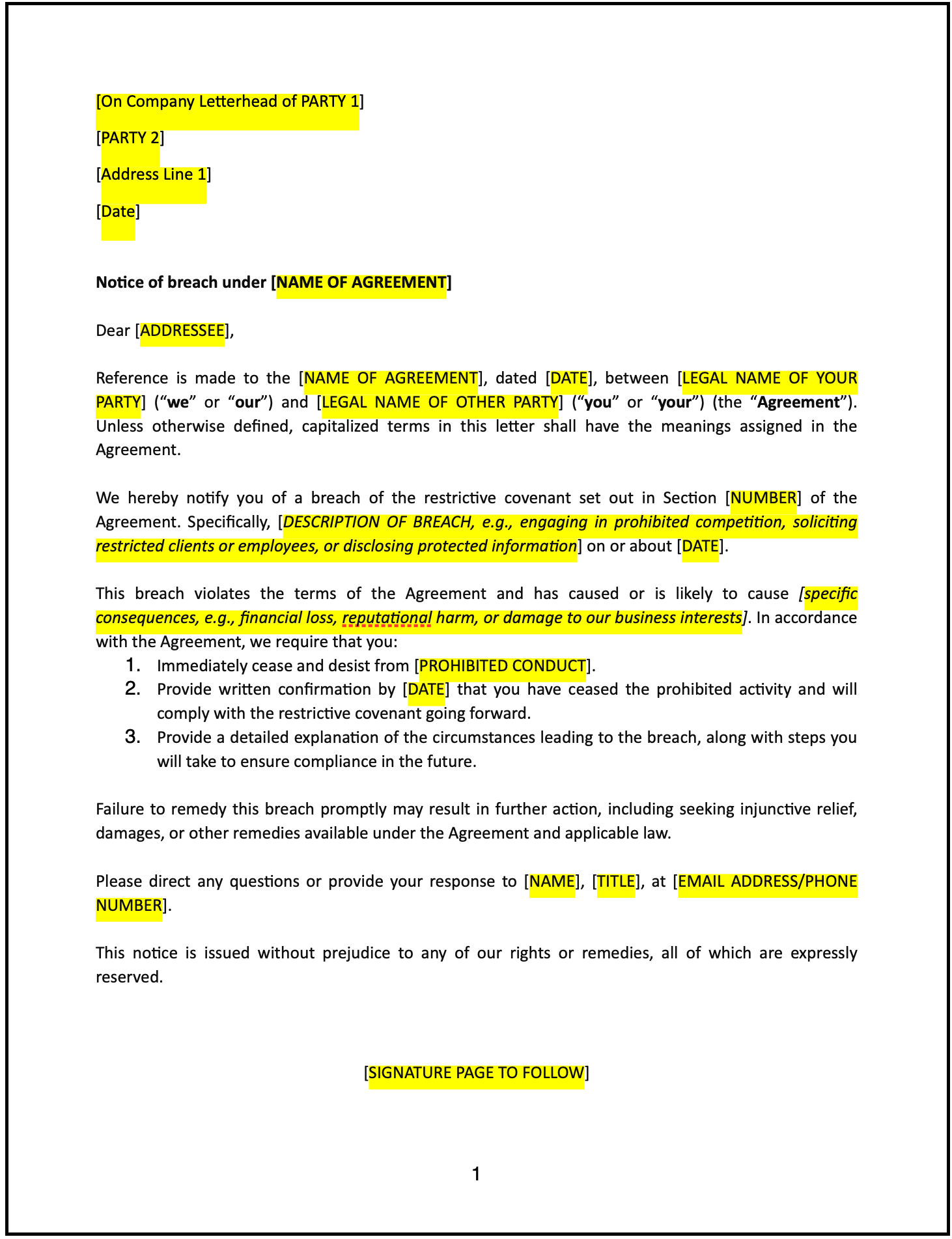
Notification letter of breach of restrictive covenant
A notification letter of breach of a restrictive covenant is a formal way to inform the breaching party of a violation of contractual obligations, assert your rights, and seek corrective action. This letter outlines the breach, its implications, and the steps required to resolve the matter amicably.
How to use this notification letter of breach of restrictive covenant
- Open with context: Start by referencing the contract containing the restrictive covenant and its significance to your agreement.
- Identify the breach: Clearly describe the specific actions or omissions that constitute the alleged breach of the covenant.
- Provide evidence: Include supporting details, such as dates, actions, or documentation, that substantiate your claim.
- Assert your position: Emphasize the enforceability of the restrictive covenant and its importance to protecting your interests.
- Request corrective action: Specify the actions required to remedy the breach, such as cessation of the prohibited activity, restitution, or written assurances.
- Highlight consequences: Mention potential legal or contractual remedies if the breach is not addressed promptly.
- Maintain a professional tone: Ensure the letter is respectful, clear, and focused on resolution.
- Provide contact information: Include details for further communication or clarification if needed.
Benefits of using a notification letter of breach of restrictive covenant
This letter template ensures a structured and professional way to address breaches while fostering resolution and protecting your interests. Here’s how it helps:
- Protects your rights: Clearly asserting your position demonstrates your commitment to upholding contractual agreements.
- Encourages compliance: Highlighting the breach and its consequences motivates prompt corrective action.
- Reflects professionalism: A well-crafted letter reinforces your credibility and seriousness.
- Reduces disputes: Clear communication minimizes misunderstandings and fosters constructive dialogue.
- Supports documentation: Creating a formal record of the breach is valuable for future reference or legal proceedings.
Tips for writing an effective notification letter of breach of restrictive covenant
- Be specific: Clearly reference the agreement, outline the breach, and provide supporting evidence.
- Use professional language: Maintain a respectful yet assertive tone to convey the seriousness of the matter.
- Highlight implications: Explain how the breach impacts your business or agreement to emphasize its importance.
- Request corrective action: Specify the actions required to resolve the issue and prevent further violations.
- Keep it concise: Focus on the key points without overwhelming the recipient with unnecessary details.