Affinity groups in the workplace (Georgia): Free template
Got contracts to review? While you're here for policies, let Cobrief make contract review effortless—start your free review now.
Customize this template for free
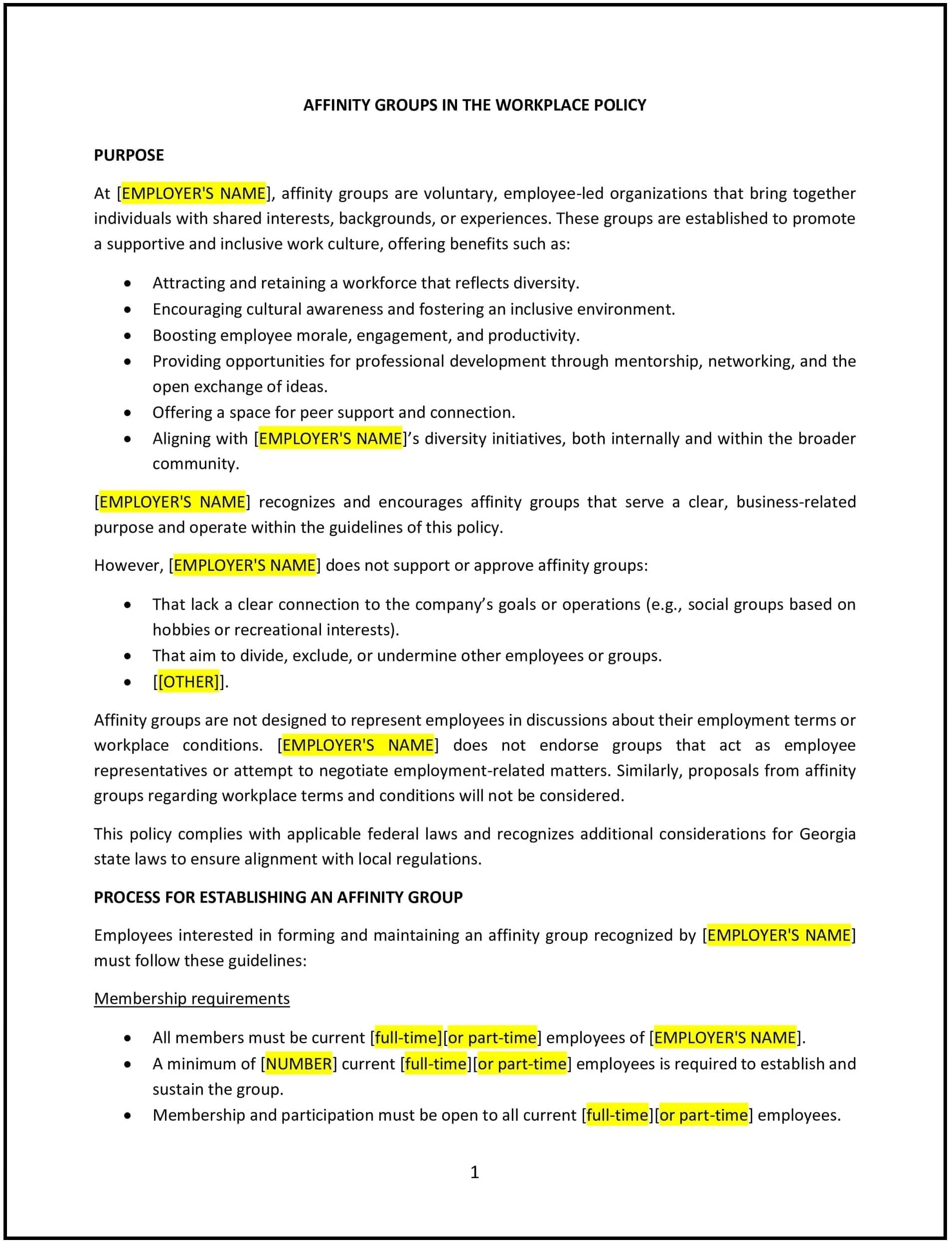
Affinity groups in the workplace policy (Georgia)
This affinity groups in the workplace policy is designed to help Georgia businesses foster an inclusive environment by supporting the formation and operation of employee affinity groups. These groups are designed to create a space where employees with shared interests, backgrounds, or identities can connect, support one another, and collaborate on initiatives that promote diversity, equity, and inclusion in the workplace.
By implementing this policy, businesses can improve employee engagement, build a more inclusive culture, and provide employees with opportunities to enhance their professional development and contribute to the organization's success.
How to use this affinity groups in the workplace policy (Georgia)
- Define affinity groups: Clearly define what constitutes an affinity group within the organization, such as groups based on gender, race, ethnicity, sexual orientation, disability, or other shared identities or interests.
- Set guidelines for formation: Outline the process for employees to form an affinity group, including the requirements for membership, the purpose of the group, and how to gain approval from management or HR.
- Establish group objectives: Specify that affinity groups should align with the company’s broader goals, including promoting diversity, fostering employee engagement, supporting professional development, and enhancing workplace culture.
- Ensure voluntary participation: Make it clear that participation in affinity groups is voluntary and open to all employees, even if they do not belong to the group’s focus identity or interest.
- Promote inclusivity: Encourage affinity groups to be inclusive and respectful of diverse viewpoints, ensuring that they serve to unite employees rather than divide them.
- Allocate resources and support: Provide affinity groups with necessary resources, such as meeting space, time to meet during work hours, and any administrative support they may need to function effectively.
- Establish group leadership: Define how group leaders will be selected, whether through election, volunteering, or other methods, and clarify the expectations of group leadership roles.
- Encourage accountability: Encourage affinity groups to report on their activities, goals, and contributions to the organization. Set guidelines for evaluating the impact of these groups on employee engagement, diversity initiatives, and overall workplace culture.
Benefits of using this affinity groups in the workplace policy (Georgia)
Implementing this policy provides several advantages for Georgia businesses:
- Promotes diversity and inclusion: Affinity groups help create a more inclusive work environment by providing employees with a space to connect with others who share similar experiences or interests, fostering a sense of belonging.
- Enhances employee engagement: By supporting employees’ passions and interests, affinity groups help increase engagement, motivation, and overall satisfaction with their work environment.
- Improves professional development: Affinity groups provide opportunities for networking, mentoring, and skill-building, helping employees advance their careers and build strong professional connections within the company.
- Fosters a collaborative culture: These groups can help break down silos within the organization, encouraging collaboration and cross-functional partnerships that benefit the business.
- Reflects Georgia-specific values: The policy can be tailored to address Georgia’s unique cultural landscape, emphasizing the importance of diversity and inclusion while respecting local norms and values.
Tips for using this affinity groups in the workplace policy (Georgia)
- Communicate the benefits: Make sure that employees understand the purpose of affinity groups and how they can contribute to a positive work environment. Promote the value of these groups in fostering diversity and inclusion.
- Ensure fairness: Ensure that all employees have the opportunity to form or participate in affinity groups, regardless of their background or identity. The policy should support equal access to resources and leadership opportunities for all groups.
- Provide support from leadership: Encourage senior leadership to participate in or endorse affinity groups to demonstrate the company’s commitment to diversity and inclusion. Leadership support helps to legitimize these groups and drive engagement.
- Monitor the impact: Regularly assess how affinity groups are contributing to the workplace culture, employee engagement, and diversity initiatives. Gather feedback from participants and non-participants to identify opportunities for improvement.
- Review and adjust the policy regularly: Periodically review the policy to ensure it is aligned with the company’s diversity and inclusion goals, evolving employee needs, and Georgia’s local legal and cultural context.