Affinity groups in the workplace policy (Alaska): Free template
Got contracts to review? While you're here for policies, let Cobrief make contract review effortless—start your free review now.
Customize this template for free
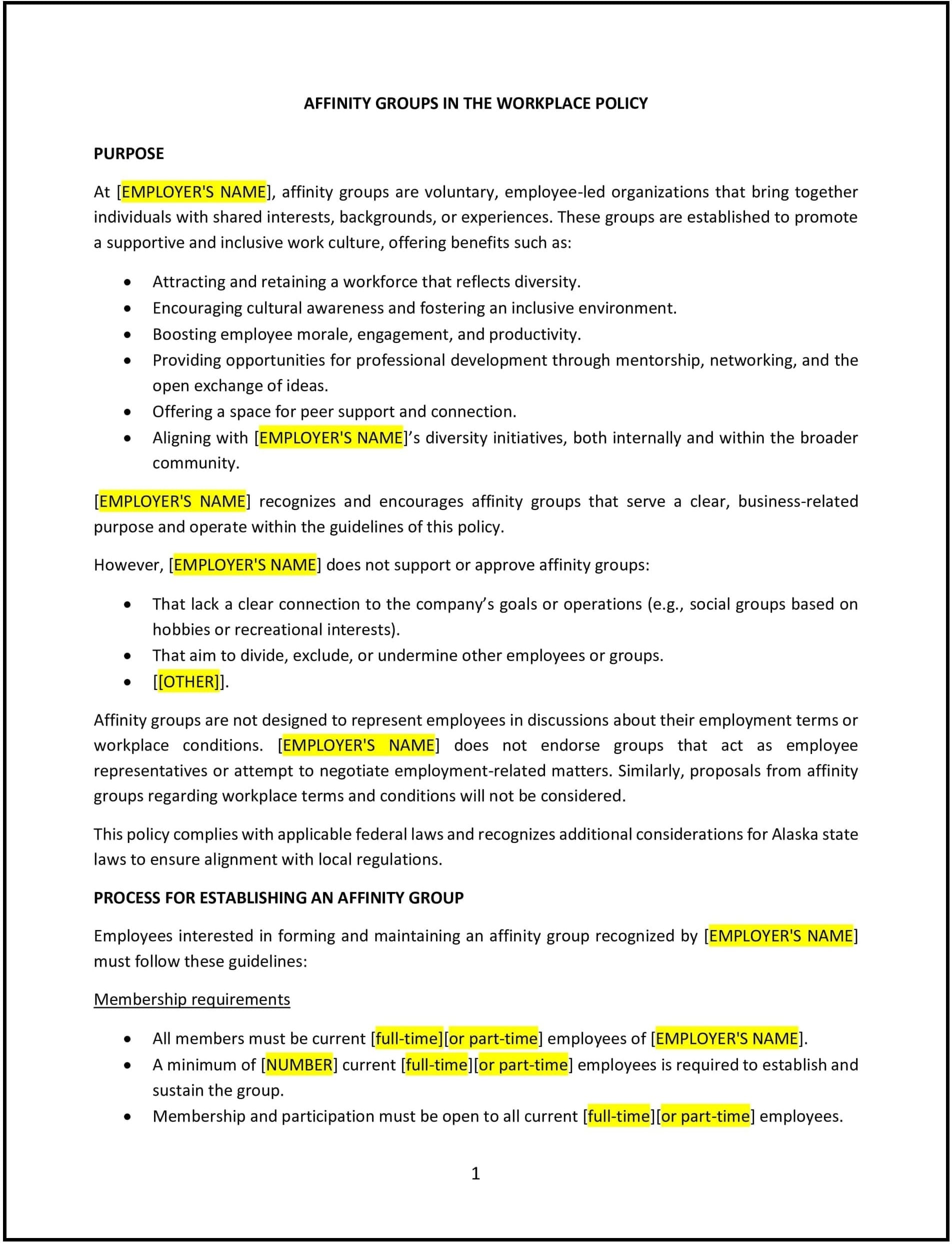
Affinity groups in the workplace policy (Alaska)
In Alaska, an affinity groups in the workplace policy helps businesses foster a culture of inclusion and collaboration while addressing the challenges of managing diverse and remote teams. This policy supports employees in connecting over shared experiences and identities, while also aligning with state and federal regulations. By tailoring this policy, you can create an inclusive environment that meets the specific needs of your organization and workforce in Alaska.
The goal of this policy is to ensure that affinity groups are established in a way that aligns with your company’s values, while also complying with applicable legal standards. By implementing this policy, you can offer a safe and supportive space for employees to connect, while also ensuring that your company’s operations remain inclusive and compliant with state and federal laws.
How to use this affinity groups in the workplace policy (Alaska)
- Explain the importance: Highlight how affinity groups can improve employee satisfaction and engagement, especially in remote or dispersed workplaces common in Alaska. These groups help individuals from similar backgrounds feel supported and connected, which is vital for maintaining morale and preventing isolation in remote work settings.
- Reflect local diversity: Ensure the policy supports the cultural dynamics of Alaska, including considerations for indigenous communities and underrepresented groups. Alaska’s diversity means that these groups must be designed to reflect the unique needs and identities of employees in this state.
- Adapt to your company: Define eligibility criteria, leadership structures, and meeting formats that suit your organizational setup. This flexibility ensures that affinity groups can be tailored to meet the specific needs of your workforce, whether it’s a small, close-knit team or a larger, more diverse group.
- Ensure clarity: Clearly communicate the purpose and guidelines of affinity groups to employees, ensuring the policy is accessible to all. Employees should understand the objectives of the groups and how they align with company culture and diversity goals.
Benefits of using an affinity groups in the workplace policy (Alaska)
A thoughtfully implemented affinity groups policy can make a significant difference in Alaska’s unique work environments. Here's how it helps:
- Connects employees: Brings together team members from remote or isolated locations to share experiences and foster collaboration. With Alaska’s vast geography and isolated workplaces, affinity groups can bridge the gap between employees who may not otherwise have the opportunity to connect.
- Supports cultural inclusion: Highlights and celebrates the contributions of Alaska Native communities and other underrepresented groups. A culturally inclusive workplace helps foster mutual respect and understanding, improving overall employee relations and satisfaction.
- Boosts employee morale: Demonstrates a commitment to inclusion and well-being, particularly in industries like oil, gas, or tourism. When employees feel they are part of an inclusive environment, they are more likely to stay engaged and remain loyal to the company.
- Encourages compliance: Aligns with anti-discrimination laws and diversity goals at the state and federal levels. While there are no state-specific requirements in Alaska, federal laws like Title VII of the Civil Rights Act and the Alaska Human Rights Law prohibit discrimination based on race, color, religion, sex, sexual orientation, and other protected categories. Affinity groups must adhere to these regulations to avoid legal risks.
- Enhances communication: Provides employees with a platform to voice concerns and share ideas. Affinity groups can also help management stay informed about issues affecting employees, leading to better communication and improved employee relations.
Tips for using an affinity groups in the workplace policy (Alaska)
- Focus on remote inclusion: Create virtual options for affinity group meetings to connect employees across Alaska’s remote locations. Virtual meetings or asynchronous communication allow employees in different regions of Alaska to participate without the need for travel, promoting inclusivity in geographically dispersed teams.
- Incorporate local values: Emphasize respect for indigenous cultures and communities in group discussions and activities. Understanding and respecting the unique cultural backgrounds of employees in Alaska is key to creating an inclusive and respectful environment.
- Use flexible formats: Adapt group structures to account for seasonal industries like fishing or tourism, where employee availability may vary. Flexibility is important in Alaska, where many industries are seasonal, and employees may have different schedules or availability at different times of the year.
- Align with your mission: Ensure each group’s purpose ties back to your company’s overall values and diversity objectives. This alignment will help ensure that the groups are not only beneficial to employees but also contribute to achieving the company’s diversity and inclusion goals.