Affinity groups in the workplace policy (Florida): Free template
Got contracts to review? While you're here for policies, let Cobrief make contract review effortless—start your free review now.
Customize this template for free
Affinity groups in the workplace policy (Florida)
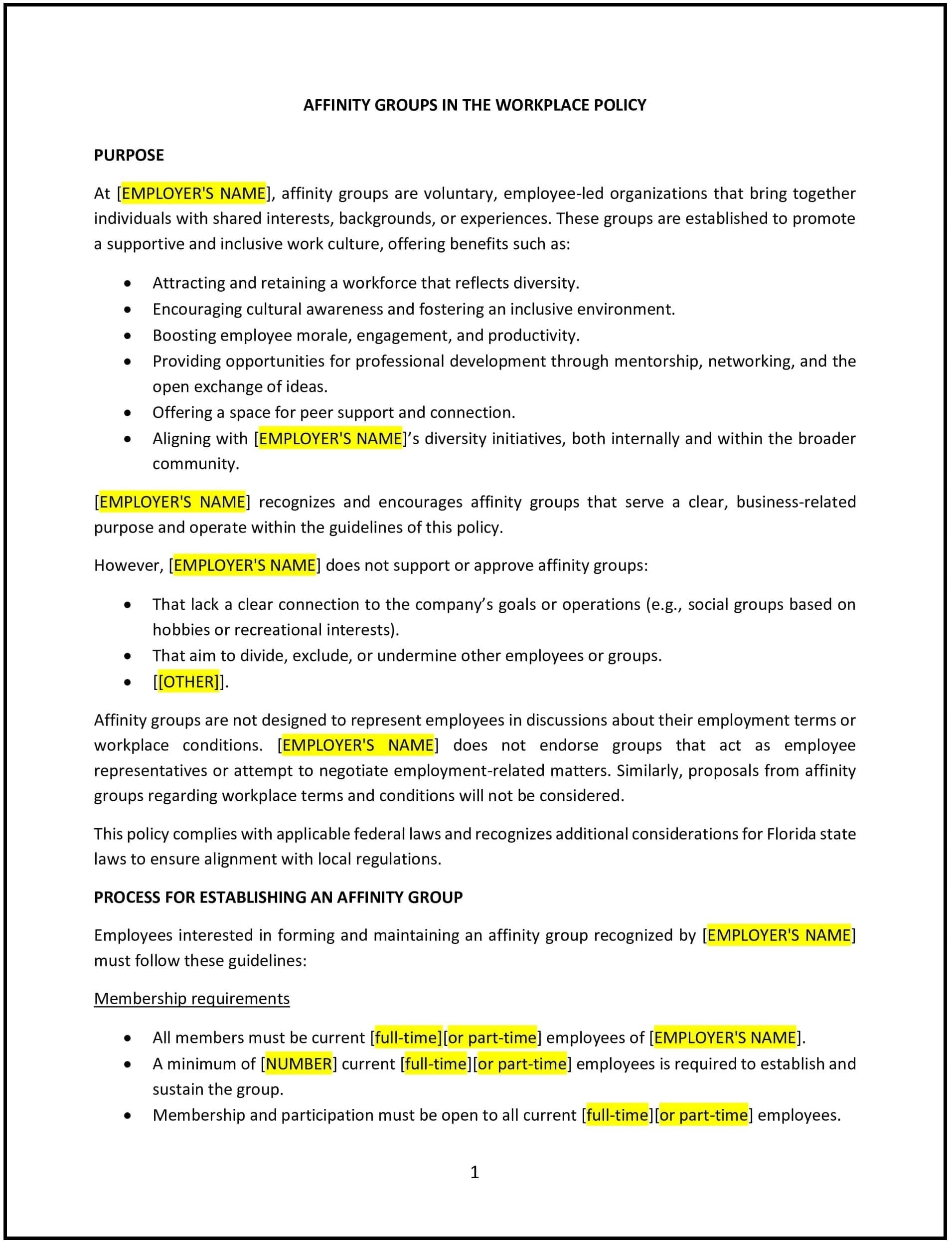
An affinity groups in the workplace policy helps Florida businesses create a supportive environment for employees to connect, share experiences, and foster inclusivity. This policy outlines procedures for establishing, managing, and supporting employee-led affinity groups that align with the organization’s values and goals. It is designed to promote diversity, enhance employee engagement, and provide a framework for fostering collaboration and mutual respect.
By implementing this policy, businesses in Florida can strengthen workplace culture, demonstrate their commitment to inclusivity, and align with the state’s diverse and dynamic workforce.
How to use this affinity groups in the workplace policy (Florida)
- Define affinity groups: Clearly explain what affinity groups are and their purpose, such as fostering inclusion, providing support, or promoting professional development.
- Establish formation guidelines: Outline how employees can propose and form affinity groups, including required documentation and approval processes.
- Specify leadership roles: Explain how group leaders should be selected and their responsibilities in managing activities and communication.
- Provide resources: Detail the types of support the business will offer, such as funding, meeting spaces, or access to organizational tools.
- Address inclusivity: Emphasize that affinity groups should be open to all employees who share the group’s purpose, regardless of background.
- Communicate the policy: Share the policy through employee handbooks, emails, or training sessions to ensure awareness and understanding.
- Monitor participation: Regularly review the impact of affinity groups on workplace culture and address any concerns promptly.
- Update the policy: Periodically assess the policy to reflect changes in workplace dynamics, employee needs, or organizational goals.
Benefits of using this affinity groups in the workplace policy (Florida)
This policy offers several advantages for Florida businesses:
- Promotes inclusivity: Encourages employees to connect and collaborate across diverse backgrounds, fostering a sense of belonging.
- Enhances engagement: Provides opportunities for employees to contribute to workplace culture and feel valued for their unique perspectives.
- Strengthens workplace culture: Demonstrates the business’s commitment to diversity and mutual respect.
- Aligns with local values: Reflects Florida’s diverse population and emphasis on community and inclusion.
- Improves retention: Supports employees’ professional and personal growth, reducing turnover and increasing loyalty.
- Drives innovation: Diverse perspectives within affinity groups can lead to creative solutions and improved decision-making.
- Builds trust: Creates a safe space for employees to share experiences and ideas, enhancing transparency and collaboration.
Tips for using this affinity groups in the workplace policy (Florida)
- Communicate clearly: Ensure employees understand the policy by providing written materials and discussing it during meetings or training sessions.
- Train managers: Educate supervisors on how to support affinity groups and encourage participation without bias or favoritism.
- Be inclusive: Encourage groups to welcome all employees who share their purpose, regardless of identity or background.
- Track outcomes: Monitor the impact of affinity groups on employee satisfaction, engagement, and retention to measure success.
- Stay informed: Keep up with trends in workplace diversity and inclusion to ensure the policy remains relevant and effective.
- Encourage feedback: Solicit input from participants to identify areas for improvement and ensure the program meets employee needs.
- Review periodically: Assess the policy’s effectiveness and make updates as needed to reflect changes in workplace dynamics or organizational goals.