Affinity groups in the workplace policy (Indiana): Free template
Got contracts to review? While you're here for policies, let Cobrief make contract review effortless—start your free review now.
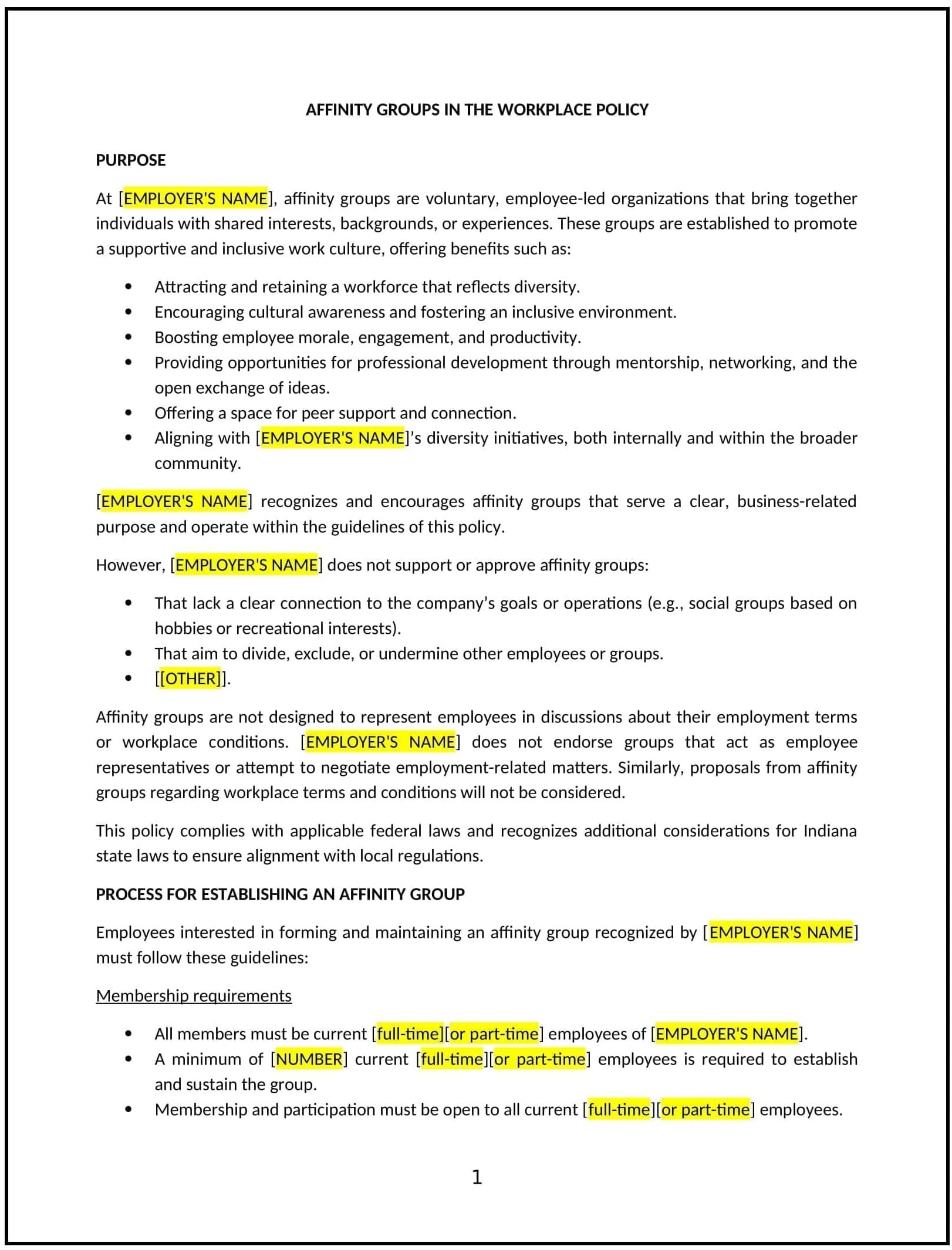
Customize this template for free
Affinity groups in the workplace policy (Indiana)
An affinity groups in the workplace policy helps Indiana businesses support the formation of employee-led groups based on shared characteristics, experiences, or interests, such as gender, race, sexual orientation, or other personal identities. This policy outlines how these groups can be established, the expectations for their activities, and the company’s commitment to fostering inclusivity and diversity. It also provides guidelines for ensuring that these groups contribute positively to the workplace culture and align with the business's broader goals for employee engagement, professional development, and community building.
By implementing this policy, Indiana businesses can create a more inclusive environment, provide employees with a sense of belonging, and promote diverse perspectives, which ultimately enhances team collaboration and productivity.
How to use this affinity groups in the workplace policy (Indiana)
- Define the purpose of affinity groups: Clearly outline the purpose of affinity groups, such as providing a space for employees to connect, share experiences, and support one another. The policy should specify that these groups should contribute to the company’s culture and business goals, such as improving employee engagement, retention, and diversity.
- Set guidelines for forming groups: Specify the criteria for creating an affinity group, such as the number of employees required to start a group, the approval process, and any oversight provided by HR or management. The policy should ensure that groups align with the company’s values and support its mission.
- Ensure inclusivity: Emphasize that affinity groups should be inclusive and welcoming to all employees, regardless of whether they belong to the particular identity group being represented. This helps ensure that groups foster diversity of thought and experience.
- Define group activities: Outline what types of activities affinity groups are allowed to engage in, such as organizing networking events, hosting educational sessions, or supporting social initiatives. The policy should ensure that these activities align with company goals and do not conflict with other business priorities.
- Address confidentiality and respect: Ensure that all interactions within affinity groups are conducted with respect for privacy and confidentiality, especially when dealing with sensitive personal topics. The policy should outline expectations for behavior and the importance of maintaining a safe space for all employees.
- Align with business objectives: Ensure that affinity groups' activities support the overall business strategy, such as promoting diversity, fostering professional development, and enhancing employee well-being. The policy should clarify how affinity groups can collaborate with other departments to achieve these goals.
- Provide support and resources: Outline the resources available to affinity groups, such as meeting space, funding, or access to leadership. The policy should specify how businesses will support these groups in their efforts to make a positive impact on the workplace culture.
Benefits of using this affinity groups in the workplace policy (Indiana)
This policy offers several benefits for Indiana businesses:
- Promotes inclusivity and diversity: The policy helps foster a workplace that values diverse perspectives and experiences, encouraging employees from different backgrounds to connect and contribute to a more inclusive environment.
- Enhances employee engagement: By supporting affinity groups, businesses provide employees with opportunities to connect, share common experiences, and build relationships, which increases job satisfaction, loyalty, and overall engagement.
- Improves retention and recruitment: A strong commitment to diversity and inclusion helps attract and retain top talent from diverse backgrounds. Affinity groups can play a key role in making employees feel supported and valued, contributing to lower turnover rates.
- Strengthens company culture: Affinity groups can contribute to a positive, collaborative workplace culture by encouraging open dialogue, mutual respect, and the celebration of differences. This leads to greater team cohesion and better communication across the business.
- Supports professional development: Affinity groups provide employees with opportunities for leadership development, skill-building, and networking. These groups often host events that help employees grow professionally and personally, benefiting both the individual and the business.
- Aligns with legal requirements: By fostering a diverse and inclusive workplace, this policy helps ensure that businesses comply with Indiana state laws and federal regulations related to equal employment opportunities, non-discrimination, and workplace diversity.
Tips for using this affinity groups in the workplace policy (Indiana)
- Communicate the policy clearly: Ensure that all employees are aware of the policy and understand how they can participate in or establish affinity groups. Include the policy in the employee handbook, during onboarding, and in diversity and inclusion training sessions.
- Encourage a culture of openness: Promote a workplace where all employees feel comfortable joining or participating in affinity groups, regardless of their background or identity. The policy should encourage employees to respect each other’s differences and be supportive of various group activities.
- Monitor the impact of affinity groups: Track the effectiveness of affinity groups in achieving business goals, such as improving engagement, increasing retention, or enhancing workplace diversity. The policy should include a process for assessing the impact and ensuring that groups align with company priorities.
- Provide support and resources: Offer resources to affinity groups, such as meeting space, funding for events, or access to leadership for guidance or mentorship. This ensures that the groups are well-equipped to achieve their goals and have the support they need to succeed.
- Review the policy regularly: Periodically review the policy to ensure it remains relevant and up-to-date with the evolving needs of the workforce and any changes in Indiana laws or business practices related to diversity and inclusion.