Affinity groups in the workplace policy (Kansas): Free template
Got contracts to review? While you're here for policies, let Cobrief make contract review effortless—start your free review now.
Customize this template for free
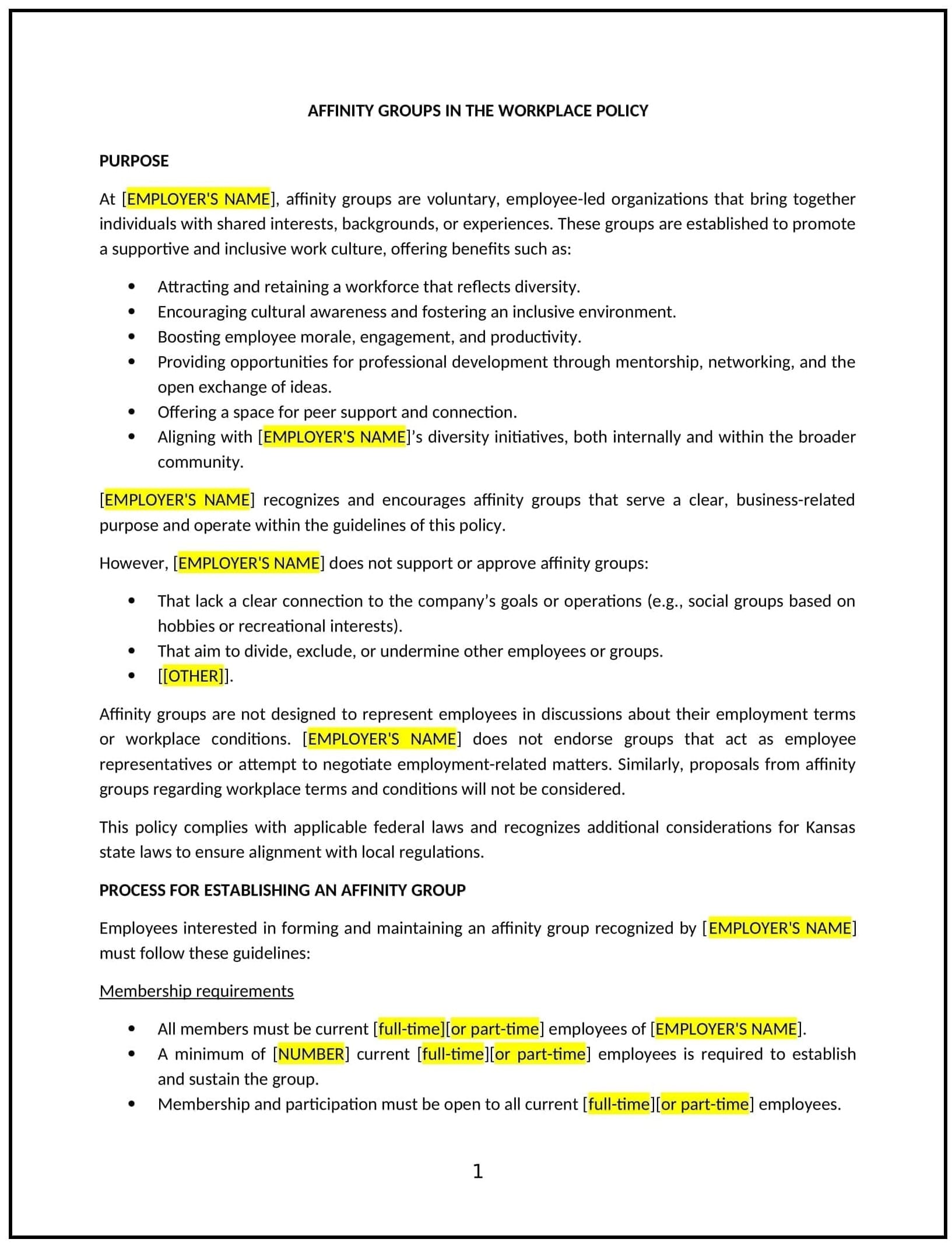
Affinity groups in the workplace policy (Kansas)
An affinity groups policy helps Kansas businesses establish guidelines for employee-led groups focused on shared interests, backgrounds, or identities. These groups foster workplace inclusion, collaboration, and professional development while aligning with company values and operational needs. A clear policy helps businesses structure affinity groups effectively while maintaining workplace cohesion.
By adopting this policy, businesses can support employee engagement, create a more inclusive culture, and encourage collaboration across teams while maintaining appropriate oversight.
How to use this affinity groups policy (Kansas)
- Define the purpose: Outline the role of affinity groups in promoting workplace inclusion, professional development, and collaboration. Businesses should specify the types of groups that can be formed and their alignment with company culture.
- Establish eligibility criteria: Clarify who can form and join affinity groups, ensuring an open and fair process. Businesses may require that groups be open to all employees and focused on shared workplace-related interests.
- Set governance guidelines: Specify how affinity groups should be structured, including leadership roles, meeting guidelines, and interaction with company leadership or HR.
- Outline participation expectations: Businesses should ensure that affinity groups maintain professionalism, inclusivity, and voluntary participation. Participation should not interfere with business operations or create conflicts.
- Address company support: Determine whether the business will provide resources such as meeting spaces, funding, or communication platforms while ensuring that support is distributed fairly.
- Implement reporting procedures: Businesses should establish how affinity groups report activities, request company support, and handle concerns or conflicts.
- Review and update regularly: Periodically assess the effectiveness of the policy and make adjustments based on employee feedback and company needs.
Benefits of using an affinity groups policy (Kansas)
- Enhances workplace inclusivity: Helps foster a supportive environment where employees feel valued and connected.
- Encourages collaboration: Allows employees to build relationships across departments, leading to stronger teamwork and innovation.
- Supports professional development: Provides networking and mentorship opportunities for employees with shared professional goals.
- Promotes employee engagement: Gives employees a platform to discuss shared interests, increasing job satisfaction and workplace morale.
- Maintains business alignment: Helps businesses structure affinity groups in a way that supports company culture and operational goals.
- Reduces potential conflicts: Establishes clear guidelines for how affinity groups operate within the workplace, preventing misunderstandings.
Tips for using this affinity groups policy (Kansas)
- Communicate the policy clearly: Employees should understand the purpose, structure, and expectations for affinity groups before forming or joining one.
- Provide oversight without interference: Businesses should support employee-led groups while maintaining clear boundaries to ensure alignment with workplace values.
- Encourage broad participation: While affinity groups often form around shared backgrounds, businesses should emphasize openness and inclusivity.
- Offer structured support: If providing resources, businesses should ensure that support is distributed fairly and aligns with company goals.
- Address concerns proactively: Establish a process for employees to raise concerns about affinity group activities while promoting open communication.