Anti-corruption and foreign corrupt practices policy (California): Free template
Got contracts to review? While you're here for policies, let Cobrief make contract review effortless—start your free review now.
Customize this template for free
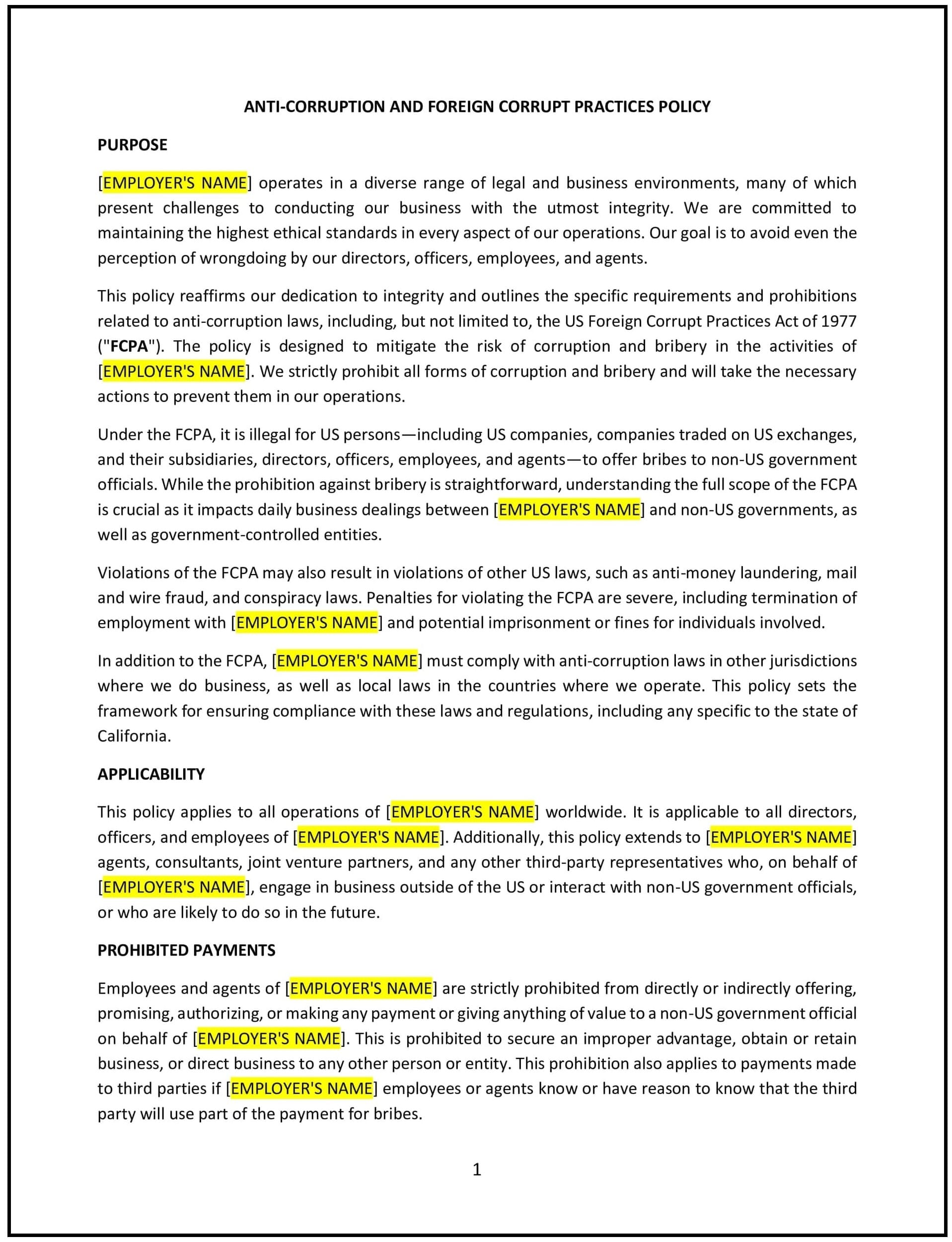
Anti-corruption and foreign corrupt practices policy (California)
In California, an anti-corruption and foreign corrupt practices policy provides businesses with guidelines to prevent bribery, corruption, and unethical practices in both domestic and international operations. This policy ensures that employees and third-party representatives act with integrity, promoting compliance with the Foreign Corrupt Practices Act (FCPA) and California laws.
This policy outlines prohibited behaviors, reporting procedures, and training requirements to minimize risks of legal violations and reputational damage. By implementing this policy, California businesses can maintain ethical standards while fostering trust with stakeholders.
How to use this anti-corruption and foreign corrupt practices policy (California)
- Define prohibited behaviors: Clearly specify actions such as offering, giving, or accepting bribes, kickbacks, or other improper payments to influence decisions.
- Establish reporting procedures: Provide employees with a secure and confidential process for reporting suspected violations of anti-corruption laws or the policy.
- Address third-party risks: Require due diligence and clear agreements with third parties to ensure compliance with anti-corruption standards.
- Conduct regular training: Offer employees and key partners training on anti-corruption laws and the business’s ethical standards.
- Monitor compliance: Implement measures to periodically review and audit business activities to identify and address potential risks.
Benefits of using this anti-corruption and foreign corrupt practices policy (California)
This policy offers several advantages for California businesses:
- Promotes ethical behavior: Encourages integrity and transparency in all business dealings.
- Supports compliance: Reflects the requirements of the FCPA and California laws regarding bribery and corruption.
- Mitigates risks: Reduces the likelihood of legal penalties, financial losses, or reputational harm.
- Builds trust: Reinforces the business’s commitment to ethical practices, strengthening stakeholder confidence.
- Enhances accountability: Establishes clear expectations and processes for addressing corruption-related concerns.
Tips for using this anti-corruption and foreign corrupt practices policy (California)
- Address California-specific considerations: Reflect any state-specific ethics or anti-corruption laws that complement federal regulations.
- Train thoroughly: Ensure all employees, especially those in high-risk roles, understand the policy and related laws.
- Conduct due diligence: Vet third-party representatives and contractors to minimize risks of indirect violations.
- Use clear agreements: Include anti-corruption clauses in contracts with vendors, partners, and agents.
- Update regularly: Revise the policy to reflect changes in laws, industry standards, or operational needs.