Anti-corruption and foreign corrupt practices policy (Georgia): Free template
Got contracts to review? While you're here for policies, let Cobrief make contract review effortless—start your free review now.
Customize this template for free
Anti-corruption and foreign corrupt practices policy (Georgia)
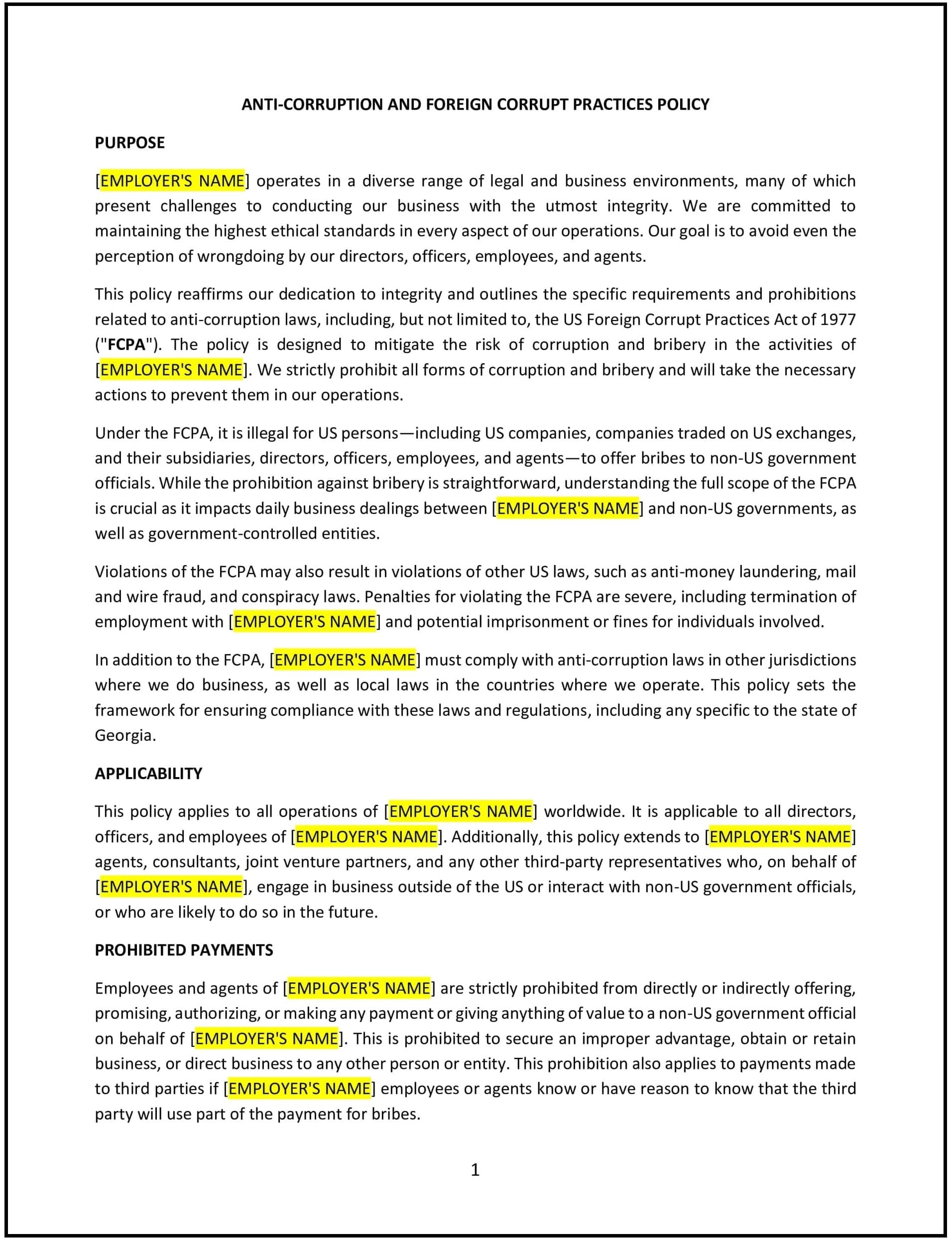
This anti-corruption and foreign corrupt practices policy is designed to help Georgia businesses address the risks of bribery, corruption, and unethical practices in their operations. Whether you’re managing a local supply chain or engaging with international partners, this policy outlines essential measures to promote ethical business practices and compliance with relevant laws, including the Foreign Corrupt Practices Act (FCPA).
By adopting this policy, businesses can foster a culture of integrity, mitigate legal and reputational risks, and promote fair competition in their industry.
How to use this anti-corruption and foreign corrupt practices policy (Georgia)
- Establish a zero-tolerance stance: Clearly state that the business prohibits bribery, corruption, and unethical practices in all forms.
- Define key terms: Include clear definitions for terms like bribery, facilitation payments, and conflicts of interest.
- Identify high-risk activities: Outline common scenarios where corruption risks may arise, such as government interactions or third-party dealings.
- Develop reporting procedures: Provide a confidential mechanism for employees to report suspected violations, such as a hotline or designated email.
- Train employees: Conduct regular training sessions to educate staff about anti-corruption laws and the company’s policies.
- Require third-party compliance: Include anti-corruption clauses in contracts with vendors, agents, and other third parties.
- Maintain accurate records: Ensure all transactions are documented transparently and in accordance with Georgia’s record-keeping standards.
- Monitor and update: Periodically review the policy and related procedures to address emerging risks or changes in laws.
Benefits of using this anti-corruption and foreign corrupt practices policy (Georgia)
This policy offers several advantages for Georgia businesses:
- Mitigates legal risks: Helps businesses avoid violations of the Foreign Corrupt Practices Act (FCPA) and Georgia-specific anti-corruption laws.
- Protects reputation: Demonstrates the business’s commitment to ethical practices, enhancing stakeholder trust.
- Promotes fair competition: Encourages a level playing field by rejecting bribery and corruption.
- Enhances operational transparency: Clear guidelines and record-keeping improve accountability across the organization.
- Supports employee awareness: Educates staff about ethical expectations and legal obligations.
- Builds a culture of integrity: Reinforces the company’s commitment to ethical behavior at all levels.
Tips for using this anti-corruption and foreign corrupt practices policy (Georgia)
- Train employees regularly: Conduct frequent training sessions to reinforce the importance of ethical practices and compliance with anti-corruption laws.
- Engage leadership: Ensure management actively supports and promotes the policy to set a strong ethical tone for the organization.
- Communicate effectively: Share the policy with employees, contractors, and third parties to ensure awareness and alignment.
- Document all processes: Maintain accurate records of transactions, trainings, and reported incidents to demonstrate transparency.
- Review and adapt: Update the policy as needed to address emerging corruption risks or changes in legal requirements.