Anti-corruption and foreign corrupt practices policy (Idaho): Free template
Got contracts to review? While you're here for policies, let Cobrief make contract review effortless—start your free review now.
Customize this template for free
Anti-corruption and foreign corrupt practices policy (Idaho)
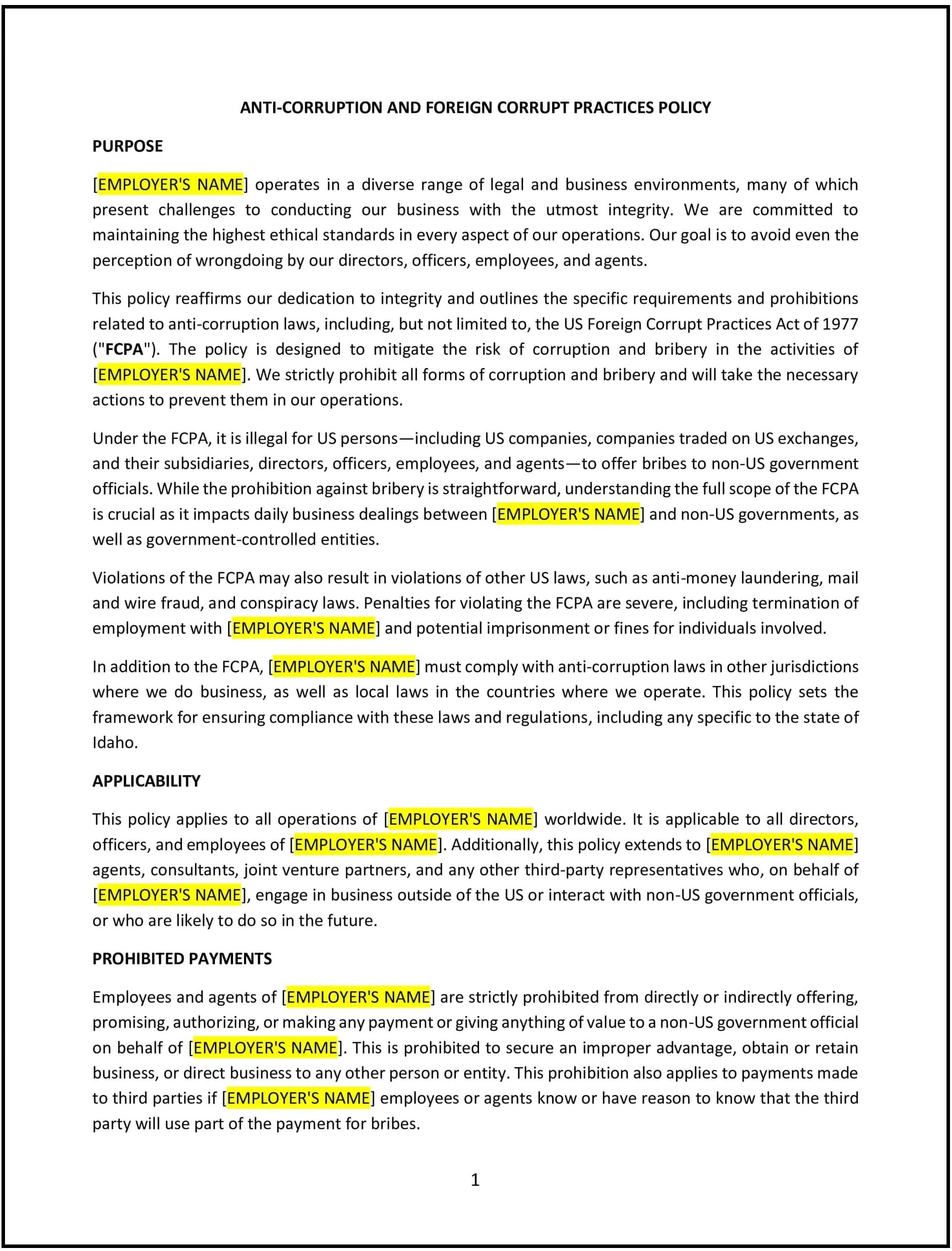
An anti-corruption and foreign corrupt practices policy helps Idaho businesses establish clear guidelines to prevent bribery, corruption, and unethical practices in both domestic and international operations. This policy outlines the standards for ethical conduct, defines prohibited behaviors, and provides a framework for reporting and addressing potential violations. It also aligns with federal laws like the Foreign Corrupt Practices Act (FCPA) and reflects Idaho’s commitment to fair business practices.
By adopting this policy, businesses can promote transparency, build trust with stakeholders, and reduce the risk of legal and reputational damage associated with corrupt activities.
How to use this anti-corruption and foreign corrupt practices policy (Idaho)
- Define prohibited behaviors: Clearly outline actions that are considered corrupt, such as bribery, kickbacks, or improper gifts to government officials, business partners, or other entities. The policy should emphasize zero tolerance for such practices.
- Establish reporting mechanisms: Provide employees with a safe and confidential way to report suspected violations, such as through a whistleblower hotline or designated compliance officer. Ensure the process is accessible and well-communicated.
- Train employees: Conduct regular training sessions to educate employees on the policy, relevant laws, and the importance of ethical business practices. Training should include real-world examples and scenarios specific to Idaho businesses.
- Monitor third-party relationships: Include guidelines for vetting and monitoring third-party vendors, contractors, and partners to ensure they adhere to the same anti-corruption standards. This is especially important for businesses with international operations.
- Document transactions: Require accurate record-keeping of all financial transactions to promote transparency and accountability. This helps businesses maintain clear records and demonstrate good faith efforts.
- Conduct regular audits: Implement periodic internal audits to identify and address potential risks or violations. Audits should be thorough and conducted by impartial parties.
- Enforce consequences: Clearly state the disciplinary actions for policy violations, ranging from warnings to termination, depending on the severity of the offense. This reinforces the seriousness of the policy.
Benefits of using this anti-corruption and foreign corrupt practices policy (Idaho)
This policy provides numerous benefits for Idaho businesses:
- Reduces legal risks: By aligning with federal and state anti-corruption laws, businesses can mitigate the risk of fines, penalties, and legal disputes.
- Enhances reputation: A strong commitment to ethical practices builds trust with customers, partners, and stakeholders, improving the company’s reputation.
- Promotes transparency: Clear guidelines and documentation requirements help maintain accountability and transparency in all business dealings.
- Encourages ethical behavior: The policy fosters a culture of integrity and ethical decision-making among employees and leadership.
- Protects against financial loss: Preventing corrupt practices helps businesses avoid financial losses associated with fines, legal fees, and damaged relationships.
- Supports international operations: For businesses operating globally, the policy helps align with international anti-corruption laws, reducing risks in foreign markets.
- Builds stakeholder confidence: Demonstrating a commitment to ethical practices can attract investors, partners, and customers who value transparency and integrity.
Tips for using this anti-corruption and foreign corrupt practices policy (Idaho)
- Communicate the policy clearly: Ensure all employees understand the policy by sharing it during onboarding, training sessions, and through internal communications.
- Lead by example: Leadership should model ethical behavior and demonstrate a commitment to the policy’s principles.
- Provide ongoing training: Regularly update employees on anti-corruption laws, policy changes, and best practices to maintain awareness and alignment.
- Monitor and update the policy: Review the policy periodically to ensure it remains aligned with evolving laws, industry standards, and business needs.
- Encourage reporting: Foster a culture where employees feel safe reporting potential violations without fear of retaliation.
- Collaborate with legal experts: Work with legal counsel to ensure the policy aligns with federal, state, and international regulations.
- Document everything: Maintain detailed records of training sessions, audits, and reported incidents to demonstrate good faith efforts and transparency.