Anti-corruption and foreign corrupt practices policy (Iowa): Free template
Got contracts to review? While you're here for policies, let Cobrief make contract review effortless—start your free review now.
Customize this template for free
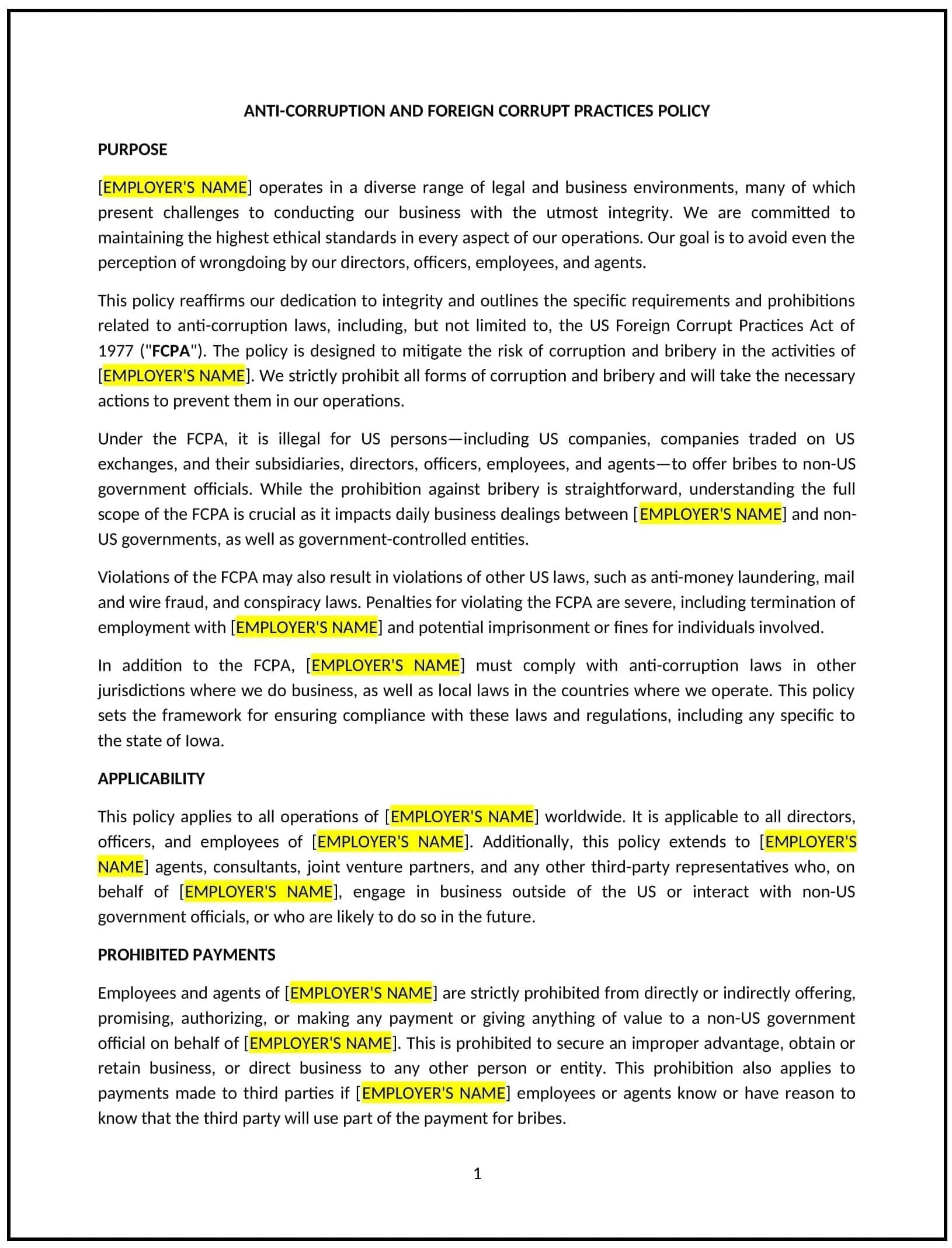
Anti-corruption and foreign corrupt practices policy (Iowa)
An anti-corruption and foreign corrupt practices policy helps Iowa businesses establish ethical standards for conducting business domestically and internationally. This policy provides guidelines for identifying, preventing, and responding to corrupt practices such as bribery, kickbacks, and improper influence.
Businesses in Iowa that engage in interstate or international commerce must take proactive steps to address corruption risks, particularly when working with foreign entities, government officials, and third-party vendors. Establishing clear rules helps protect businesses from legal risks and reputational damage.
By implementing this policy, businesses in Iowa can promote ethical business conduct, reduce fraud risks, and strengthen trust with clients, partners, and stakeholders.
How to use this anti-corruption and foreign corrupt practices policy (Iowa)
- Define corruption and bribery: Clearly explain what constitutes corrupt practices, including bribery, facilitation payments, and conflicts of interest.
- Establish reporting procedures: Outline how employees and stakeholders can report suspected corruption or unethical behavior.
- Provide training and awareness: Educate employees, leadership, and third parties on recognizing and preventing corrupt practices.
- Implement due diligence measures: Require background checks and risk assessments for vendors, partners, and foreign business relationships.
- Set financial controls: Establish safeguards to detect and prevent fraudulent transactions, unauthorized payments, and improper financial reporting.
- Monitor third-party engagements: Ensure that vendors, contractors, and consultants follow anti-corruption standards.
- Enforce consequences: Specify disciplinary actions for violations of the policy, including potential termination and legal action.
- Review and update: Periodically assess and revise the policy to align with evolving laws and business practices.
Benefits of using this anti-corruption and foreign corrupt practices policy (Iowa)
This policy offers several advantages for Iowa businesses:
- Promotes ethical business practices: Establishes a culture of integrity and transparency.
- Reduces legal and financial risks: Helps prevent violations that could result in penalties, fines, or legal disputes.
- Strengthens business reputation: Demonstrates a commitment to responsible and lawful operations.
- Enhances stakeholder trust: Builds confidence among customers, investors, and partners.
- Protects against fraud: Establishes clear processes for detecting and addressing corruption risks.
- Supports responsible global trade: Helps businesses manage risks when working with foreign entities and government officials.
Tips for using this anti-corruption and foreign corrupt practices policy (Iowa)
- Communicate expectations: Businesses should provide clear guidance on acceptable and unacceptable business practices.
- Train employees: Businesses should implement ongoing training programs to ensure employees understand corruption risks.
- Conduct regular audits: Businesses should review financial transactions and vendor relationships to identify potential red flags.
- Encourage reporting: Businesses should establish anonymous reporting mechanisms for employees to report concerns without fear of retaliation.
- Evaluate third parties: Businesses should perform due diligence on vendors, suppliers, and partners before entering into contracts.
- Enforce accountability: Businesses should apply disciplinary measures consistently for violations of anti-corruption standards.