Anti-corruption and foreign corrupt practices policy (Kentucky): Free template
Got contracts to review? While you're here for policies, let Cobrief make contract review effortless—start your free review now.
Customize this template for free
Anti-corruption and foreign corrupt practices policy (Kentucky)
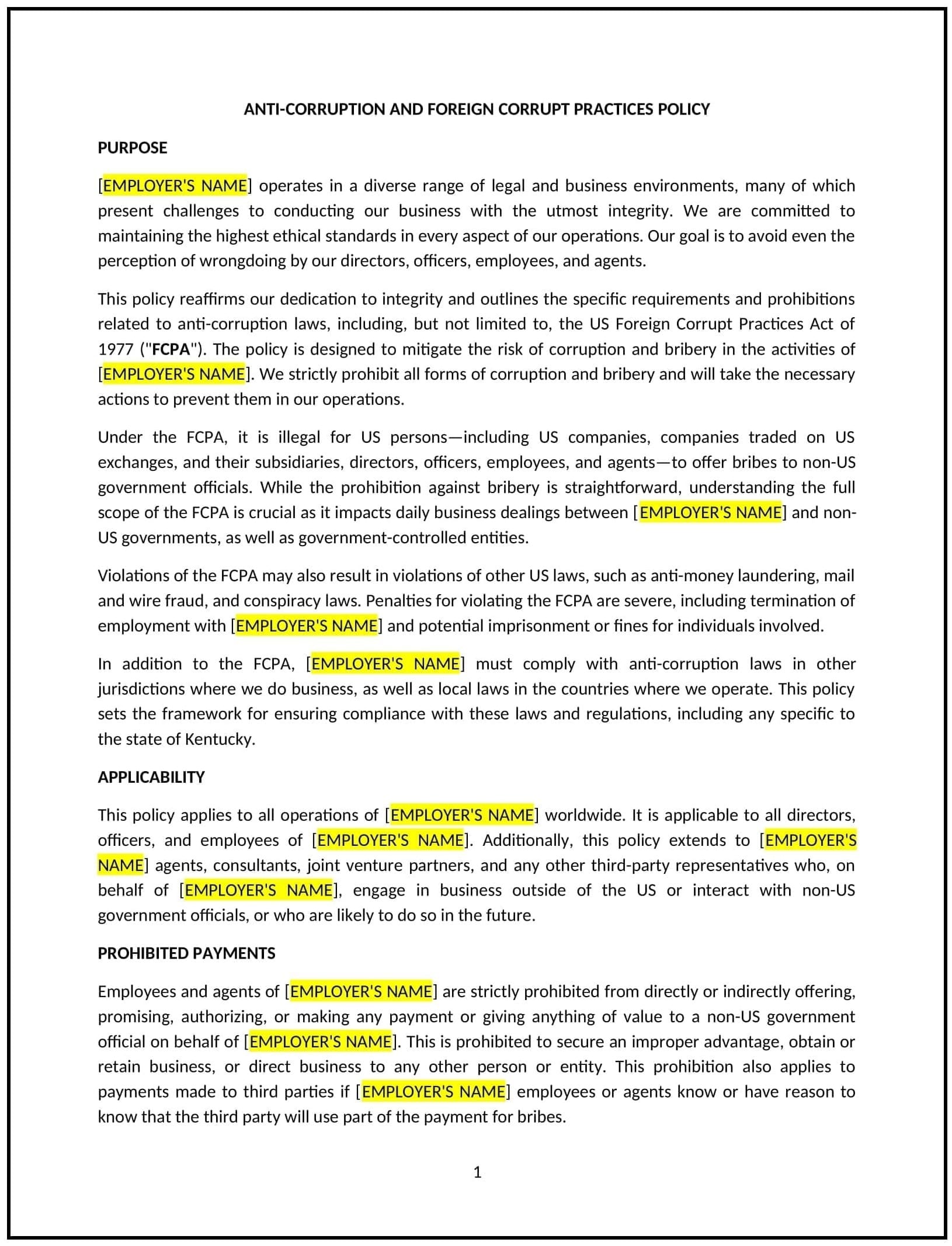
An anti-corruption and foreign corrupt practices policy is essential for Kentucky businesses to establish guidelines for preventing, identifying, and addressing corruption risks. This policy outlines the expectations for employees, contractors, and other stakeholders to act with integrity and support compliance with state and federal laws, including the Foreign Corrupt Practices Act (FCPA). It provides clear rules against bribery, improper payments, and other forms of corruption, emphasizing the company’s commitment to ethical business practices.
By implementing this policy, businesses can reduce the risk of legal violations, safeguard their reputation, and foster a culture of accountability and transparency.
How to use this anti-corruption and foreign corrupt practices policy (Kentucky)
- Define prohibited activities: Clearly outline what constitutes corruption or unethical behavior, such as offering or accepting bribes, facilitating payments, or engaging in conflicts of interest. Use examples relevant to Kentucky businesses.
- Provide compliance requirements: Specify the standards employees, contractors, and other stakeholders must follow to comply with the FCPA, Kentucky state laws, and internal ethical standards.
- Establish reporting procedures: Detail how employees can report suspected corruption, whether through a hotline, a designated compliance officer, or another reporting mechanism. Emphasize confidentiality and protection against retaliation for whistleblowers.
- Outline training and awareness efforts: Describe how the business will educate employees about anti-corruption laws, the importance of compliance, and their responsibilities under the policy.
- Define monitoring and enforcement: Explain how the business will monitor compliance with the policy, investigate potential violations, and enforce disciplinary measures where necessary.
- Address third-party relationships: Include guidelines for working with vendors, contractors, and other third parties, ensuring they also adhere to the business’s anti-corruption standards.
- Promote leadership accountability: Emphasize that leadership plays a critical role in upholding the policy and fostering a culture of integrity throughout the organization.
Benefits of using this anti-corruption and foreign corrupt practices policy (Kentucky)
This policy provides several benefits for Kentucky businesses:
- Reduces legal risks: By adhering to the FCPA and Kentucky anti-corruption laws, businesses can avoid costly legal penalties and investigations.
- Protects the company’s reputation: A strong anti-corruption policy helps build trust with stakeholders, including customers, partners, and regulators.
- Promotes ethical behavior: Clear guidelines encourage employees to act with integrity and transparency, fostering a culture of accountability.
- Enhances stakeholder confidence: Third parties, investors, and clients are more likely to engage with businesses that demonstrate a commitment to ethical practices.
- Supports compliance: The policy helps businesses align with legal and regulatory requirements, reducing the risk of accidental violations.
- Improves operational efficiency: Preventing corruption can reduce inefficiencies and costs associated with unethical practices, such as fraud or mismanagement.
Tips for using this anti-corruption and foreign corrupt practices policy (Kentucky)
- Communicate expectations clearly: Share the policy with employees and stakeholders to ensure they understand the importance of compliance and their role in upholding the standards.
- Regularly update the policy: Review and revise the policy to ensure it aligns with the latest Kentucky laws, FCPA requirements, and industry best practices.
- Provide accessible training: Offer ongoing education and resources to employees, ensuring they are aware of the policy and know how to identify and prevent corruption risks.
- Encourage reporting: Foster a workplace culture where employees feel comfortable reporting concerns without fear of retaliation.
- Monitor third-party compliance: Conduct due diligence and regular audits of third-party relationships to ensure they adhere to the company’s anti-corruption standards.
- Assess policy effectiveness: Periodically evaluate the policy’s impact and effectiveness in promoting compliance and reducing corruption risks.