Anti-corruption and foreign corrupt practices policy (Mississippi): Free template
Got contracts to review? While you're here for policies, let Cobrief make contract review effortless—start your free review now.
Customize this template for free
Anti-corruption and foreign corrupt practices policy (Mississippi)
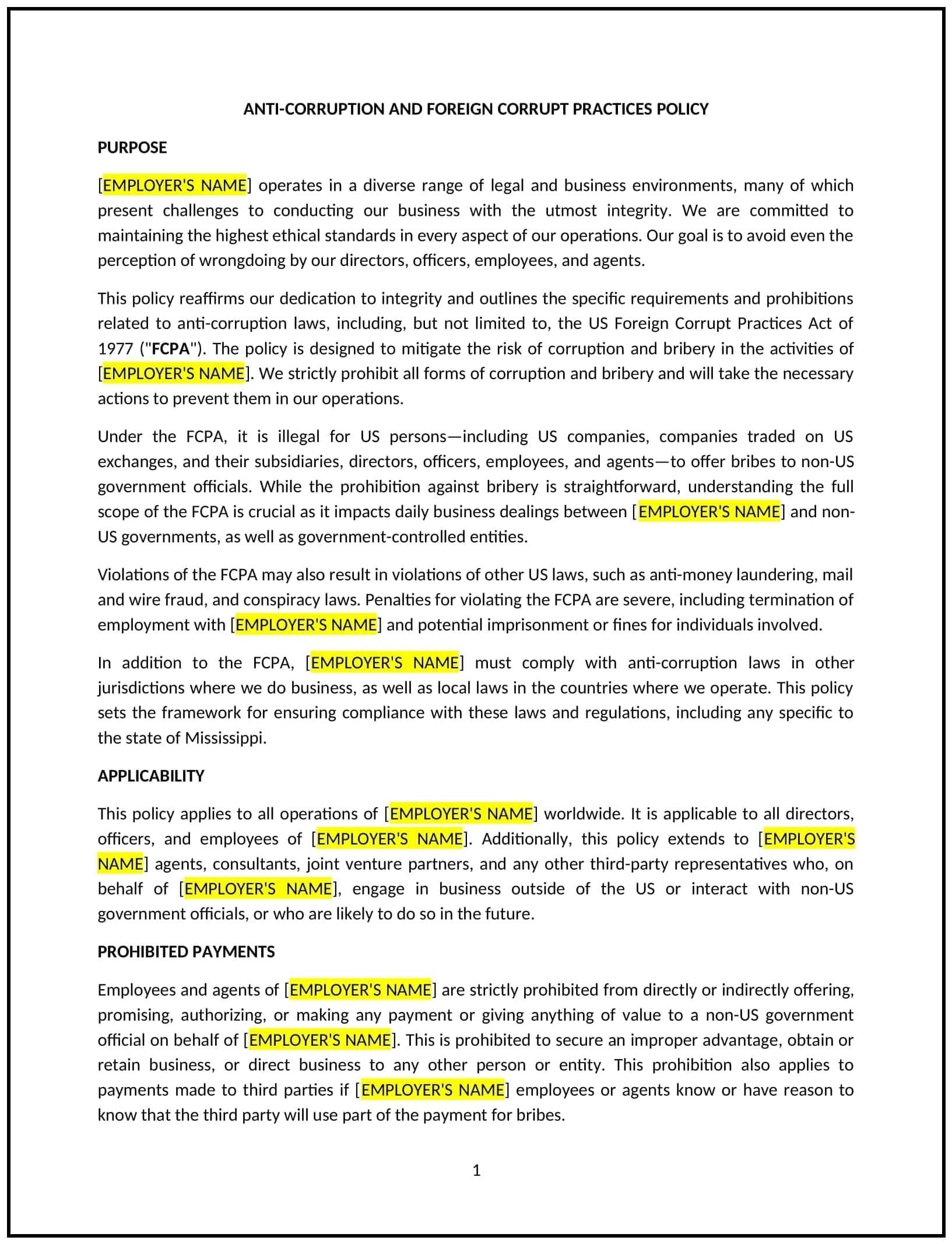
An anti-corruption and foreign corrupt practices policy helps Mississippi businesses establish guidelines for conducting business with integrity, ensuring that employees and agents act in accordance with both U.S. and international anti-corruption laws. The policy outlines prohibited practices, such as bribery, kickbacks, and improper influence, while promoting transparency, honesty, and legal compliance in all business dealings.
By implementing this policy, businesses can prevent legal issues, protect their reputation, and foster a culture of ethical behavior, reducing the risks associated with corruption in domestic and international business transactions.
How to use this anti-corruption and foreign corrupt practices policy (Mississippi)
- Define prohibited practices: Clearly outline what constitutes corruption and illegal practices under both domestic and foreign laws, such as bribery, kickbacks, falsification of documents, or offering improper incentives to government officials or business partners.
- Establish company-wide expectations: Set expectations for ethical conduct at all levels of the organization, emphasizing that corruption is never acceptable, regardless of local business customs or practices.
- Provide guidelines for third-party interactions: Outline the due diligence process for working with third-party vendors, agents, contractors, or partners, ensuring that they comply with anti-corruption laws and adhere to ethical business practices.
- Set clear reporting procedures: Create a system for employees and third parties to report potential violations of the policy, such as a whistleblower hotline or dedicated contact point. Ensure that reporting is confidential and that there is no retaliation for reporting violations in good faith.
- Establish disciplinary actions: Define the consequences for violating the policy, including disciplinary measures, termination, and legal action, depending on the severity of the violation.
- Offer training and education: Provide regular training for employees to ensure they understand the policy, how to identify corrupt practices, and how to prevent violations from occurring.
- Conduct regular audits and monitoring: Implement a system for regularly auditing business transactions, financial records, and third-party relationships to identify any risks of corruption or misconduct.
- Stay up-to-date with laws: Continuously monitor changes in anti-corruption laws and regulations, both domestically and internationally, and update the policy as needed to remain in compliance with evolving legal standards.
Benefits of using this anti-corruption and foreign corrupt practices policy (Mississippi)
This policy provides several benefits for Mississippi businesses:
- Protects against legal and financial risk: By adhering to anti-corruption laws, businesses can avoid costly legal issues, fines, and reputational damage.
- Promotes ethical behavior: The policy fosters a culture of integrity and ethical conduct within the organization, ensuring that employees and partners act with transparency and fairness.
- Enhances company reputation: Companies that follow anti-corruption policies are viewed as trustworthy and reliable by clients, investors, and business partners, enhancing the company’s reputation.
- Strengthens international operations: For businesses engaged in international trade or partnerships, this policy ensures compliance with both U.S. laws and international anti-corruption regulations, making global operations smoother and more sustainable.
- Improves internal controls: The policy helps identify and address vulnerabilities in the company’s internal processes, strengthening overall controls against corruption and fraud.
Tips for using this anti-corruption and foreign corrupt practices policy (Mississippi)
- Communicate the policy clearly: Make sure all employees, contractors, and business partners are aware of the policy and understand their role in adhering to anti-corruption practices.
- Provide training and education: Regularly train employees on anti-corruption laws, the company’s policies, and how to identify and avoid corrupt practices.
- Encourage transparency: Foster a culture of transparency by encouraging employees to report any suspicious activity or concerns about potential violations without fear of retaliation.
- Perform regular audits: Conduct regular audits of financial records and business dealings to identify any potential signs of corruption and take corrective action if needed.
- Keep the policy up-to-date: Stay informed about changes to both U.S. and international anti-corruption laws and update the policy as necessary to ensure continued compliance.