Got contracts to review? While you're here for policies, let Cobrief make contract review effortless—start your free review now.
Customize this template for free
Anti-harassment policy (Arizona)
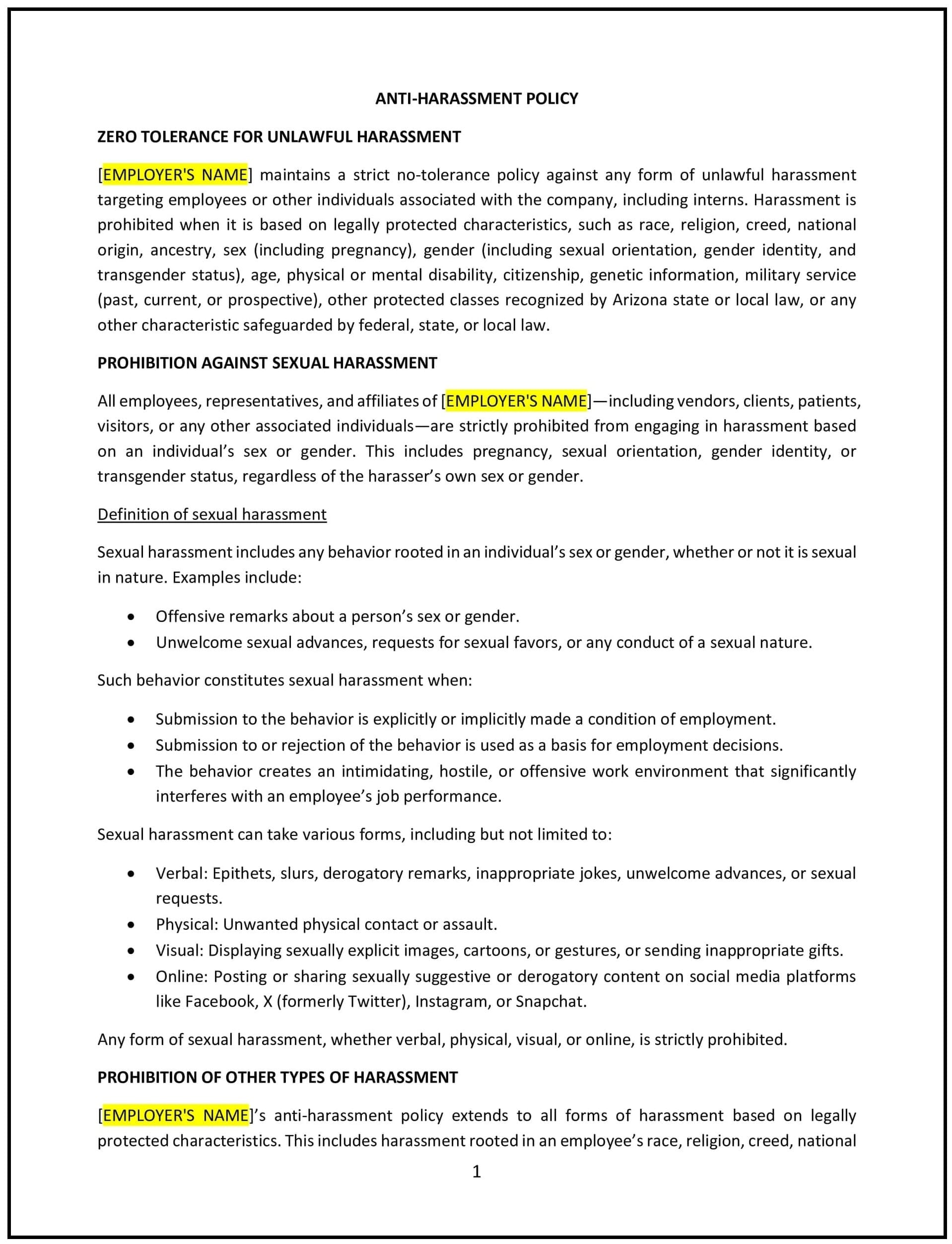
In Arizona, an anti-harassment policy helps businesses create a safe and respectful workplace for all employees by clearly defining unacceptable behavior and outlining procedures for reporting and addressing harassment. This policy is essential for fostering a positive work environment and ensuring compliance with federal and state anti-harassment laws, including the Arizona Civil Rights Act.
This policy provides guidance for identifying, preventing, and addressing harassment in the workplace. It establishes clear reporting procedures and disciplinary measures while promoting education and awareness about harassment to minimize its occurrence.
How to use this anti-harassment policy (Arizona)
- Define harassment: Clearly explain what constitutes harassment, including examples of verbal, physical, and non-verbal behaviors. Ensure the definition aligns with Arizona and federal regulations.
- Provide reporting procedures: Outline how employees can report harassment, specifying multiple reporting channels, including supervisors, HR representatives, or anonymous hotlines.
- Ensure confidentiality: Include measures to protect the privacy of employees involved in harassment complaints, maintaining confidentiality to the extent possible.
- Educate employees: Conduct regular training sessions to raise awareness about harassment and reinforce the company’s zero-tolerance stance.
- Enforce consistently: Apply the policy uniformly across all employees to demonstrate fairness and prevent favoritism or bias.
Benefits of using an anti-harassment policy (Arizona)
This policy offers significant advantages for Arizona businesses:
- Promotes a safe workplace: Helps prevent harassment and creates an environment where employees feel secure and respected.
- Supports compliance: Aligns with Arizona’s Civil Rights Act and federal laws, reducing the risk of legal disputes or penalties.
- Encourages accountability: Establishes clear expectations and consequences for unacceptable behavior, fostering a culture of responsibility.
- Improves morale: Demonstrates the organization’s commitment to employee well-being, boosting satisfaction and engagement.
- Protects reputation: Reduces the risk of publicized harassment claims that could harm the company’s image and stakeholder trust.
Tips for using an anti-harassment policy (Arizona)
- Address Arizona-specific considerations: Include provisions for addressing harassment in remote or hybrid work environments, which are increasingly common in Arizona’s workforce.
- Provide multiple reporting options: Ensure employees have several channels for reporting harassment, such as in-person, online, or anonymous systems, to encourage reporting.
- Regularly review and update: Periodically revise the policy to reflect changes in Arizona’s laws, workplace trends, or organizational needs.
- Encourage bystander intervention: Include guidelines for employees to safely intervene or report harassment they witness in the workplace.
- Document all actions: Maintain thorough records of reported incidents and the actions taken to ensure transparency and legal compliance.