Anti-harassment policy (California): Free template
Defines harassment, provides reporting procedures, and enforces protections to maintain respectful California work environments.
- Policies
- California
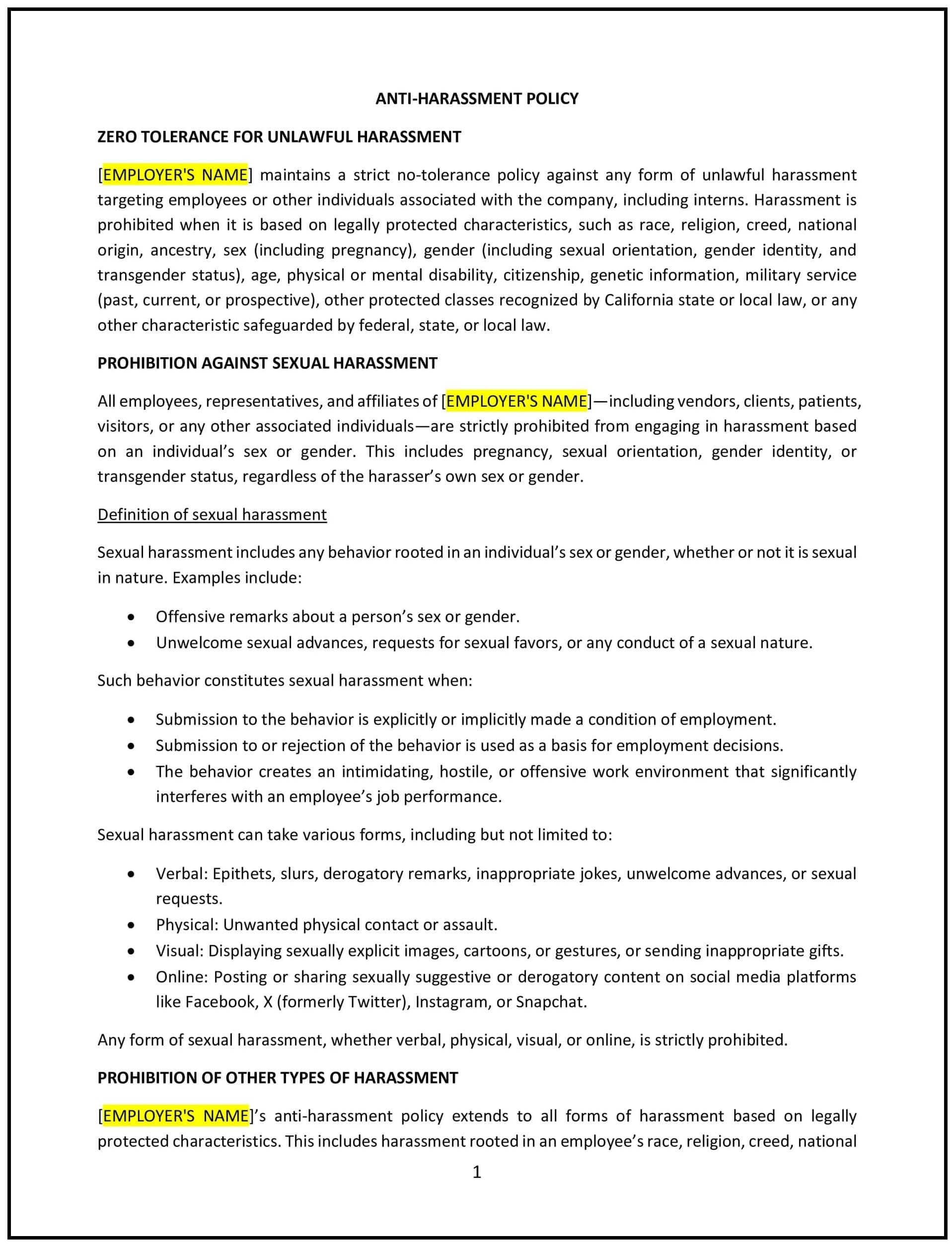
Anti-harassment policy (California)
In California, an anti-harassment policy provides businesses with guidelines to prevent, address, and resolve harassment in the workplace. This policy ensures that employees, contractors, and visitors work in a respectful and inclusive environment free from discrimination, bullying, or harassment.
This policy outlines prohibited behaviors, reporting procedures, and response protocols in compliance with California’s robust anti-harassment laws, including the California Fair Employment and Housing Act (FEHA). By implementing this policy, California businesses can foster a culture of respect while minimizing legal and reputational risks.
How to use this anti-harassment policy (California)
- Define prohibited behaviors: Clearly describe forms of harassment, including verbal, physical, visual, and online behaviors, as well as harassment based on protected characteristics such as race, gender, and religion.
- Establish reporting procedures: Provide employees with multiple options for reporting harassment, including anonymous and confidential methods.
- Outline response protocols: Detail the steps the business will take to investigate reports, document findings, and take corrective actions.
- Communicate zero-tolerance: Emphasize the business’s commitment to a harassment-free workplace and the consequences of violating the policy.
- Provide training: Offer regular anti-harassment training in compliance with California law, especially for supervisors and managers.
Benefits of using this anti-harassment policy (California)
This policy offers several advantages for California businesses:
- Promotes a respectful workplace: Encourages professionalism and mutual respect, fostering a positive work culture.
- Supports compliance: Aligns with California laws, including FEHA and mandated harassment prevention training requirements.
- Reduces risks: Helps prevent legal claims, financial liabilities, and reputational harm related to harassment incidents.
- Enhances employee trust: Demonstrates the business’s commitment to protecting employees from harassment and ensuring fair treatment.
- Encourages accountability: Establishes clear guidelines and procedures for addressing harassment consistently.
Tips for using this anti-harassment policy (California)
- Address California-specific considerations: Ensure the policy complies with FEHA and local ordinances, such as training requirements for employers with five or more employees.
- Train thoroughly: Provide mandatory anti-harassment training for all employees and additional supervisory training as required by California law.
- Use clear communication: Ensure all employees understand the policy, reporting options, and the consequences of harassment.
- Document thoroughly: Maintain records of training, reports, investigations, and actions taken to demonstrate compliance and accountability.
- Review regularly: Update the policy to reflect changes in California laws, workplace dynamics, or best practices.
Frequently asked questions (FAQs)
Similar templates
Where deals go from offer to paid
