Got contracts to review? While you're here for policies, let Cobrief make contract review effortless—start your free review now.
Customize this template for free
Anti-harassment policy (Florida)
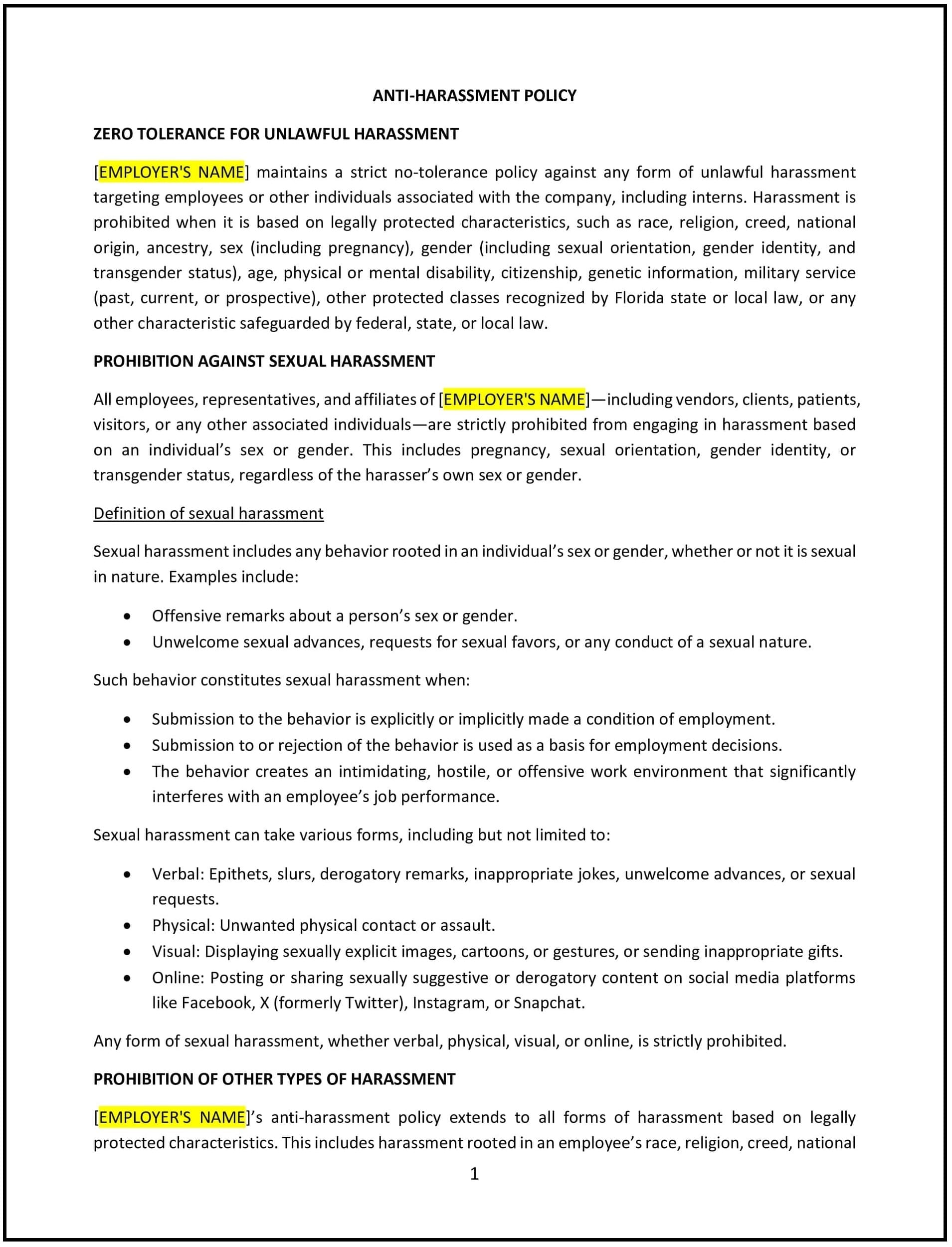
An anti-harassment policy helps Florida businesses create a respectful and inclusive workplace environment. This policy outlines procedures for preventing, addressing, and responding to harassment in all forms, including verbal, physical, and digital interactions. It is designed to promote safety, reduce risks, and provide clear guidelines for fostering a culture of respect and accountability.
By implementing this policy, businesses in Florida can demonstrate their commitment to employee well-being, strengthen workplace culture, and align with the state’s focus on protecting individuals from harmful behavior.
How to use this anti-harassment policy (Florida)
- Define harassment: Clearly explain what constitutes harassment, including examples such as discriminatory remarks, unwanted advances, or offensive jokes.
- Prohibit inappropriate behavior: Specify that any form of harassment will not be tolerated in the workplace or during work-related activities.
- Establish reporting procedures: Outline how employees should report incidents or concerns about harassment, including whom to contact and how to document incidents.
- Provide support resources: Offer information about counseling services, employee assistance programs (EAPs), or external hotlines for additional support.
- Train employees and managers: Educate staff on recognizing warning signs, understanding the policy, and addressing harassment appropriately.
- Develop investigation protocols: Create procedures for investigating reports of harassment, ensuring fairness, confidentiality, and timely resolution.
- Communicate the policy: Share the policy with employees during onboarding and through regular communications to ensure awareness and understanding.
- Monitor adherence: Regularly review workplace interactions and address any concerns or discrepancies promptly.
- Update the policy: Periodically assess the policy to reflect changes in workplace dynamics, legal standards, or business needs.
Benefits of using this anti-harassment policy (Florida)
This policy offers several advantages for Florida businesses:
- Promotes safety: Clear guidelines help prevent harassment and ensure a safe environment for employees, customers, and visitors.
- Reduces risks: Proactive measures minimize the likelihood of harassment incidents and their potential impacts on the business.
- Supports employee well-being: Providing resources and support demonstrates the business’s commitment to mental health and respect.
- Enhances workplace culture: A policy that prioritizes respect fosters trust, collaboration, and a positive work environment.
- Builds trust: Transparent procedures for reporting and addressing harassment demonstrate the business’s commitment to fairness and accountability.
- Aligns with community values: The policy reflects Florida’s emphasis on inclusivity, diversity, and mutual respect.
- Improves preparedness: Training and investigation protocols help employees and managers respond effectively to harassment incidents.
Tips for using this anti-harassment policy (Florida)
- Communicate clearly: Ensure employees understand the policy by providing written materials and discussing it during meetings or training sessions.
- Train managers: Educate supervisors on how to handle harassment complaints fairly and consistently while maintaining confidentiality.
- Be proactive: Encourage employees to report concerns early and address potential issues before they escalate.
- Conduct drills: Practice scenarios to ensure employees and managers know how to respond to harassment incidents effectively.
- Stay informed: Keep up with changes in laws, regulations, or societal norms that may affect workplace expectations around harassment.
- Encourage feedback: Solicit input from employees to identify areas for improvement and ensure the policy meets their needs.
- Review periodically: Assess the policy’s effectiveness and make updates as needed to reflect changes in workplace dynamics or legal requirements.