Got contracts to review? While you're here for policies, let Cobrief make contract review effortless—start your free review now.
Customize this template for free
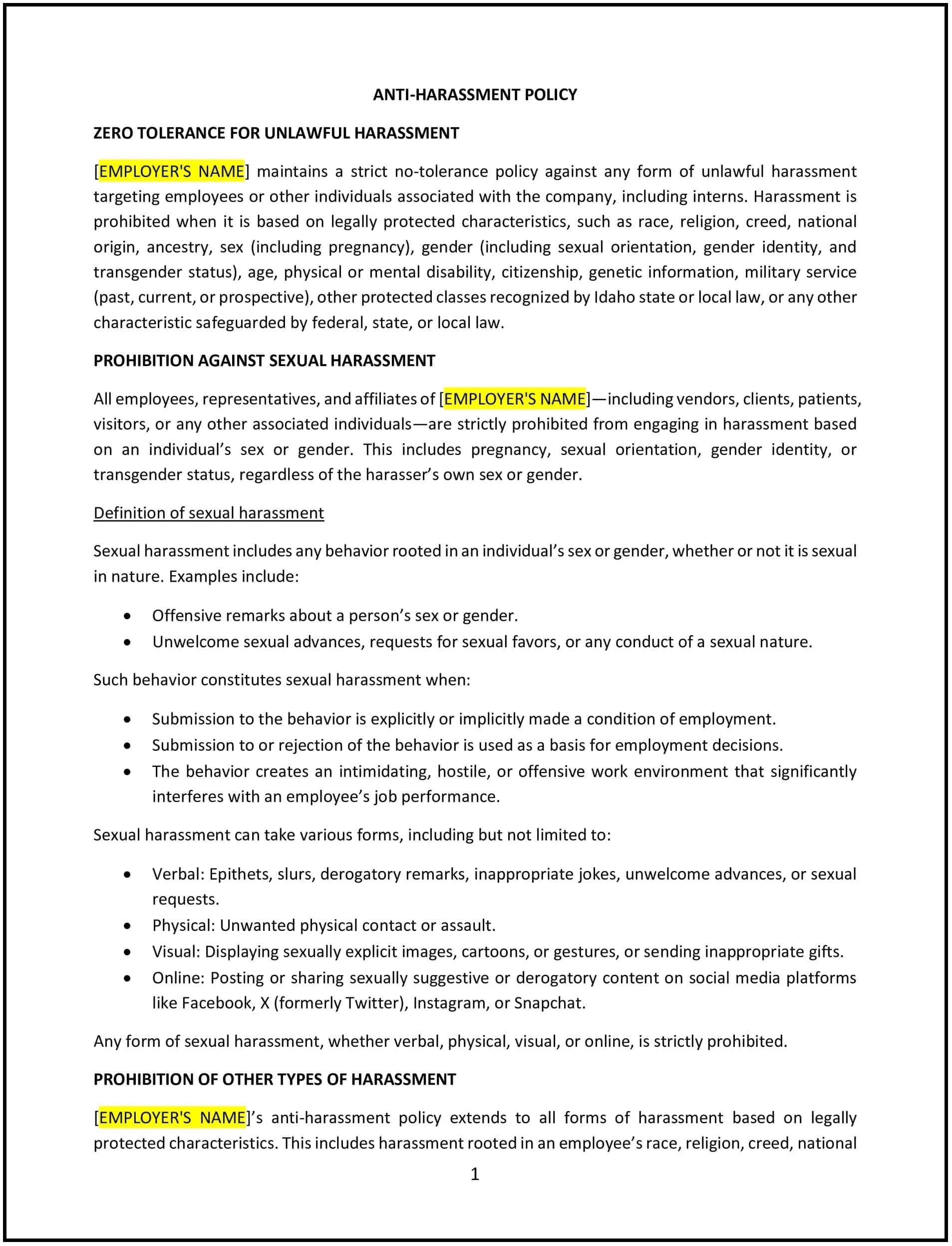
Anti-harassment policy (Idaho)
An anti-harassment policy helps Idaho businesses create a safe and respectful workplace by defining unacceptable behaviors and providing clear procedures for reporting and addressing harassment. This policy covers all forms of harassment, including but not limited to sexual harassment, bullying, and discrimination based on protected characteristics such as race, gender, religion, or disability. It reflects Idaho’s commitment to fostering an inclusive and professional work environment.
By implementing this policy, businesses can promote a culture of respect, protect employees from harmful behaviors, and reduce the risk of workplace conflicts or legal issues.
How to use this anti-harassment policy (Idaho)
- Define harassment: Clearly outline what constitutes harassment, including examples of verbal, physical, and visual harassment. The policy should emphasize that harassment of any kind will not be tolerated.
- Establish reporting procedures: Provide multiple avenues for employees to report harassment, such as through a supervisor, HR representative, or anonymous hotline. Ensure the process is accessible and well-communicated.
- Train employees: Conduct regular training sessions to educate employees on the policy, what behaviors are considered harassment, and how to report incidents. Training should include real-world examples and scenarios specific to Idaho workplaces.
- Investigate promptly: Outline the steps for investigating harassment complaints, including timelines, confidentiality measures, and the involvement of impartial investigators.
- Enforce consequences: Clearly state the disciplinary actions for policy violations, ranging from warnings to termination, depending on the severity of the offense. This reinforces the seriousness of the policy.
- Protect against retaliation: Emphasize that employees who report harassment or participate in investigations will be protected from retaliation. This encourages open communication and trust.
- Review and update: Regularly review the policy to ensure it remains aligned with Idaho laws, federal regulations, and evolving workplace standards.
Benefits of using this anti-harassment policy (Idaho)
This policy provides numerous benefits for Idaho businesses:
- Promotes a respectful workplace: By clearly defining unacceptable behaviors, the policy helps create a professional and inclusive environment for all employees.
- Reduces workplace conflicts: Addressing harassment proactively can prevent misunderstandings and conflicts, leading to better teamwork and collaboration.
- Protects employee well-being: A clear anti-harassment policy ensures employees feel safe and supported, which can improve morale and job satisfaction.
- Mitigates legal risks: Aligning with state and federal laws helps businesses reduce the risk of lawsuits or regulatory penalties related to harassment claims.
- Enhances company reputation: Demonstrating a commitment to a harassment-free workplace can improve the business’s reputation among employees, customers, and partners.
- Encourages accountability: The policy holds all employees, including leadership, accountable for maintaining a respectful workplace.
- Supports employee retention: A safe and inclusive work environment can help businesses attract and retain top talent.
Tips for using this anti-harassment policy (Idaho)
- Communicate the policy effectively: Share the policy with employees during onboarding, training sessions, and through internal communications to ensure everyone understands its importance.
- Lead by example: Leadership should model respectful behavior and demonstrate a commitment to maintaining a harassment-free workplace.
- Provide ongoing training: Regularly update employees on the policy, reporting procedures, and examples of unacceptable behaviors to maintain awareness.
- Foster open communication: Encourage employees to speak up about harassment without fear of retaliation, and ensure they know how to access reporting mechanisms.
- Investigate thoroughly: Address all harassment complaints promptly and impartially, ensuring confidentiality and fairness throughout the process.
- Monitor workplace culture: Regularly assess the workplace environment to identify and address potential issues before they escalate.
- Collaborate with legal experts: Work with legal counsel to ensure the policy aligns with Idaho laws, federal regulations, and industry best practices.