Got contracts to review? While you're here for policies, let Cobrief make contract review effortless—start your free review now.
Customize this template for free
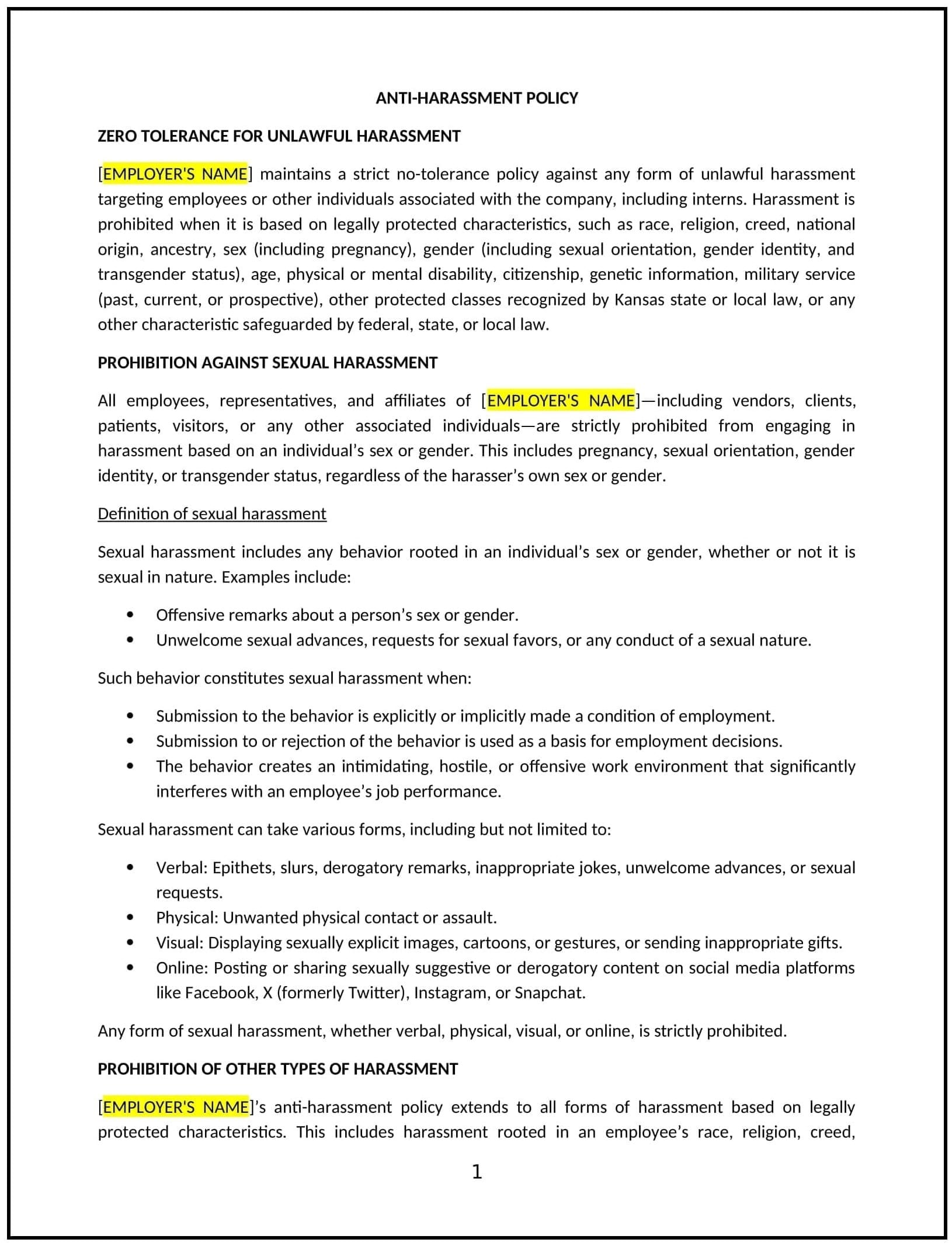
Anti-harassment policy (Kansas)
An anti-harassment policy helps Kansas businesses establish clear expectations for maintaining a respectful and professional workplace. This policy outlines what constitutes harassment, how businesses should handle complaints, and the steps to prevent inappropriate behavior in the workplace. A well-structured policy promotes a safe and inclusive environment while minimizing conflicts and legal risks.
By implementing this policy, businesses can foster a culture of respect, address harassment concerns effectively, and create a positive workplace for all employees.
How to use this anti-harassment policy (Kansas)
- Define harassment: Businesses should clearly describe behaviors that constitute harassment, including verbal, physical, and visual conduct that creates a hostile work environment.
- Establish reporting procedures: Businesses should provide employees with clear, accessible methods to report harassment, including anonymous reporting options if possible.
- Outline investigation steps: Businesses should define how harassment complaints will be reviewed, ensuring confidentiality and fair treatment of all parties involved.
- Implement preventive measures: Businesses should promote respectful workplace behavior through training, leadership example, and clear policies on inappropriate conduct.
- Address retaliation concerns: Businesses should prohibit retaliation against employees who report harassment and establish safeguards to protect those who come forward.
- Set disciplinary actions: Businesses should outline the potential consequences for employees who violate the policy, ensuring consistent enforcement.
- Review and update regularly: Businesses should periodically assess the policy and make adjustments based on workplace feedback and legal considerations.
Benefits of using an anti-harassment policy (Kansas)
- Promotes a respectful workplace: Encourages professionalism and discourages inappropriate behavior.
- Reduces legal and reputational risks: Helps businesses mitigate workplace conflicts and potential claims.
- Strengthens employee trust: Provides employees with confidence that concerns will be taken seriously and addressed properly.
- Establishes clear expectations: Defines appropriate workplace behavior and prevents misunderstandings.
- Encourages early intervention: Helps businesses address issues proactively before they escalate into larger conflicts.
- Supports workplace morale: Fosters an environment where employees feel safe, valued, and heard.
Tips for using this anti-harassment policy (Kansas)
- Communicate the policy clearly: Businesses should ensure all employees understand what constitutes harassment and how to report concerns.
- Offer training and awareness: Regular training on harassment prevention helps reinforce expectations and appropriate workplace behavior.
- Provide accessible reporting channels: Businesses should offer multiple ways for employees to report harassment, ensuring confidentiality and trust in the process.
- Address complaints promptly: Businesses should investigate complaints in a timely and impartial manner to maintain fairness.
- Document incidents properly: Keeping thorough records of reports and investigations helps businesses track trends and respond effectively.
- Apply policies consistently: Businesses should enforce anti-harassment measures fairly across all levels of the organization.