Anti-harassment policy (Mississippi): Free template
Got contracts to review? While you're here for policies, let Cobrief make contract review effortless—start your free review now.
Customize this template for free
Anti-harassment policy (Mississippi)
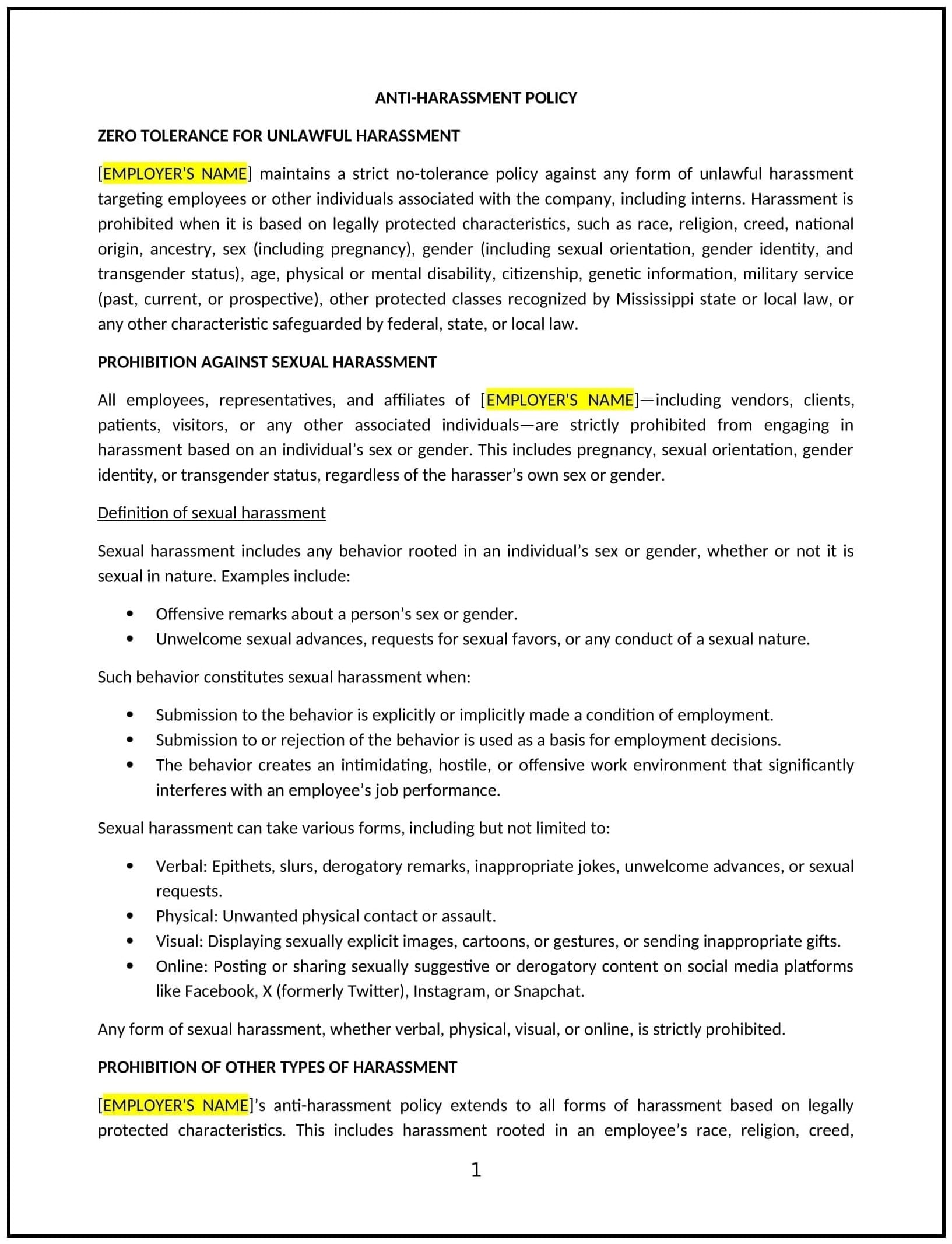
An anti-harassment policy helps Mississippi businesses establish a clear framework for preventing and addressing harassment in the workplace. This policy outlines the types of harassment, the company's commitment to maintaining a respectful work environment, and the steps employees can take if they experience or witness harassment.
By implementing this policy, businesses can create a safe and inclusive environment for all employees, reducing the risk of harassment claims and fostering a culture of mutual respect and professionalism.
How to use this anti-harassment policy (Mississippi)
- Define harassment: Clearly define what constitutes harassment in the workplace, including but not limited to sexual harassment, racial or ethnic harassment, bullying, and other forms of offensive conduct. Ensure that the definition is inclusive of all forms of harassment that could potentially occur in the workplace.
- Establish reporting procedures: Outline how employees can report incidents of harassment, including the use of a designated reporting point (e.g., HR, management) and any confidential reporting options available. Make sure employees understand that they can report harassment without fear of retaliation.
- Investigate complaints: Describe the process for investigating harassment claims, including the steps taken to maintain confidentiality, the timeline for investigations, and the consequences for found violations.
- Promote prevention: Encourage proactive measures to prevent harassment, such as regular training, fostering awareness, and promoting positive workplace behavior through clear codes of conduct and workplace expectations.
- Outline disciplinary actions: Specify the potential consequences for employees who engage in harassment, which may range from warnings to termination depending on the severity of the incident.
- Encourage respect and inclusivity: Reinforce the company's commitment to creating an environment where all employees are treated with respect and dignity, regardless of their background, gender, or personal characteristics.
- Review and update: Regularly review the policy and its effectiveness, making adjustments as necessary to ensure that it continues to meet the needs of the workplace and reflects any changes in applicable laws.
Benefits of using this anti-harassment policy (Mississippi)
This policy provides several benefits for Mississippi businesses:
- Protects employees from harm: A comprehensive anti-harassment policy protects employees from offensive behavior, harassment, and discrimination, creating a safer and more supportive work environment.
- Promotes a respectful workplace: By addressing harassment, the policy fosters a culture of respect and inclusion, where employees feel valued and safe.
- Reduces legal and financial risk: Implementing an anti-harassment policy can help businesses reduce the risk of costly harassment claims and lawsuits by ensuring that complaints are addressed promptly and appropriately.
- Enhances employee morale: Employees who feel that their workplace is free of harassment are more likely to be engaged, productive, and satisfied with their jobs.
- Demonstrates commitment to DEI: A strong anti-harassment policy supports diversity, equity, and inclusion (DEI) initiatives by ensuring that all employees are treated fairly and with respect.
Tips for using this anti-harassment policy (Mississippi)
- Communicate the policy effectively: Make sure all employees are familiar with the policy, how to report harassment, and the company’s commitment to addressing concerns.
- Provide training: Regularly conduct training on harassment prevention and respectful workplace behavior for employees at all levels.
- Encourage open communication: Create a culture where employees feel comfortable discussing harassment and workplace concerns without fear of retaliation.
- Investigate complaints thoroughly: Ensure that all complaints are investigated fairly and promptly, with appropriate confidentiality and impartiality.
- Take action when necessary: Follow through on the policy by taking appropriate disciplinary action when harassment is confirmed.