Got contracts to review? While you're here for policies, let Cobrief make contract review effortless—start your free review now.
Customize this template for free
Anti-retaliation policy (Alabama)
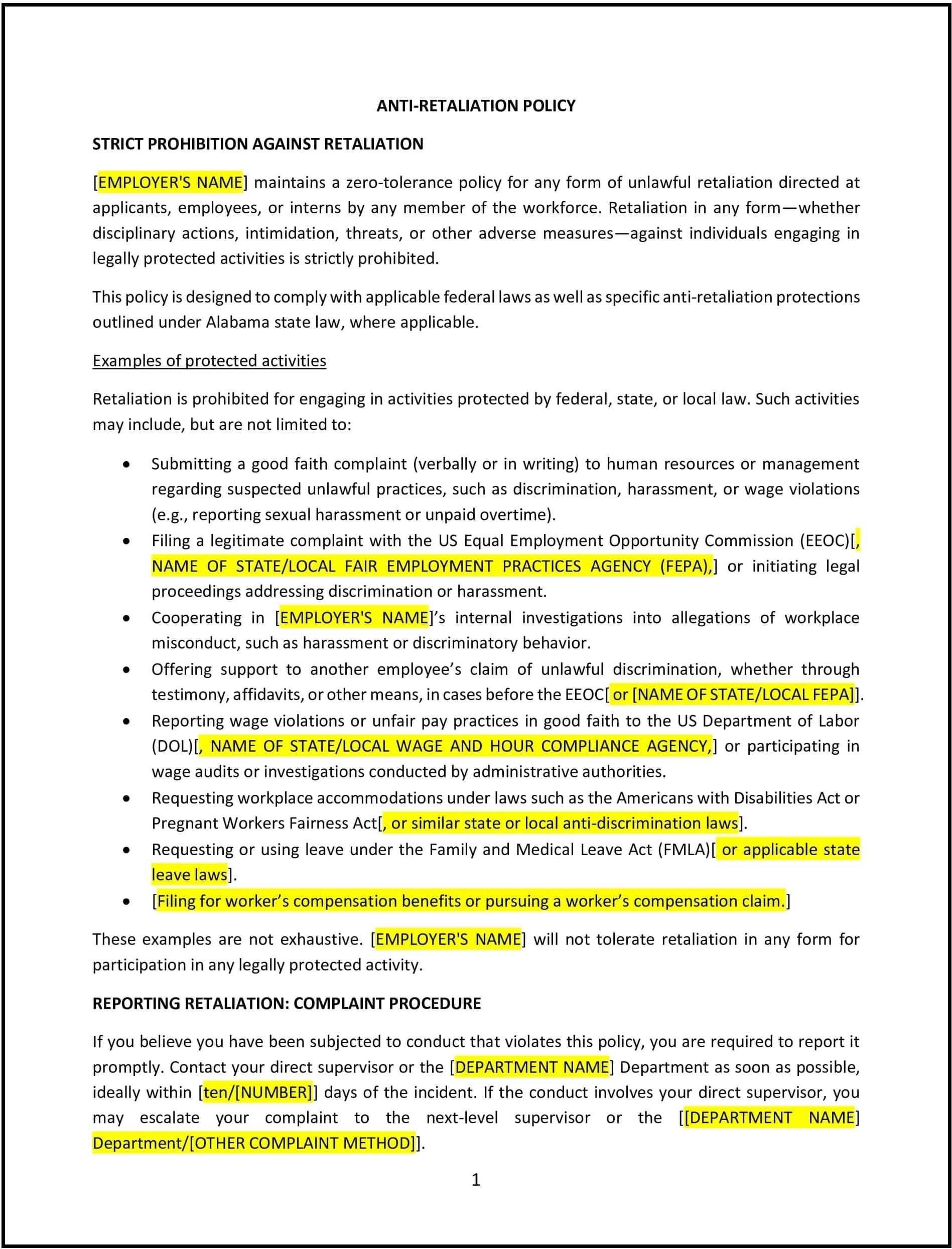
An anti-retaliation policy is essential for fostering a workplace culture where employees feel safe to voice concerns, report misconduct, or participate in investigations without fear of reprisal. In Alabama, this policy supports compliance with federal laws like Title VII of the Civil Rights Act, the Whistleblower Protection Act, and other applicable state regulations. Tailoring this policy ensures it aligns with your organization’s structure, promotes accountability, and protects employees from unfair treatment.
How to use this anti-retaliation policy (Alabama)
- Emphasize protection: Clearly communicate that the policy safeguards employees who report issues or participate in investigations.
- Outline reporting procedures: Provide detailed instructions on how employees can report retaliation, including confidential options.
- Include state-specific considerations: Address how Alabama’s legal landscape affects retaliation claims and reporting processes.
- Train leadership: Ensure managers and supervisors understand their roles in preventing retaliation and enforcing this policy.
- Regularly review: Update the policy to reflect changes in Alabama laws or organizational practices, ensuring continued compliance.
Benefits of using an anti-retaliation policy (Alabama)
A strong anti-retaliation policy supports transparency and trust in the workplace. Here's how it helps:
- Protects employees: Safeguards employees from unfair treatment after reporting concerns or engaging in investigations.
- Promotes accountability: Ensures managers and employees adhere to ethical standards.
- Ensures compliance: Aligns with federal and Alabama-specific anti-retaliation laws to mitigate legal risks.
- Encourages reporting: Fosters a culture where employees feel safe to voice concerns without fear of retribution.
- Strengthens organizational trust: Demonstrates a commitment to fair treatment and employee rights.
Tips for using an anti-retaliation policy (Alabama)
- Define retaliation clearly: Provide examples of prohibited behaviors, such as demotions, terminations, or hostile work environments.
- Establish clear reporting channels: Include multiple ways for employees to report retaliation, such as HR, hotlines, or third-party platforms.
- Address Alabama’s workforce dynamics: Consider unique factors, such as industries with close-knit teams or small business settings.
- Communicate zero tolerance: Reinforce that any act of retaliation will be met with serious consequences.
- Monitor implementation: Conduct periodic audits to ensure compliance and address any gaps in enforcement.