Got contracts to review? While you're here for policies, let Cobrief make contract review effortless—start your free review now.
Customize this template for free
Anti-retaliation policy (Arizona)
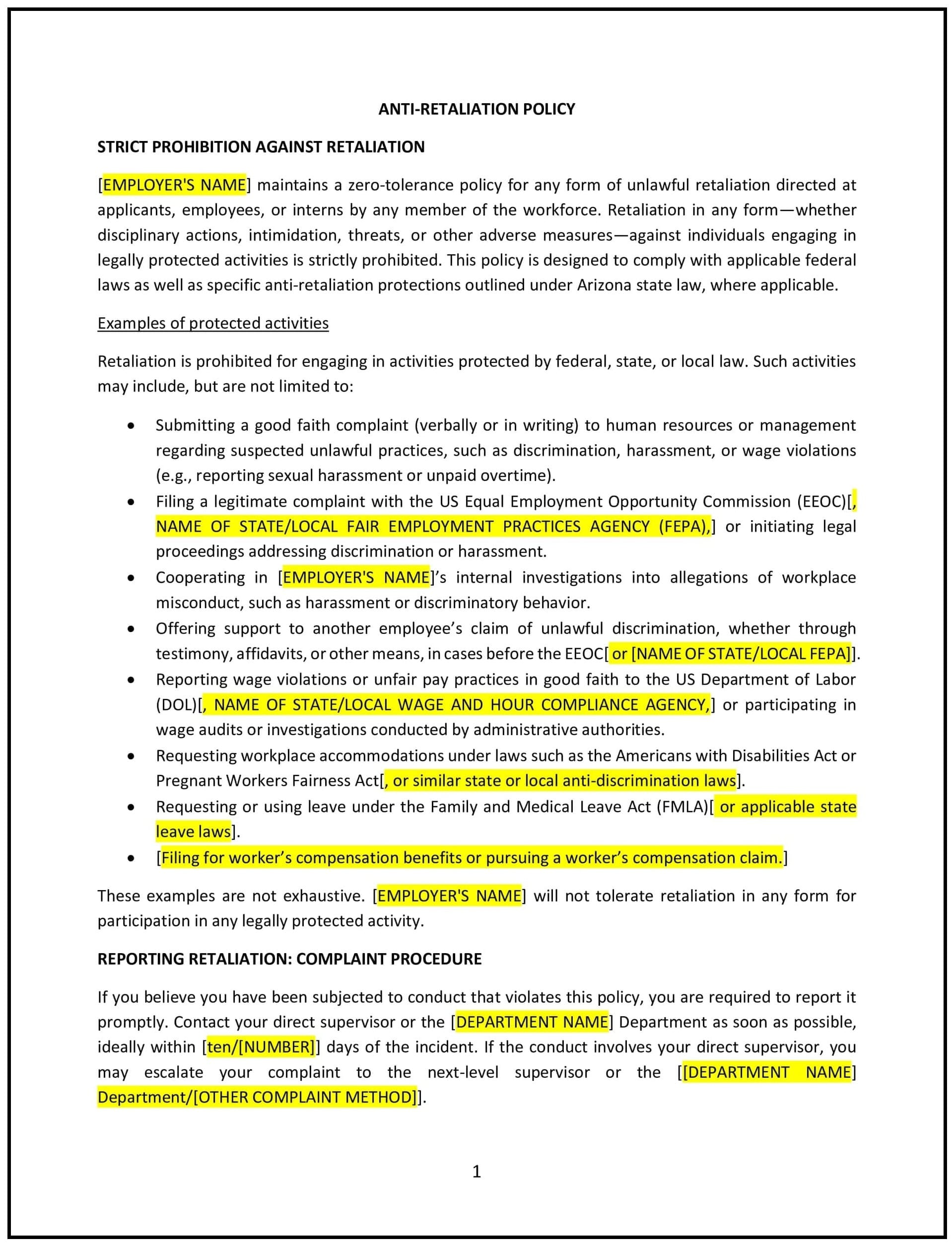
In Arizona, an anti-retaliation policy helps businesses protect their operations by fostering a workplace culture where employees can report issues like harassment, discrimination, or legal violations without fear of retaliation. This policy supports compliance with state and federal regulations, including the Arizona Civil Rights Act, while reducing risks associated with employee claims and potential litigation.
This policy defines retaliation, outlines clear procedures for addressing complaints, and ensures protections for employees who act in good faith. By implementing this policy, Arizona businesses can encourage transparency, accountability, and ethical practices.
How to use this anti-retaliation policy (Arizona)
- Define retaliation: Include clear examples of prohibited behavior, such as firing, demoting, or harassing employees who report workplace concerns.
- Offer reporting options: Provide multiple, accessible reporting channels for employees to raise concerns about retaliation, such as HR representatives or online systems.
- Maintain confidentiality: Protect the identities and information of employees involved in complaints to the fullest extent possible.
- Train managers: Equip leaders with the tools to recognize and prevent retaliation, ensuring consistent application of the policy across the organization.
- Enforce consistently: Investigate complaints thoroughly and apply disciplinary actions uniformly to build trust and accountability.
Benefits of using an anti-retaliation policy (Arizona)
This policy provides critical advantages for businesses in Arizona:
- Encourages transparency: Creates an environment where employees feel comfortable reporting concerns, reducing the likelihood of undisclosed issues escalating.
- Reduces legal risks: Helps businesses comply with Arizona’s anti-retaliation laws and federal regulations, minimizing the chances of costly lawsuits.
- Improves morale: Demonstrates a commitment to fairness and integrity, boosting employee satisfaction and trust.
- Protects reputation: Safeguards the organization from public backlash associated with retaliation claims.
- Enhances compliance: Reinforces other workplace policies by ensuring employees can safely report violations or unethical practices.
Tips for using an anti-retaliation policy (Arizona)
- Include Arizona-specific considerations: Tailor the policy to address the needs of industries prevalent in Arizona, such as hospitality or healthcare, where retaliation risks may vary.
- Ensure accessibility: Provide training and clear instructions so employees and managers understand the reporting process and their responsibilities under the policy.
- Document thoroughly: Maintain records of all complaints, investigations, and resolutions to demonstrate compliance and protect against disputes.
- Address third-party interactions: Extend the policy’s coverage to include retaliation involving contractors, vendors, or other external parties.
- Review and revise regularly: Update the policy as laws or organizational needs evolve to ensure continued relevance and effectiveness.