Got contracts to review? While you're here for policies, let Cobrief make contract review effortless—start your free review now.
Customize this template for free
Anti-retaliation policy (Arkansas)
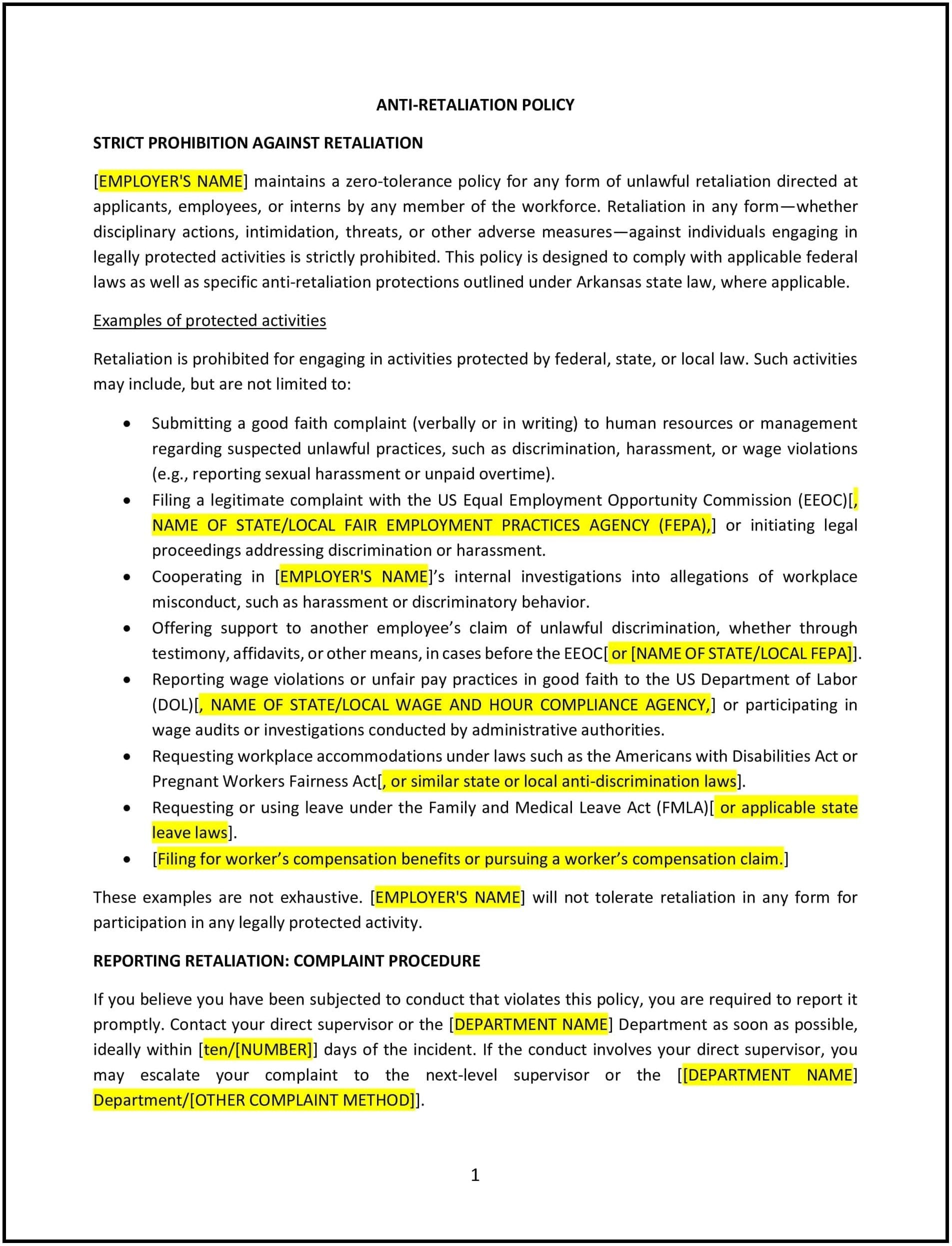
In Arkansas, an anti-retaliation policy provides businesses with guidelines to protect employees who report workplace concerns, such as harassment, discrimination, or safety violations, from retaliation. This policy ensures that employees feel safe raising legitimate issues without fear of adverse consequences, supporting a culture of accountability and transparency.
This policy outlines prohibited retaliatory actions, the process for reporting concerns, and the steps the business will take to investigate and address retaliation claims. By implementing this policy, Arkansas businesses can support compliance with state and federal laws while fostering employee trust and engagement.
How to use this anti-retaliation policy (Arkansas)
- Define retaliation: Clearly outline what constitutes retaliation, such as termination, demotion, reduced hours, or other adverse actions taken against employees for reporting concerns or participating in investigations.
- Establish reporting procedures: Provide a clear and confidential process for employees to report suspected retaliation, ensuring all complaints are handled promptly and fairly.
- Investigate claims: Define the steps the business will take to investigate retaliation claims, including maintaining confidentiality, gathering evidence, and interviewing involved parties.
- Enforce consequences: Outline disciplinary actions for individuals found to have engaged in retaliatory behavior, including warnings, suspension, or termination, based on the severity of the offense.
- Promote awareness: Communicate the policy during onboarding and provide ongoing training to ensure all employees understand their rights and responsibilities under the policy.
Benefits of using this anti-retaliation policy (Arkansas)
This policy offers several advantages for Arkansas businesses:
- Fosters a culture of accountability: Encourages employees to report concerns without fear, promoting transparency and ethical behavior throughout the organization.
- Supports compliance: Aligns with Arkansas and federal laws protecting whistleblowers and employees who report violations or participate in investigations.
- Reduces legal risks: Helps the business avoid lawsuits or penalties associated with claims of retaliation by establishing clear processes and protections.
- Enhances employee trust: Demonstrates the business’s commitment to protecting employees who raise legitimate concerns, fostering a supportive and inclusive workplace culture.
- Improves productivity: Employees are more likely to focus on their work and contribute positively when they feel safe and valued in the workplace.
Tips for using this anti-retaliation policy (Arkansas)
- Address Arkansas-specific considerations: Ensure the policy aligns with Arkansas employment laws, including whistleblower protections and anti-retaliation statutes.
- Communicate clearly: Make the policy accessible to all employees, emphasizing the importance of reporting concerns and the protections in place to prevent retaliation.
- Train managers: Provide training to supervisors and HR staff on recognizing and preventing retaliation, handling complaints, and supporting affected employees.
- Monitor and review: Regularly assess the policy’s effectiveness by tracking complaints, evaluating outcomes, and updating processes as needed.
- Document thoroughly: Maintain detailed records of all reported concerns, investigations, and resolutions to support compliance and transparency.