Anti-retaliation policy (California): Free template
Got contracts to review? While you're here for policies, let Cobrief make contract review effortless—start your free review now.
Customize this template for free
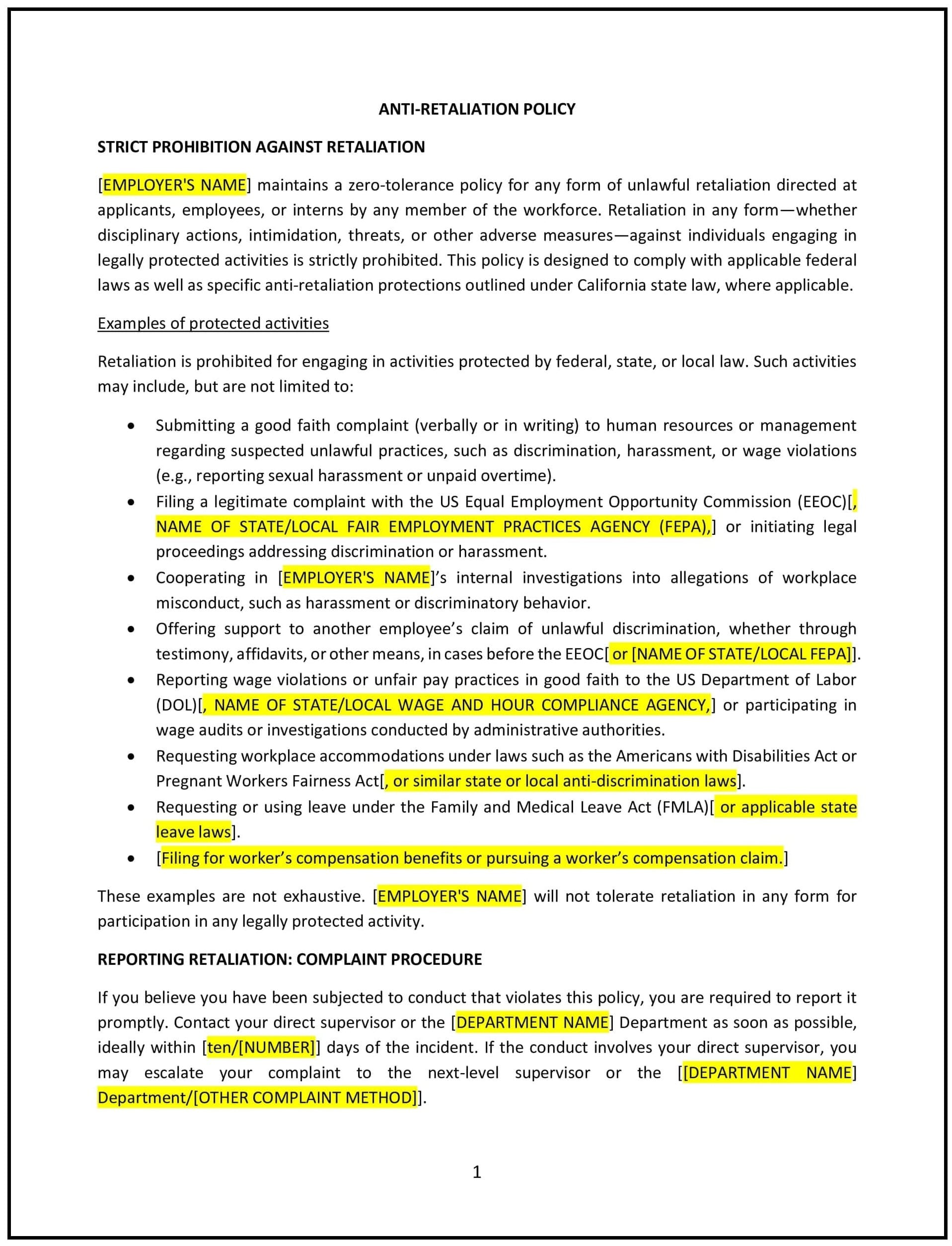
Anti-retaliation policy (California)
In California, an anti-retaliation policy provides businesses with guidelines to protect employees from adverse actions when they report concerns, participate in investigations, or exercise their legal rights. This policy ensures that employees feel safe raising issues without fear of reprisal, promoting a transparent and fair workplace culture.
This policy outlines prohibited retaliatory behaviors, reporting procedures, and steps the business will take to address and prevent retaliation. By implementing this policy, California businesses can foster trust and support compliance with state and federal anti-retaliation laws, including California Labor Code Section 1102.5.
How to use this anti-retaliation policy (California)
- Define retaliation: Clearly describe what constitutes retaliation, such as demotions, terminations, reduced hours, or other adverse actions following a protected activity.
- Establish reporting procedures: Provide employees with multiple ways to report suspected retaliation, including confidential or anonymous methods.
- Outline response protocols: Detail how the business will investigate reports of retaliation and take corrective actions when necessary.
- Communicate protections: Inform employees of their rights under this policy and California law, emphasizing the business’s commitment to a retaliation-free workplace.
- Provide training: Offer regular training for employees and managers to ensure they understand the policy and how to avoid retaliatory behavior.
Benefits of using this anti-retaliation policy (California)
This policy offers several advantages for California businesses:
- Promotes a safe workplace: Encourages employees to speak up about concerns without fear of retaliation, fostering openness and accountability.
- Supports compliance: Aligns with California’s robust anti-retaliation laws, including Labor Code protections and whistleblower statutes.
- Reduces legal risks: Helps the business proactively address and prevent retaliation-related claims or lawsuits.
- Enhances trust: Demonstrates the business’s commitment to fairness and protecting employees’ rights.
- Encourages accountability: Provides clear guidelines for handling retaliation claims consistently and fairly.
Tips for using this anti-retaliation policy (California)
- Address California-specific considerations: Reflect the state’s labor laws and whistleblower protections in the policy.
- Foster communication: Encourage employees to report concerns early to prevent escalation of potential retaliation issues.
- Train supervisors: Ensure managers and supervisors understand their responsibilities under the policy and how to handle reports appropriately.
- Document incidents: Maintain thorough records of all retaliation reports, investigations, and resolutions to ensure transparency and compliance.
- Review regularly: Update the policy to reflect changes in laws, workplace practices, or industry standards.