Got contracts to review? While you're here for policies, let Cobrief make contract review effortless—start your free review now.
Customize this template for free
Anti-retaliation policy (Colorado)
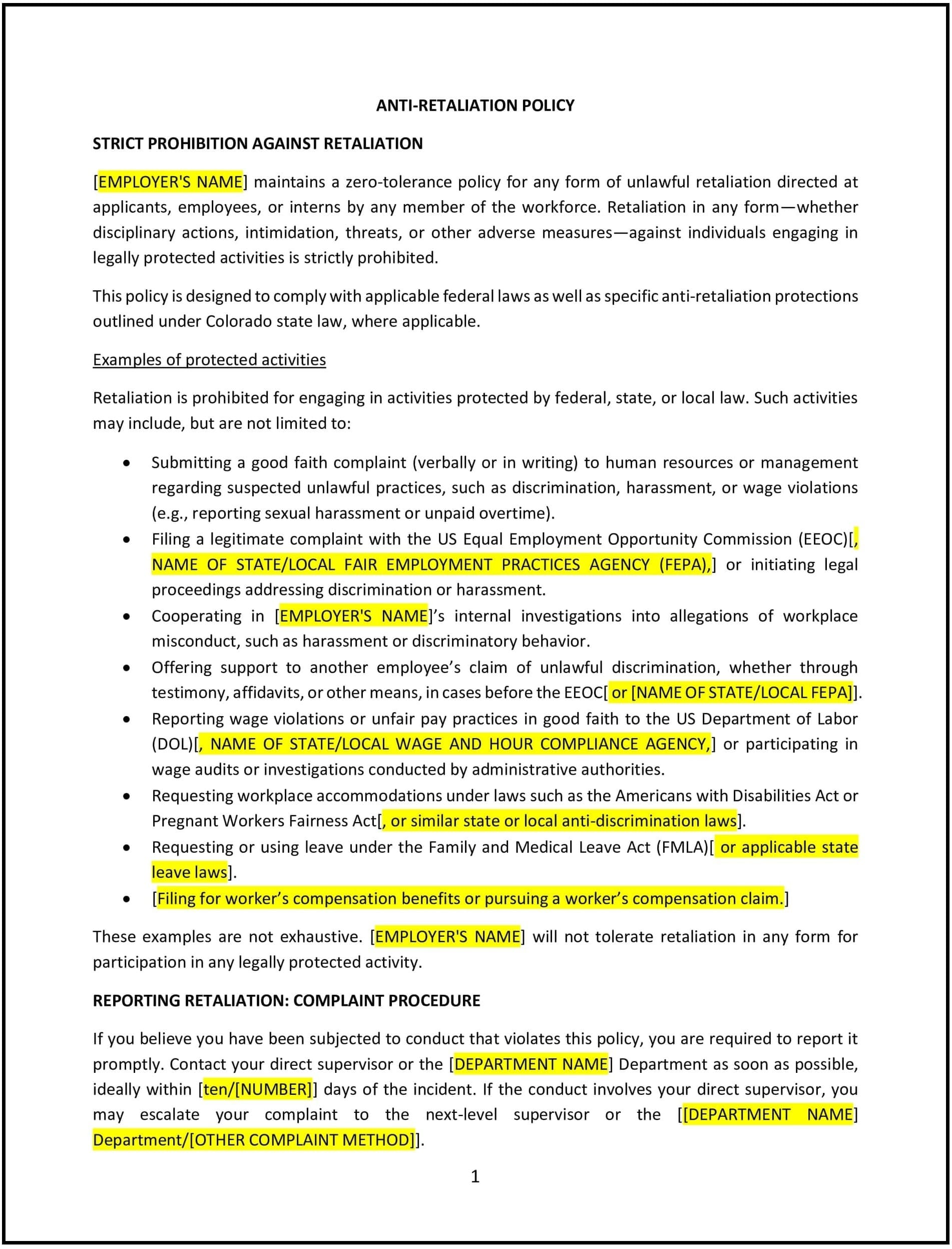
In Colorado, an anti-retaliation policy provides businesses with guidelines for preventing retaliation against employees who report complaints, participate in investigations, or assert their legal rights. This policy aligns with Colorado labor laws, including the Colorado Anti-Discrimination Act (CADA) and federal regulations, ensuring that employees are protected when they engage in protected activities such as reporting harassment, discrimination, or other unlawful conduct.
By implementing this policy, Colorado businesses can create a culture of trust and accountability, where employees feel safe to report issues without fear of retaliation, ultimately supporting a fair and respectful work environment.
How to use this anti-retaliation policy (Colorado)
- Define retaliation: Clearly outline what constitutes retaliation, such as demotion, termination, harassment, or any other negative employment action taken against an employee for engaging in protected activities.
- Communicate reporting procedures: Provide employees with clear and confidential reporting procedures for retaliation, including who to contact, how to file a complaint, and what steps will be taken to address the issue.
- Establish investigation protocols: Detail the steps the business will take when retaliation is suspected, including timelines for investigations, involvement of appropriate parties, and corrective actions.
- Promote awareness: Educate employees and managers about their rights and responsibilities under the policy, including what constitutes protected activity and how to prevent retaliation.
- Ensure non-retaliation: Reinforce the commitment to a workplace where employees will not face retaliation for speaking out or participating in investigations.
Benefits of using this anti-retaliation policy (Colorado)
This policy offers several advantages for Colorado businesses:
- Supports compliance: Ensures adherence to Colorado and federal anti-retaliation laws, minimizing legal risks and potential penalties.
- Fosters trust: Helps build a transparent and supportive workplace culture where employees feel comfortable raising concerns or reporting misconduct without fear of retaliation.
- Reduces risks: Minimizes the likelihood of retaliation claims, protecting the business from legal disputes and reputational harm.
- Enhances employee morale: Promotes a sense of security and fairness, which can improve overall employee satisfaction, engagement, and retention.
- Builds a positive reputation: Demonstrates the business’s commitment to maintaining an ethical and lawful work environment, both internally and in the public eye.
Tips for using this anti-retaliation policy (Colorado)
- Reflect Colorado-specific laws: Ensure the policy aligns with the Colorado Anti-Discrimination Act (CADA) and any other relevant state or federal protections against retaliation.
- Implement training programs: Educate employees and management on their rights and responsibilities, and how to identify and report retaliation.
- Create a safe reporting system: Establish anonymous reporting channels and ensure that employees feel comfortable submitting complaints without fear of retaliation.
- Monitor complaints: Track complaints of retaliation to ensure timely investigation and resolution.
- Review regularly: Update the policy to reflect any changes in Colorado laws or best practices regarding retaliation and employee protections.