Got contracts to review? While you're here for policies, let Cobrief make contract review effortless—start your free review now.
Customize this template for free
Anti-retaliation policy (Delaware)
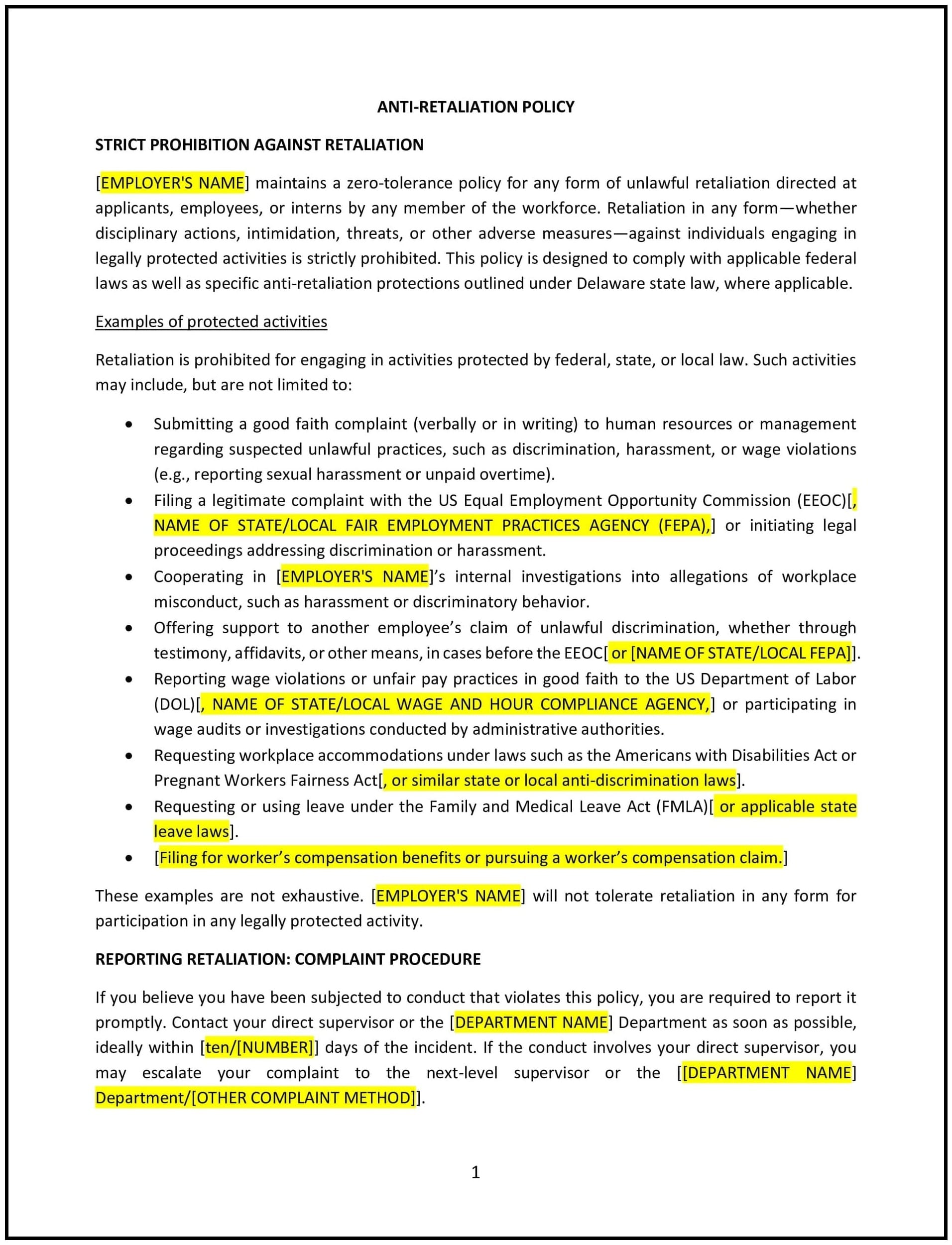
An anti-retaliation policy helps Delaware businesses protect employees who report misconduct, discrimination, or other workplace issues. This policy outlines the company’s commitment to safeguarding employees from retaliation, such as demotion, termination, or harassment, for making good faith reports or participating in investigations.
By implementing this policy, businesses can promote a culture of accountability, support employee trust, and reduce legal risks.
How to use this anti-retaliation policy (Delaware)
- Define retaliation: Clearly describe what constitutes retaliation, including examples such as adverse employment actions, intimidation, or creating a hostile work environment.
- Outline reporting procedures: Provide a clear and confidential process for employees to report retaliation or concerns about potential retaliation.
- Ensure confidentiality: Emphasize the importance of maintaining confidentiality during the reporting and investigation process to protect employees and witnesses.
- Assign responsible parties: Designate individuals or teams to handle retaliation complaints, ensuring impartiality and prompt action.
- Communicate consequences: Clearly outline the disciplinary actions for engaging in retaliation, such as warnings, suspension, or termination.
- Provide regular training: Educate employees and management on anti-retaliation principles, reporting procedures, and the company’s commitment to protecting employees.
Benefits of using this anti-retaliation policy (Delaware)
This policy offers several benefits for Delaware businesses:
- Encourages reporting: Promotes a workplace where employees feel safe reporting misconduct or participating in investigations without fear of retaliation.
- Builds trust: Demonstrates the company’s commitment to fairness and accountability, fostering employee trust and morale.
- Reduces legal risks: Helps businesses comply with federal and state laws, minimizing the likelihood of legal claims related to retaliation.
- Strengthens workplace culture: Promotes a culture of transparency and integrity by protecting employees who raise concerns in good faith.
- Enhances compliance efforts: Supports adherence to workplace policies and regulatory requirements by encouraging employees to report violations.
Tips for using this anti-retaliation policy (Delaware)
- Communicate the policy clearly: Ensure employees understand their rights under the policy and know how to report retaliation or concerns.
- Promote a zero-tolerance approach: Make it clear that the company has a zero-tolerance stance toward retaliation and will take immediate action against violations.
- Protect confidentiality: Safeguard the identities of employees who report retaliation and maintain confidentiality during investigations.
- Monitor compliance: Regularly review the policy and related practices to ensure they remain effective and aligned with legal requirements.
- Provide ongoing training: Offer periodic training sessions to reinforce the importance of anti-retaliation measures and educate employees on reporting mechanisms.