Got contracts to review? While you're here for policies, let Cobrief make contract review effortless—start your free review now.
Customize this template for free
Anti-retaliation policy (Georgia)
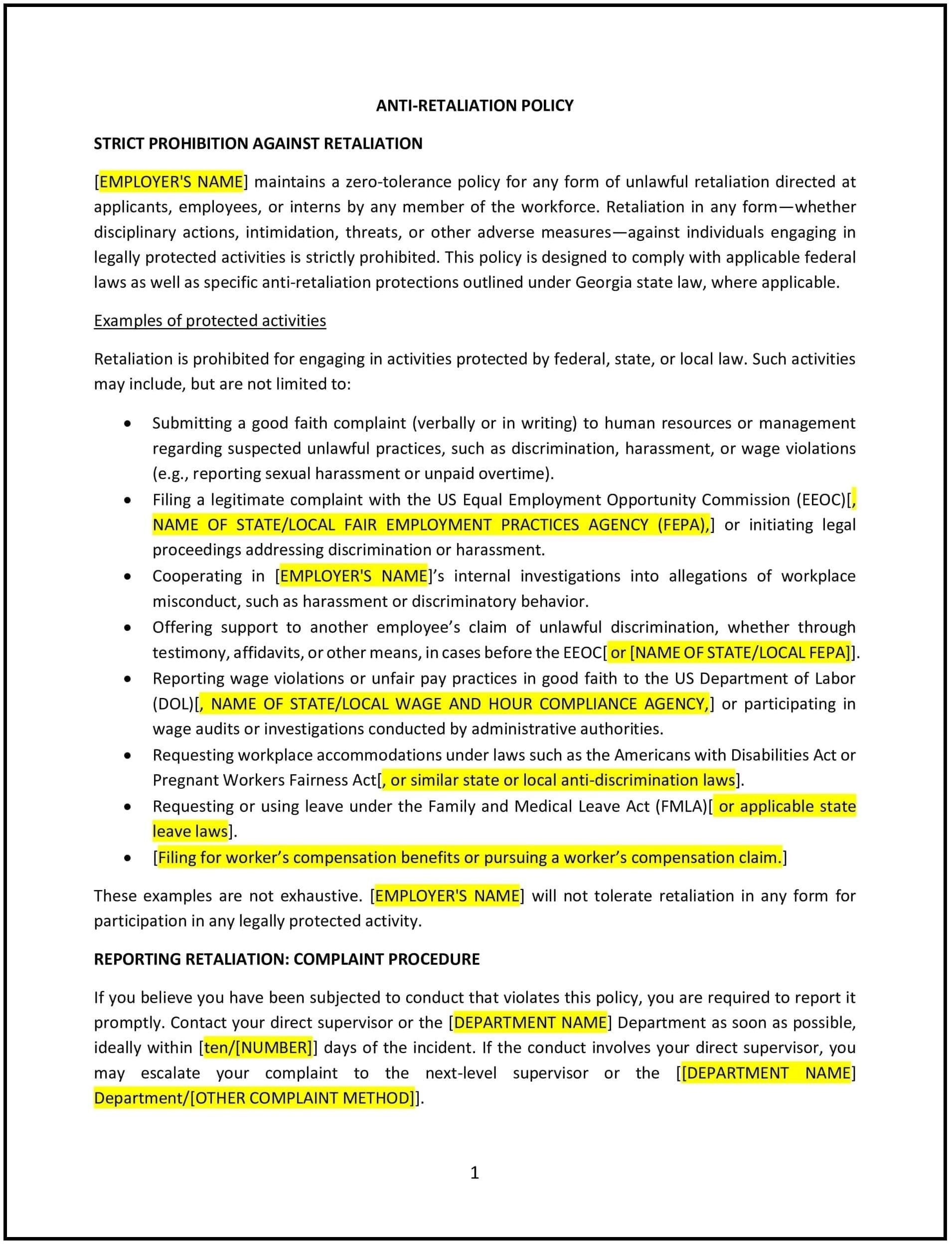
This anti-retaliation policy is designed to help Georgia businesses protect employees who report workplace misconduct or participate in investigations. The policy outlines expectations for employee protection, reporting procedures, and steps businesses should take to prevent and address retaliation in the workplace.
By implementing this policy, businesses can foster a safe, transparent, and respectful work environment where employees feel empowered to report concerns without fear of negative consequences.
How to use this anti-retaliation policy (Georgia)
- Define retaliation: Clearly state what constitutes retaliation, such as termination, demotion, harassment, or any adverse action taken against employees for reporting misconduct or participating in investigations.
- Set reporting procedures: Establish a clear process for employees to report suspected retaliation, including designated contacts (e.g., HR or a compliance officer) and options for confidential reporting.
- Emphasize confidentiality: Assure employees that retaliation complaints will be handled confidentially, and information will only be shared on a need-to-know basis during the investigation.
- Outline investigation steps: Specify the process for investigating retaliation complaints, including timelines, evidence collection, and steps to ensure a fair and unbiased review.
- Prohibit adverse actions: State that adverse actions against employees for reporting misconduct or participating in investigations are strictly prohibited and will result in disciplinary measures.
- Address consequences for retaliation: Define the disciplinary actions that will be taken against employees found to have engaged in retaliatory behavior, such as termination or other corrective measures.
- Provide support for affected employees: Offer resources, such as counseling or employee assistance programs (EAPs), to employees who experience retaliation or feel unsafe in the workplace.
- Review and reinforce the policy: Regularly review the policy to ensure it remains effective and aligned with Georgia laws, workplace dynamics, and employee needs.
Benefits of using this anti-retaliation policy (Georgia)
Implementing this policy provides several advantages for Georgia businesses:
- Fosters trust and transparency: Employees are more likely to report concerns and participate in investigations when they feel protected from retaliation.
- Promotes a safe workplace culture: A clear policy helps create a supportive work environment where employees feel respected and valued.
- Protects businesses from legal risks: Addressing retaliation proactively reduces the risk of lawsuits, regulatory complaints, and reputational damage.
- Supports accountability: Establishing consequences for retaliatory behavior ensures that employees understand the seriousness of upholding a respectful workplace.
- Reflects Georgia-specific considerations: Tailoring the policy to Georgia’s legal and cultural context helps businesses align with local standards while addressing employee concerns effectively.
Tips for using this anti-retaliation policy (Georgia)
- Communicate the policy effectively: Ensure employees understand their rights under the anti-retaliation policy and know how to report concerns. Include information in onboarding materials and regular training sessions.
- Encourage early reporting: Create an environment where employees feel safe reporting retaliation concerns promptly, enabling businesses to address issues before they escalate.
- Train management: Provide training for managers and supervisors to recognize potential retaliation and handle employee concerns appropriately.
- Monitor workplace culture: Regularly assess workplace dynamics to identify and address any behaviors that may discourage employees from reporting concerns.
- Support affected employees: Offer resources to employees who report retaliation, ensuring they feel supported and respected throughout the process.