Got contracts to review? While you're here for policies, let Cobrief make contract review effortless—start your free review now.
Customize this template for free
Anti-retaliation policy (Hawaiʻi)
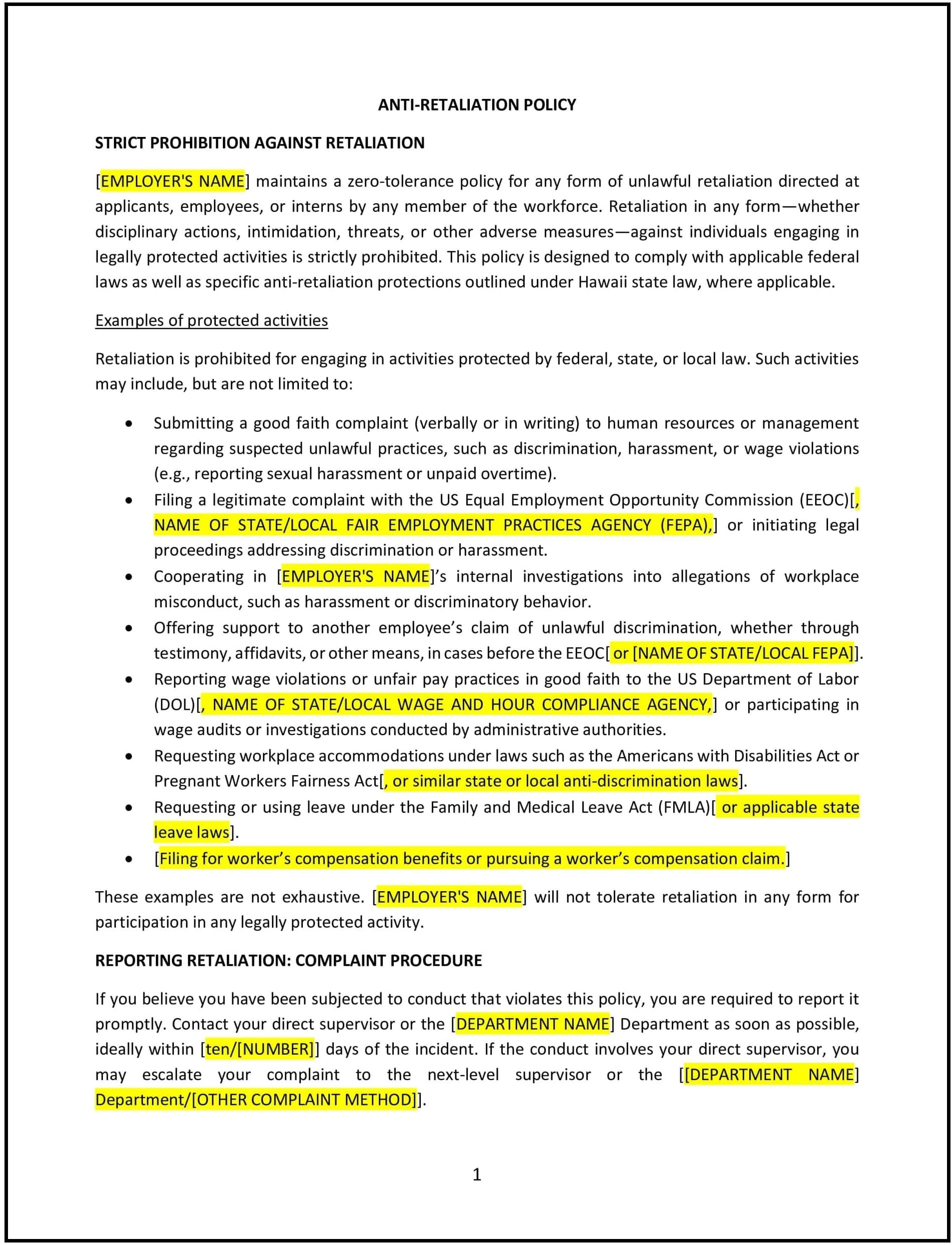
An anti-retaliation policy helps Hawaiʻi businesses protect employees who report workplace concerns, such as harassment, discrimination, safety violations, or unethical behavior. This policy outlines the rights of employees to speak up without fear of retaliation and establishes procedures for addressing and preventing retaliatory actions. It aligns with Hawaiʻi state laws and federal regulations, such as whistleblower protections under the Occupational Safety and Health Act (OSHA) and Title VII of the Civil Rights Act.
By implementing this policy, businesses in Hawaiʻi can foster a culture of transparency, encourage employees to report concerns, and reduce the risk of legal or reputational issues.
How to use this anti-retaliation policy (Hawaiʻi)
- Define retaliation clearly: Provide examples of prohibited retaliatory actions, such as termination, demotion, harassment, or any adverse treatment against employees who report concerns or participate in investigations.
- Establish reporting mechanisms: Create a clear, confidential process for employees to report retaliation. Include multiple reporting channels, such as HR representatives, supervisors, or an anonymous hotline.
- Train employees and managers: Businesses should provide regular training on recognizing and preventing retaliation. Training should emphasize the importance of protecting employees who report concerns.
- Investigate complaints promptly: Outline steps for conducting thorough, impartial investigations into retaliation claims. Businesses should ensure investigations are handled confidentially and without further retaliation.
- Enforce consequences: Specify the disciplinary actions that may result from policy violations, ranging from warnings to termination, depending on the severity of the offense.
- Promote a culture of openness: Encourage employees to report concerns without fear of retaliation. Leadership should model this behavior by supporting employees who speak up.
- Review and update the policy: Regularly assess the policy’s effectiveness and make adjustments as needed to reflect changes in Hawaiʻi laws, workplace dynamics, or best practices.
Benefits of using this anti-retaliation policy (Hawaiʻi)
This policy offers several advantages for Hawaiʻi businesses:
- Encourages reporting: Employees are more likely to report concerns when they feel protected from retaliation, helping businesses address issues early.
- Reduces legal risks: A clear anti-retaliation policy helps businesses avoid lawsuits, fines, or reputational damage associated with retaliation claims.
- Builds trust: Demonstrating a commitment to protecting employees fosters trust and loyalty, improving workplace morale and retention.
- Promotes transparency: By addressing retaliation proactively, businesses can create a culture of openness and accountability.
- Aligns with legal requirements: The policy helps businesses comply with Hawaiʻi state laws and federal regulations, such as OSHA and Title VII.
- Enhances reputation: A strong anti-retaliation stance can differentiate businesses as ethical leaders, attracting top talent and like-minded partners.
Tips for using this anti-retaliation policy (Hawaiʻi)
- Communicate the policy effectively: Share the policy with all employees during onboarding and through regular reminders, such as emails or posters in common areas.
- Provide ongoing training: Businesses should offer regular training sessions to ensure employees understand the policy and know how to report retaliation.
- Encourage reporting: Create a culture where employees feel safe and supported when reporting concerns. Emphasize that retaliation will not be tolerated.
- Monitor workplace culture: Regularly assess the workplace environment to identify and address potential issues before they escalate.
- Lead by example: Ensure leadership adheres to the policy and actively promotes a culture of openness and support.
- Review the policy periodically: Update the policy as needed to reflect changes in Hawaiʻi laws, workplace dynamics, or industry best practices.