Got contracts to review? While you're here for policies, let Cobrief make contract review effortless—start your free review now.
Customize this template for free
Anti-retaliation policy (Illinois)
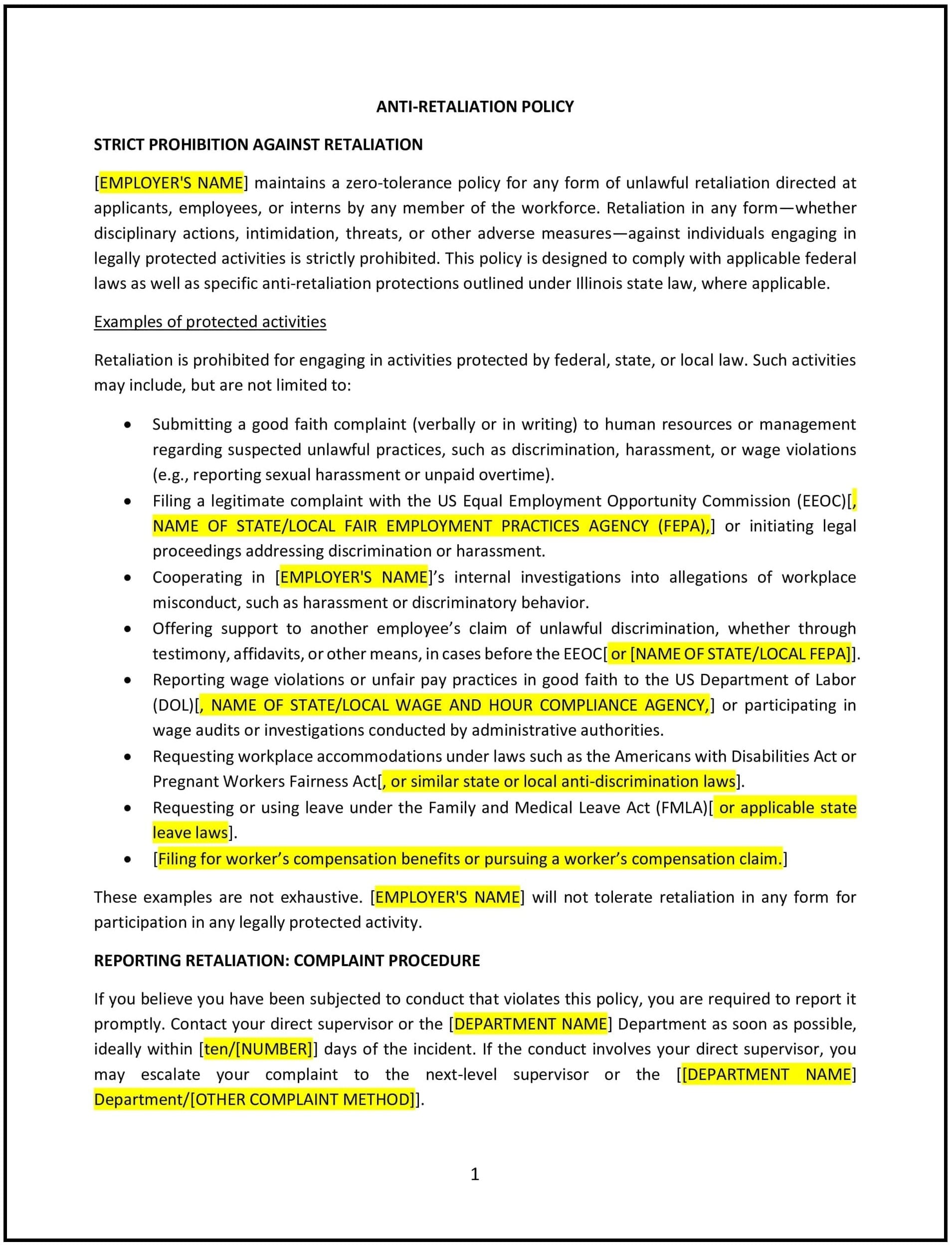
This anti-retaliation policy is designed to help Illinois businesses protect employees from retaliation for reporting workplace concerns or participating in investigations. It provides clear guidelines for reporting, addressing, and resolving retaliation claims, promoting compliance with Illinois employment laws and fostering a culture of openness and accountability.
By adopting this policy, businesses can encourage employees to voice concerns without fear, strengthen trust, and mitigate legal risks.
How to use this anti-retaliation policy (Illinois)
- Define retaliation: Specify what constitutes retaliation, such as adverse actions like demotion, termination, or harassment in response to reporting concerns or participating in investigations.
- Prohibit retaliatory behavior: Clearly state that retaliation of any kind is unacceptable and will result in disciplinary action, up to and including termination.
- Establish reporting procedures: Provide employees with clear instructions on how to report retaliation, including multiple reporting channels and anonymous options if available.
- Include investigation protocols: Detail the steps the company will take to investigate retaliation claims, such as reviewing evidence and interviewing relevant parties.
- Emphasize confidentiality: Assure employees that retaliation complaints will be handled confidentially to the extent possible.
- Provide training: Offer regular training for employees and managers on recognizing and preventing retaliation in the workplace.
- Monitor compliance: Regularly review workplace practices and policies to ensure adherence to anti-retaliation standards and Illinois laws.
Benefits of using this anti-retaliation policy (Illinois)
This policy provides several benefits for Illinois businesses:
- Encourages open communication: Fosters a culture where employees feel safe reporting concerns or participating in investigations.
- Improves legal compliance: Aligns with Illinois laws and federal standards, reducing the risk of legal disputes.
- Protects employees: Provides a framework for addressing and preventing retaliatory behavior, ensuring fairness and accountability.
- Enhances trust: Demonstrates the company’s commitment to supporting employees and addressing concerns promptly.
- Reduces workplace conflicts: Helps resolve issues effectively, maintaining a harmonious work environment.
Tips for using this anti-retaliation policy (Illinois)
- Communicate the policy: Share the policy with employees during onboarding and ensure it is accessible in employee handbooks or internal systems.
- Train managers: Equip managers to recognize and prevent retaliation and handle complaints effectively.
- Foster a supportive environment: Encourage employees to voice concerns and assure them of the company’s commitment to addressing issues fairly.
- Conduct regular audits: Periodically assess workplace practices to ensure compliance with this policy and identify areas for improvement.
- Update regularly: Revise the policy to reflect changes in Illinois laws, workplace dynamics, or best practices.