Got contracts to review? While you're here for policies, let Cobrief make contract review effortless—start your free review now.
Customize this template for free
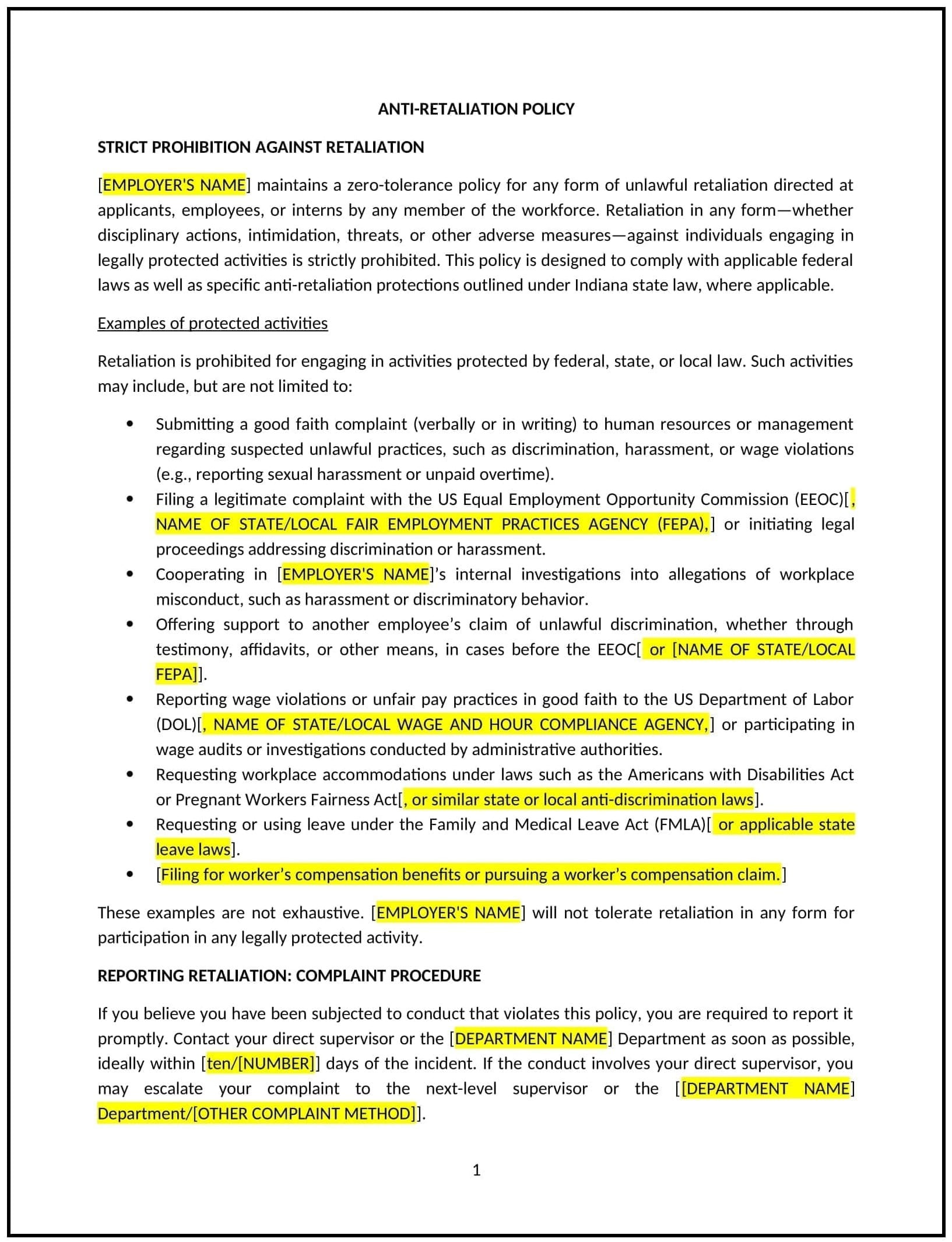
Anti-retaliation policy (Indiana): Free template
The anti-retaliation policy helps Indiana businesses protect employees who report unethical practices, violations, or other protected activities, ensuring that employees can raise concerns without fear of negative consequences. This policy outlines the company's commitment to safeguarding employees who engage in whistleblowing or report misconduct, such as harassment, discrimination, or legal violations. By using this template, businesses can foster an environment of trust and transparency, encouraging employees to speak up when they witness problems without the risk of retaliation.
By implementing this policy, Indiana businesses promote a culture of accountability and integrity, ensuring that employees are protected and can contribute to maintaining a positive and ethical workplace.
How to use this anti-retaliation policy (Indiana)
- Define retaliation: Clearly outline what constitutes retaliation, including actions like termination, demotion, harassment, reduction in pay, or any other negative actions taken against employees who report misconduct.
- Set reporting procedures: Establish clear, confidential, and easily accessible reporting channels for employees who wish to report retaliation or express concerns. Ensure employees understand how to report retaliation and the company’s commitment to investigating these claims.
- Educate employees: Provide training for all employees, including managers and supervisors, to raise awareness about the anti-retaliation policy. Employees should understand their rights to be protected when reporting misconduct or participating in investigations.
- Investigate claims promptly: Emphasize the importance of investigating retaliation complaints swiftly and thoroughly. The policy should outline a clear timeline for addressing complaints and taking corrective action if retaliation is found.
- Protect whistleblowers: Ensure that employees who report misconduct are not subject to retaliation, even if their report is found to be inaccurate or incomplete. The policy should clarify that good faith reporting is protected, and employees cannot be penalized for reporting issues.
- Specify consequences: Clearly state the consequences for employees or managers who engage in retaliatory actions, which could include disciplinary measures such as suspension, demotion, or termination.
- Align with legal requirements: Ensure the policy complies with Indiana state law and federal regulations regarding retaliation, including whistleblower protections under the Occupational Safety and Health Act (OSHA) and other relevant statutes.
Benefits of using this anti-retaliation policy (Indiana)
Implementing this policy provides several key benefits for Indiana businesses:
- Protects whistleblowers: The policy safeguards employees who report unethical behavior, promoting a safe environment for employees to speak up about misconduct without fear of retaliation.
- Promotes transparency and accountability: A clear anti-retaliation policy helps create a culture where employees feel confident raising concerns about workplace issues, leading to a more transparent and accountable organization.
- Reduces legal and financial risks: By ensuring employees who report violations are protected, businesses minimize the risk of legal actions and penalties related to retaliation claims.
- Enhances employee trust and morale: A business that protects employees from retaliation builds trust and loyalty, contributing to higher morale and engagement in the workplace.
- Strengthens company reputation: Companies that are committed to preventing retaliation and fostering an ethical work environment are more likely to maintain a positive public image and attract top talent.
- Supports compliance with laws: The policy helps businesses comply with both Indiana state laws and federal regulations that protect whistleblowers and prohibit retaliation.
Tips for using this anti-retaliation policy (Indiana)
- Communicate the policy effectively: Ensure all employees are aware of the anti-retaliation policy and the reporting channels available to them. Include the policy in the employee handbook and training programs.
- Provide regular training: Conduct training for all employees, including managers, on recognizing retaliation and the importance of protecting whistleblowers. Ensure that everyone understands the protections in place and how to handle retaliation claims.
- Ensure accessibility: Make the reporting process clear and easy to access for all employees. This includes providing multiple ways to report concerns, such as via email, phone, or in-person, and ensuring confidentiality throughout the process.
- Act promptly on retaliation claims: Investigate any retaliation complaints as soon as they are reported. The policy should outline how complaints will be handled and the importance of taking swift action to address the issue.
- Review and update the policy regularly: Periodically review the anti-retaliation policy to ensure it remains up-to-date with changes in state and federal laws, as well as evolving workplace dynamics.